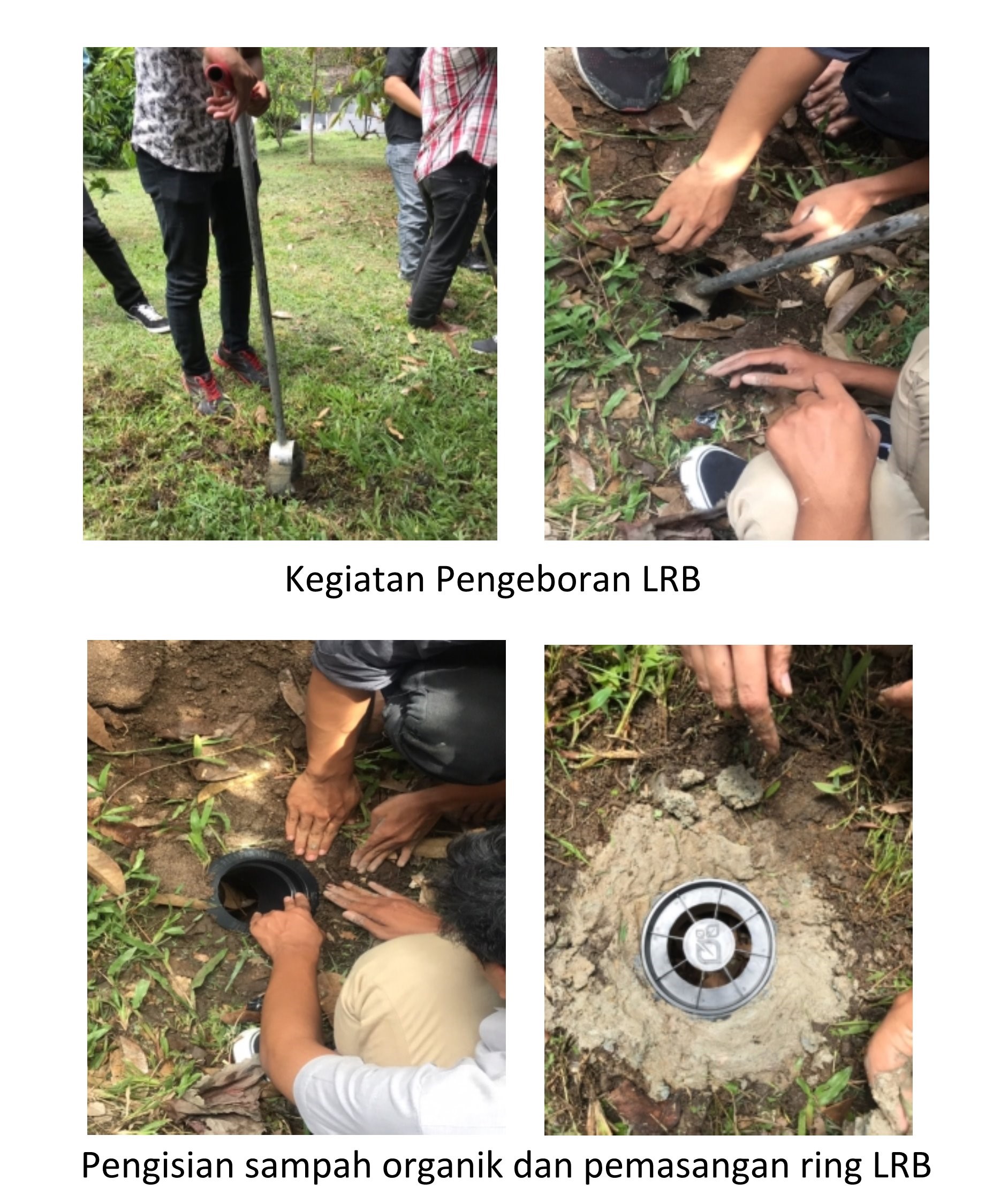
Biopori infiltration holes function to absorb water into the ground, thus minimizing standing water. Biopori holes do not require a large area, and their creation process is very easy, which certainly makes them a suitable solution for areas with limited open land. These biopori infiltration holes are also filled with organic waste to manage scattered leaf litter on campus grounds and can become compost for the soil and plants.
In this activity, students hope to address several issues, namely:
Increasing water absorption capacity
Preventing floods or water puddles in campus courtyards
Improving groundwater quality
Disposal site for organic waste
Converting organic waste into compost
Utilizing the role of soil fauna activity and plant roots
Overcoming problems caused by standing water
Preventing global warming
The stages of creating biopori infiltration holes are as follows: