


MEDAN – The Industrial Engineering Undergraduate Program, Faculty of Engineering, Universitas Sumatera Utara (USU), successfully held a General Lecture with optimization and simulation as the central topic. The event featured Prof. Nurhadi Siswanto, S.T., MSIE., Ph.D., as the Chair of the Central Board of the Higher Education Collaboration Agency for Industrial Engineering (BKSTI).
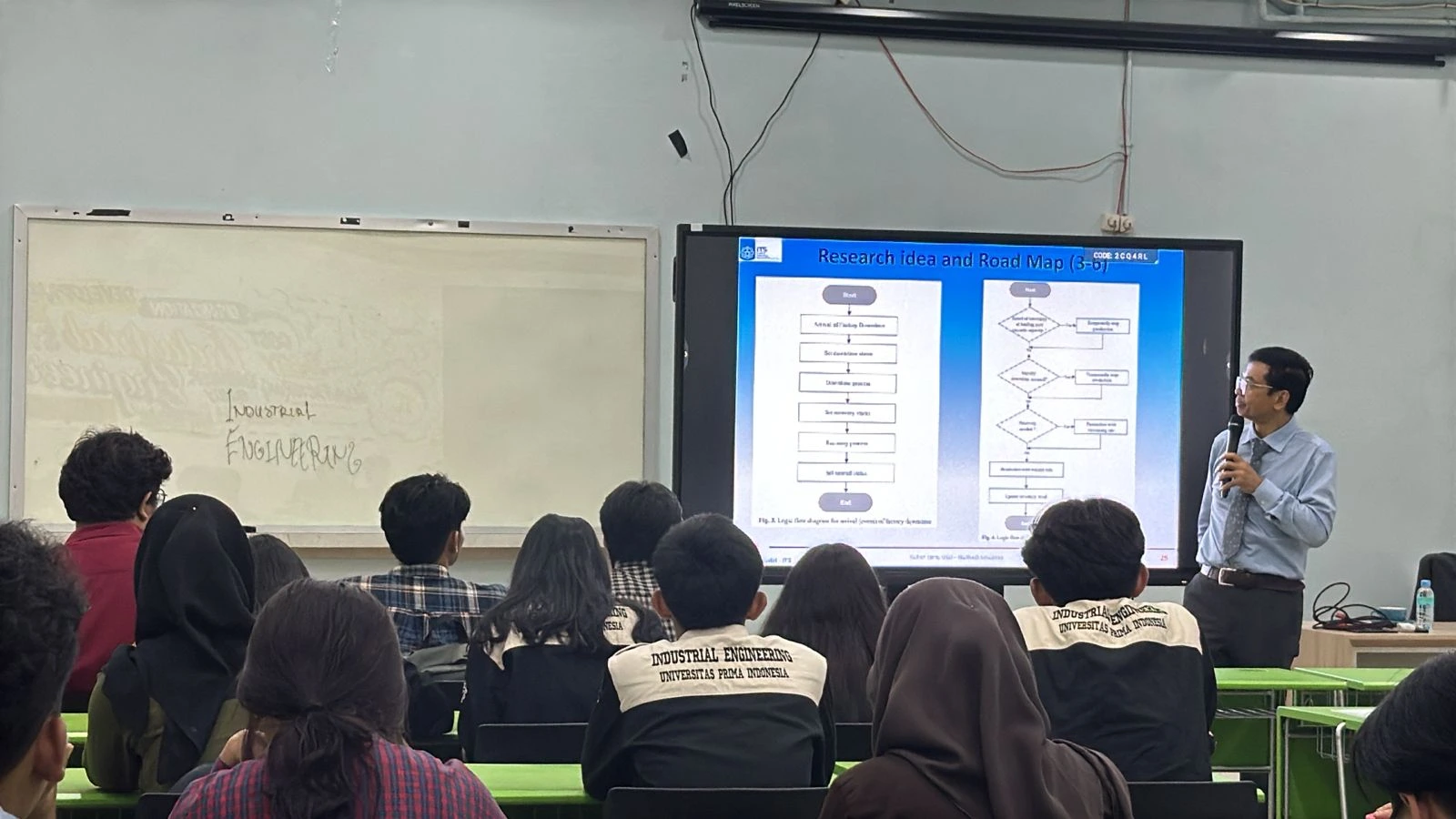
The general lecture was held on Tuesday, 18 November 2025, from 14.00 until completion in the Industrial Engineering Smartclass Room, 3rd Floor, Faculty of Engineering USU. The presence of Prof. Nurhadi Siswanto became a major attraction for participants, especially Industrial Engineering students and lecturers, considering the relevance of the topic discussed. Optimization and Simulation are two essential scientific disciplines in Industrial Engineering. Both play significant roles in:
Efficiency Improvement: Ensuring resources (human, machine, material) are utilized to their maximum potential.
Decision-Making: Providing analytical tools to test various scenarios before implementation in the real world, thereby minimizing the risk of failure.
System Design: Designing adaptive and effective production, logistics, or service systems, particularly amid the challenges of automation and the Industrial Revolution 4.0.
This event was made possible through the strong collaboration between the Industrial Engineering Undergraduate Program at USU and BKSTI Regional Coordinator (Korwil) Sumatera 1. In addition to Prof. Nurhadi Siswanto, Prof. Ir. Aulia Ishak, S.T., M.T., Ph.D., the Head of BKSTI Korwil Sumatera 1, was also present to deliver remarks and accompany the session.
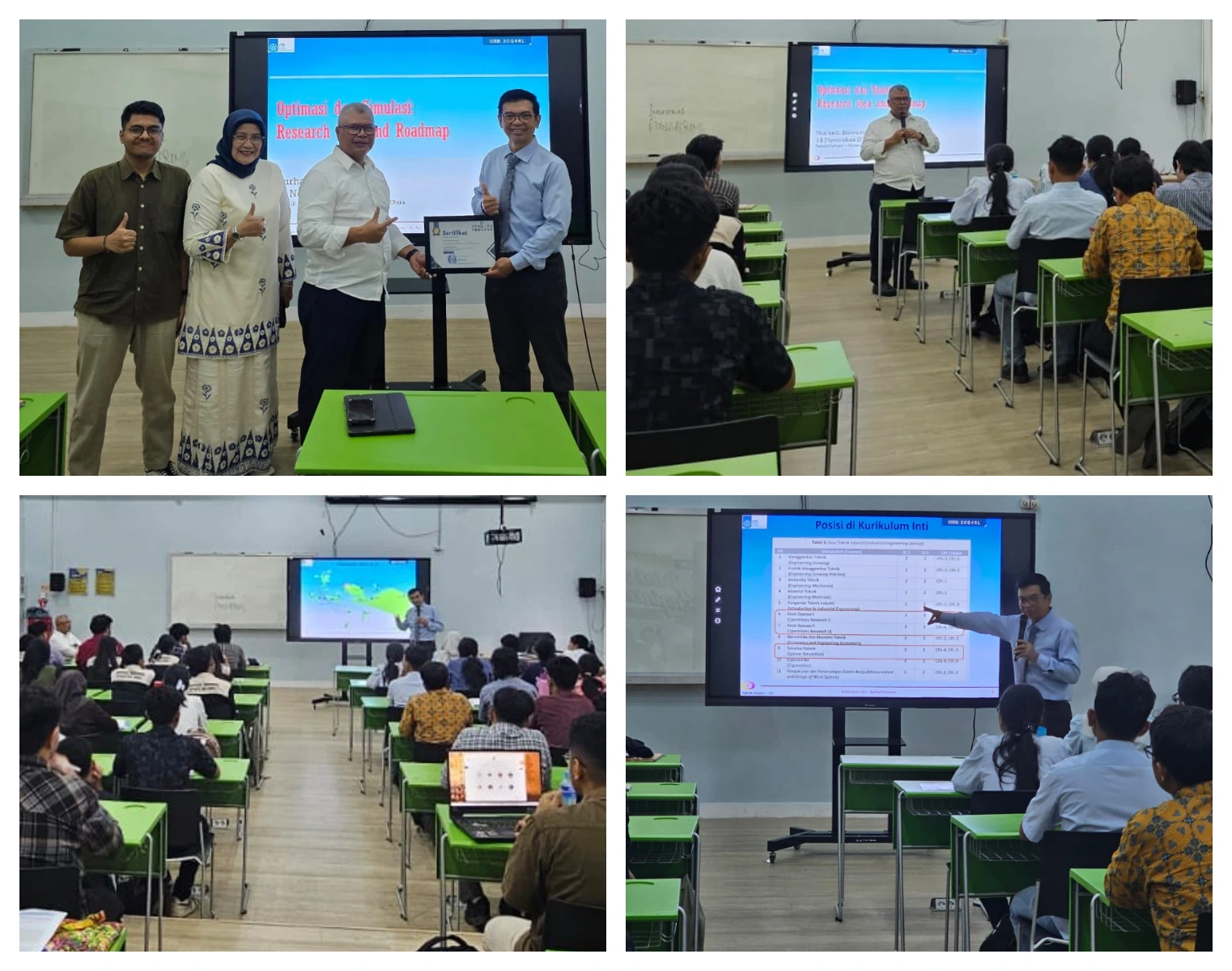
The number of participants for this general lecture was limited to only 100 people to maintain an interactive and focused discussion atmosphere, making the moment highly exclusive for those who had the opportunity to attend. This General Lecture serves as a form of commitment by the USU Industrial Engineering Undergraduate Program in providing up-to-date scientific insights and strengthening academic collaboration with institutions and professional organizations at the national level, to produce graduates who are ready to face future industrial challenges.