


.webp)
Students of the Faculty of Engineering, Universitas Sumatera Utara, conducted a practicum for the Electrical Machines course, with one of the experiment topics focusing on DC Machines. This activity was designed to strengthen students' understanding of the characteristics, operation, and response of direct current machines through a series of laboratory tests.
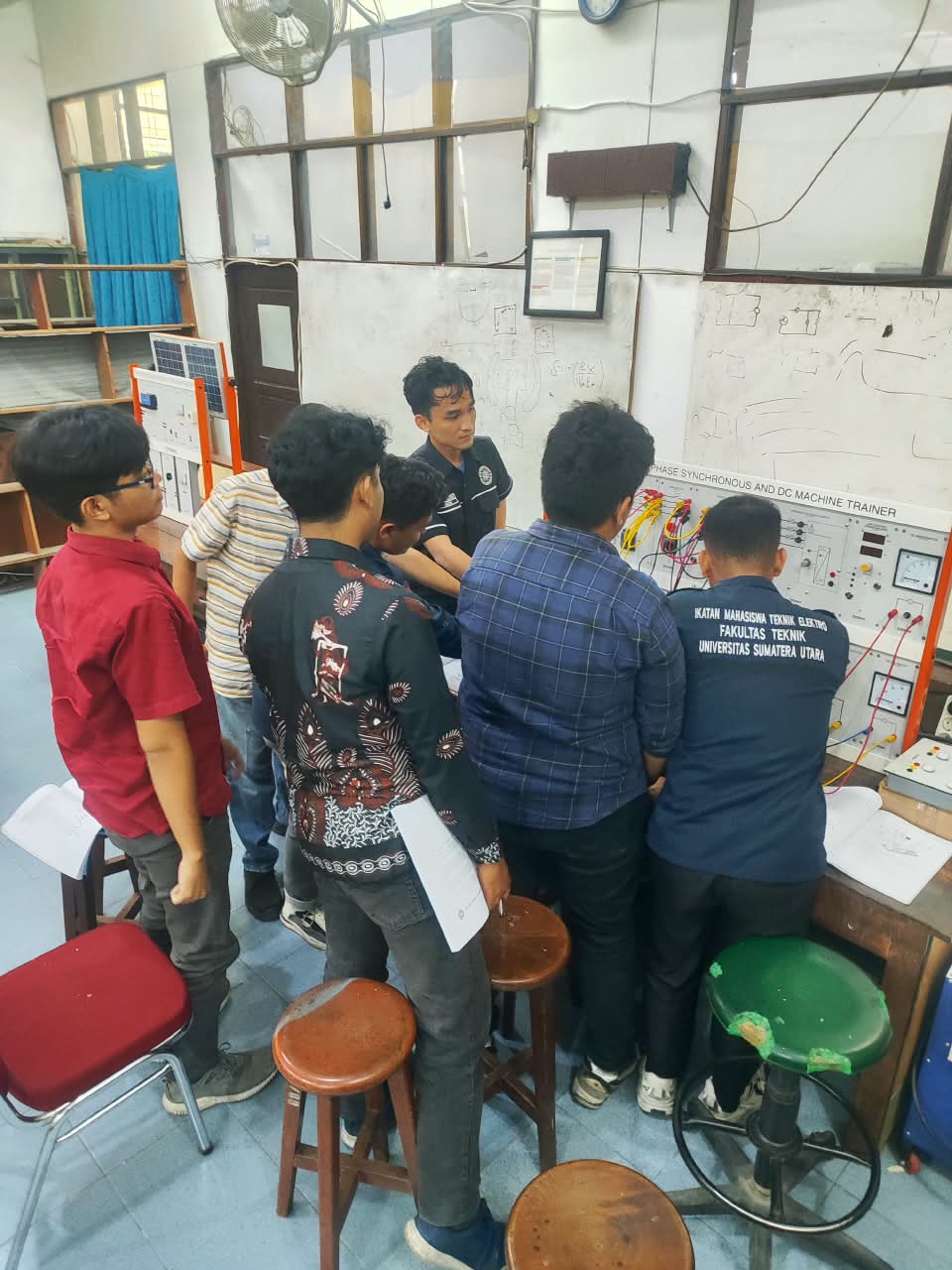
Before proceeding to the experimental stage, the practicum began with a brief presentation of the concepts and circuits to be used. The entire activity lasted approximately two to three hours, with students directly involved in the testing and observation processes.
The practicum included several experiments on DC series motors, namely observing starting characteristics, changes in rotational direction, and motor speed control. These experiments provided students with the opportunity to directly observe motor behavior when its configuration or operating parameters were changed.
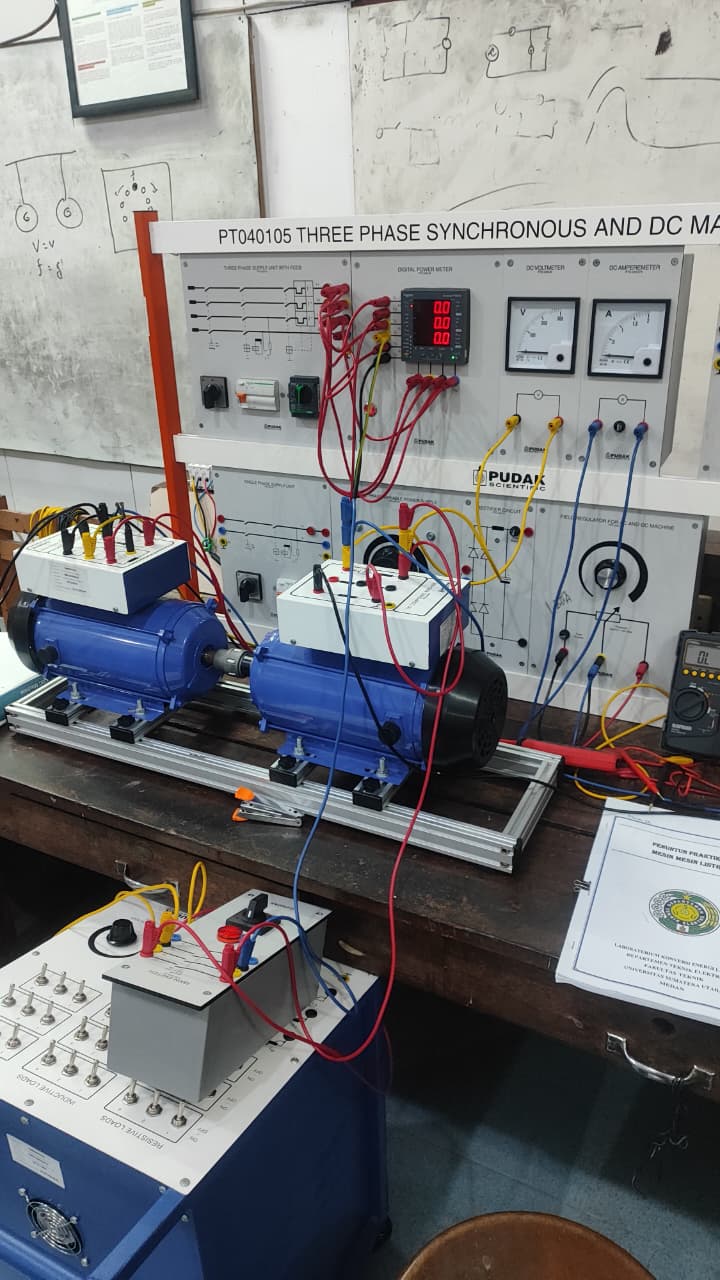
For DC shunt motors, students tested the excitation current characteristics against speed, n=f(IE), and the voltage characteristics against speed, n=f(V). The observations were used to understand the relationship between electrical parameters and changes in the machine's operating characteristics.
The practicum series also included tests on DC series-connected generators and compound-connected generators. Through these experiments, students learned about the connection configurations of DC generators and observed the characteristics that emerged during the testing process.
All experiments were designed to enable students to understand the differences in the characteristics of DC machines with series, shunt, and compound connections. Students were also trained to analyze the effects of variations in electrical parameters and loading on machine performance based on the test data.
The data obtained during the practicum were subsequently processed and compiled into a structured report. This stage is an important part of training students to interpret test results, conduct technical analyses, and connect the theories learned in lectures with experimental conditions in the laboratory.
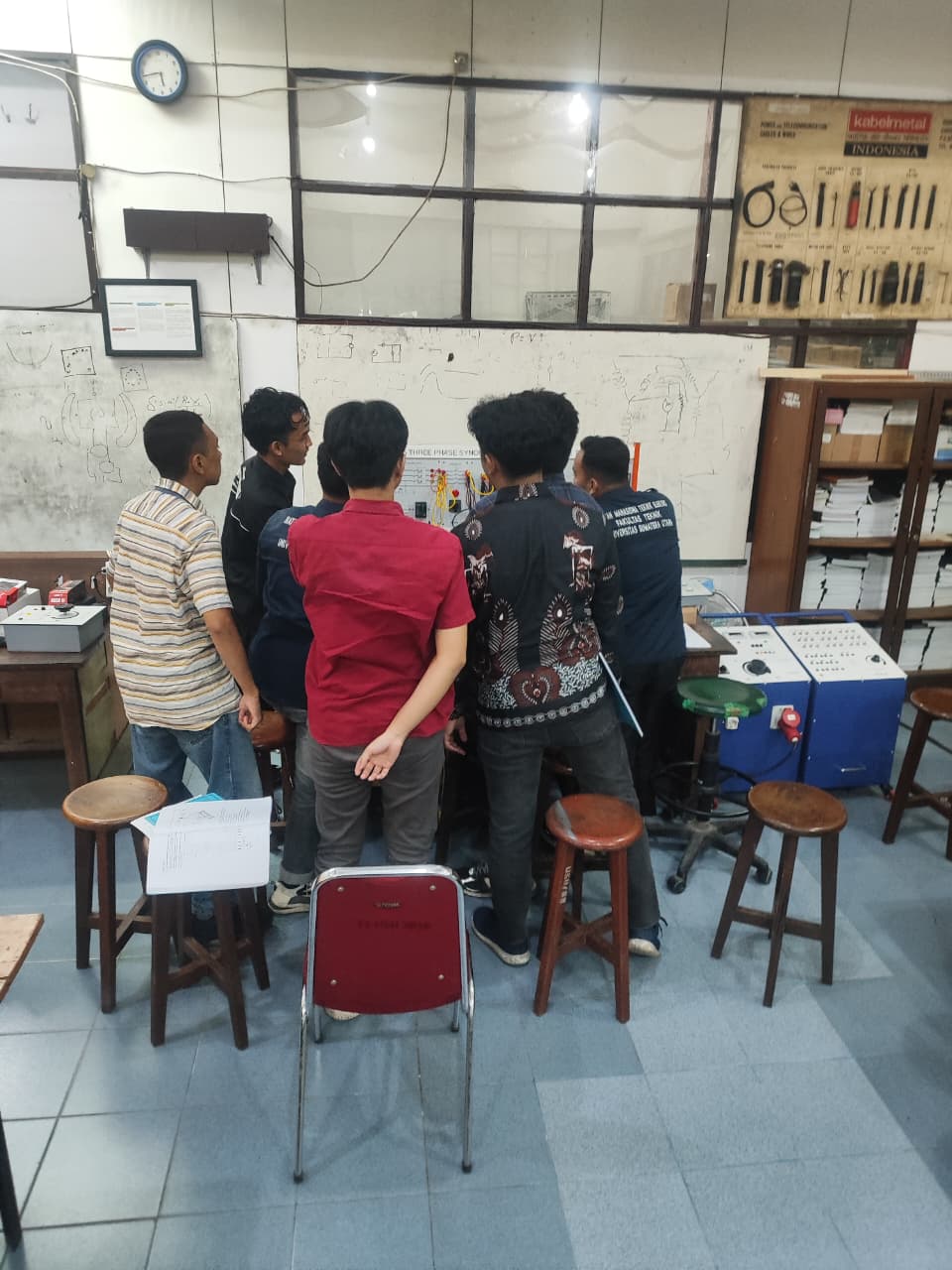
This activity primarily supports SDG 4 – Quality Education through experiential learning and the strengthening of students' technical competencies. SDG 9 – Industry, Innovation, and Infrastructure is also relevant through the study of electrical machine technology, which is part of various engineering systems and applications.
Through the Electrical Machines practicum, the Faculty of Engineering, Universitas Sumatera Utara, continues to encourage learning that integrates theory, experimentation, and analysis as part of developing students' competencies in the field of engineering.