


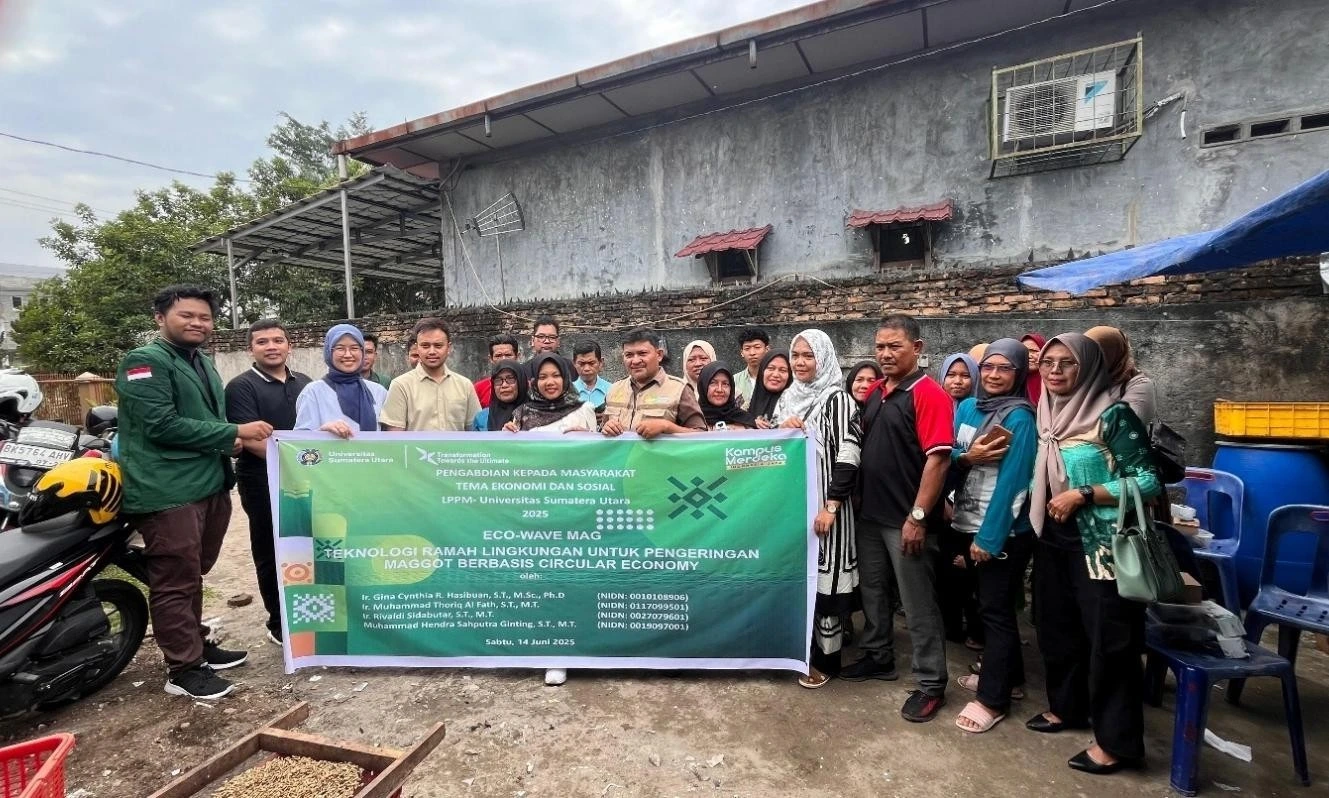
This Community Service Program (PkM) was carried out by a team of lecturers from the Faculty of Engineering, Universitas Sumatera Utara (USU), consisting of Ir. Gina Cynthia Raphita Hasibuan, S.T., M.Sc., Ph.D., Ir. Muhammad Thoriq Al Fath, S.T., M.T., Ir. Rivaldi Sidabutar, S.T., M.T., and Muhammad Hendra Sahputra Ginting, S.T., M.T. The program, titled “Eco-Wave Mag: Environmentally Friendly Technology for Maggot Drying Based on the Circular Economy,” took place at the partner site, BSF Ratna.
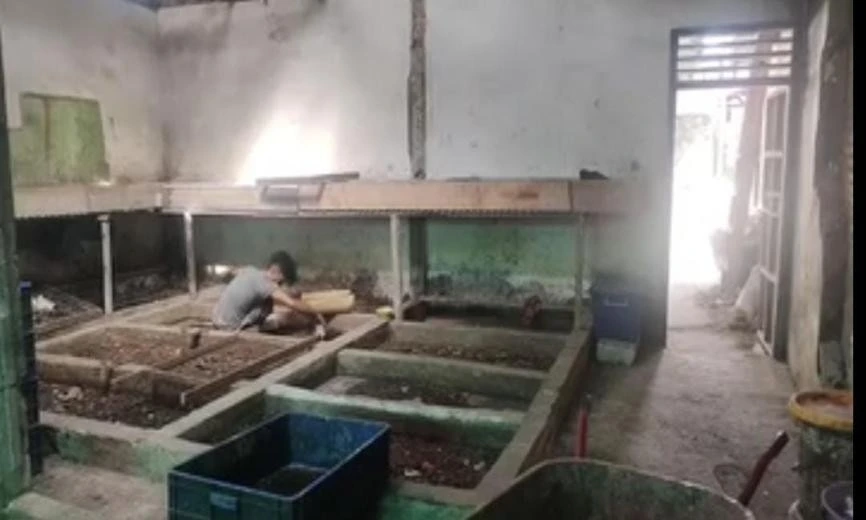
Maggots play a crucial role in the circular economy system, as they can convert organic waste into high-value products, particularly as a sustainable alternative feed source. BSF Ratna is one of the maggot farming groups that has been developing maggot cultivation to support the circular economy. However, the partner faces challenges in the maggot drying stage, which still relies on conventional methods such as sun drying and basic ovens. These methods are time-consuming, energy-intensive, and result in inconsistent product quality.
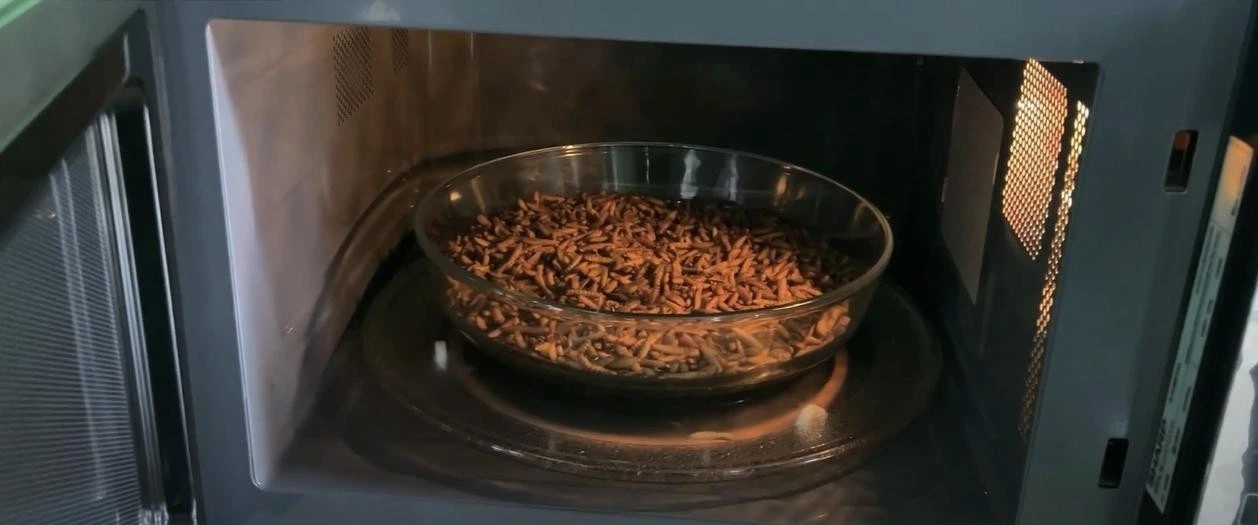
The ECO-WAVE MAG program was introduced as a solution by implementing and modifying a microwave dryer-based drying technology. This technology has been proven to reduce drying time from 12–24 hours to only 3–4 hours, achieving a stable moisture content of 8–10%, while maintaining nutritional quality and improving energy efficiency.
Moreover, the implementation of this technology supports several Sustainable Development Goals (SDGs), including SDG 7 (Affordable and Clean Energy), SDG 8 (Decent Work and Economic Growth), SDG 9 (Industry, Innovation, and Infrastructure), and SDG 12 (Responsible Consumption and Production).
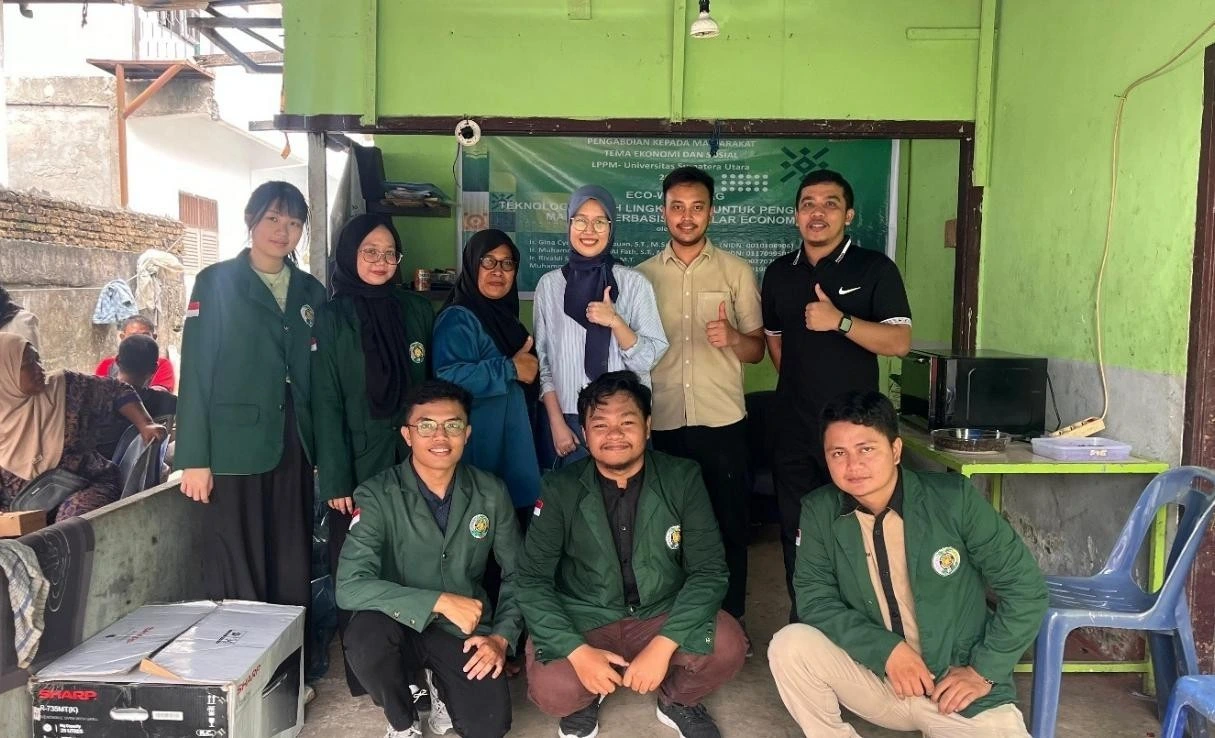
This community service program provides an innovative solution to enhance the efficiency of dried maggot production through modern, faster, and energy-efficient drying technology. With the adoption of this system, partners can improve product quality, expand market reach, and reduce operational costs—ultimately increasing economic value.
Furthermore, this initiative contributes to broader impacts by advancing the principles of the circular economy, reducing dependence on less efficient conventional drying methods, and promoting the use of environmentally friendly technologies in the maggot farming industry.