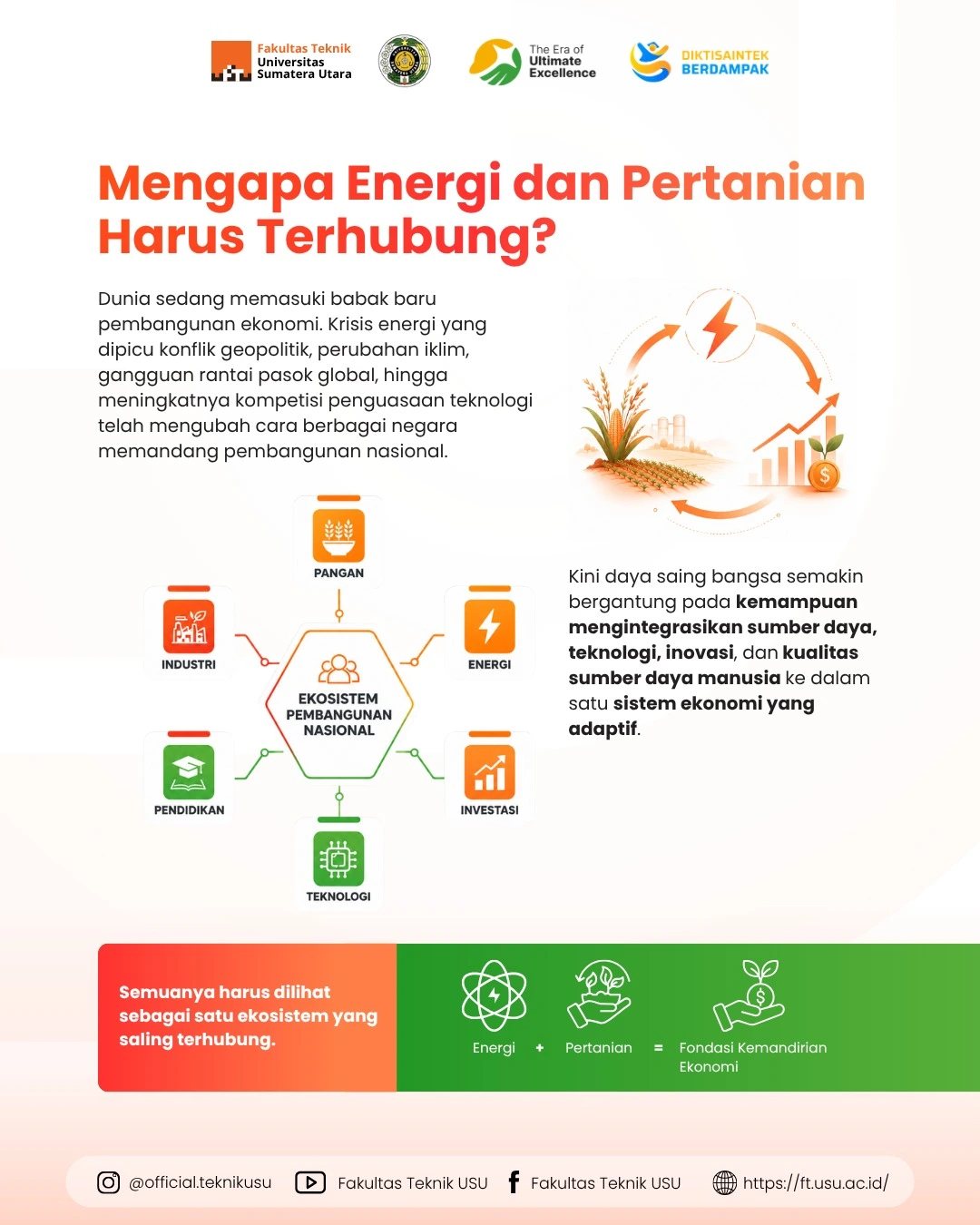
National development must be pursued through an integrated approach that connects the food, energy, industrial, education, and technology sectors within a unified ecosystem.
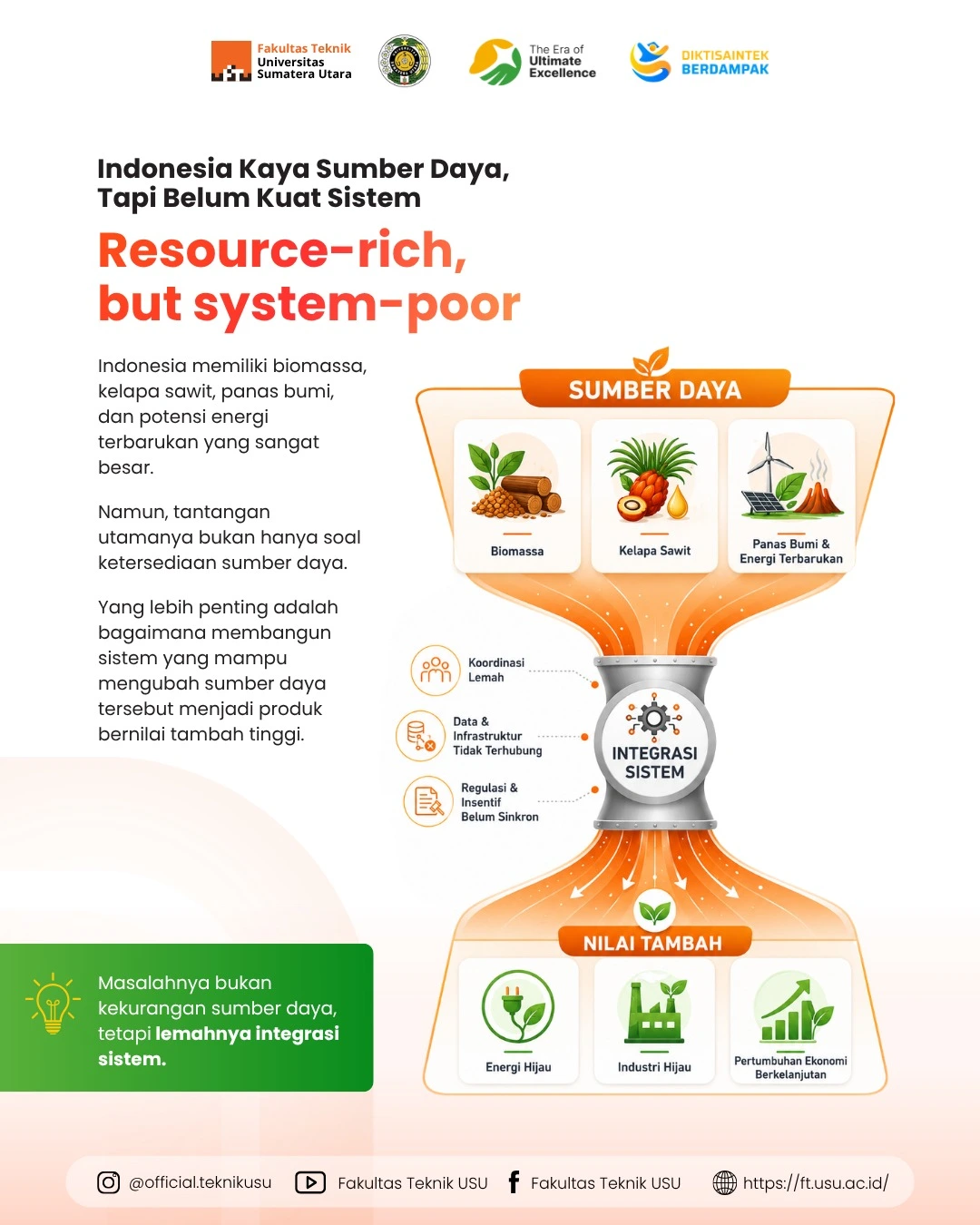
Indonesia possesses tremendous potential through its abundant biomass resources, palm oil industry, geothermal reserves, and other renewable energy sources.
However, the country's primary challenge lies in the suboptimal utilization of these resources to create higher value-added products. This condition is often described as "resource-rich but system-poor," where abundant natural resources are not yet supported by systems capable of maximizing their economic potential.
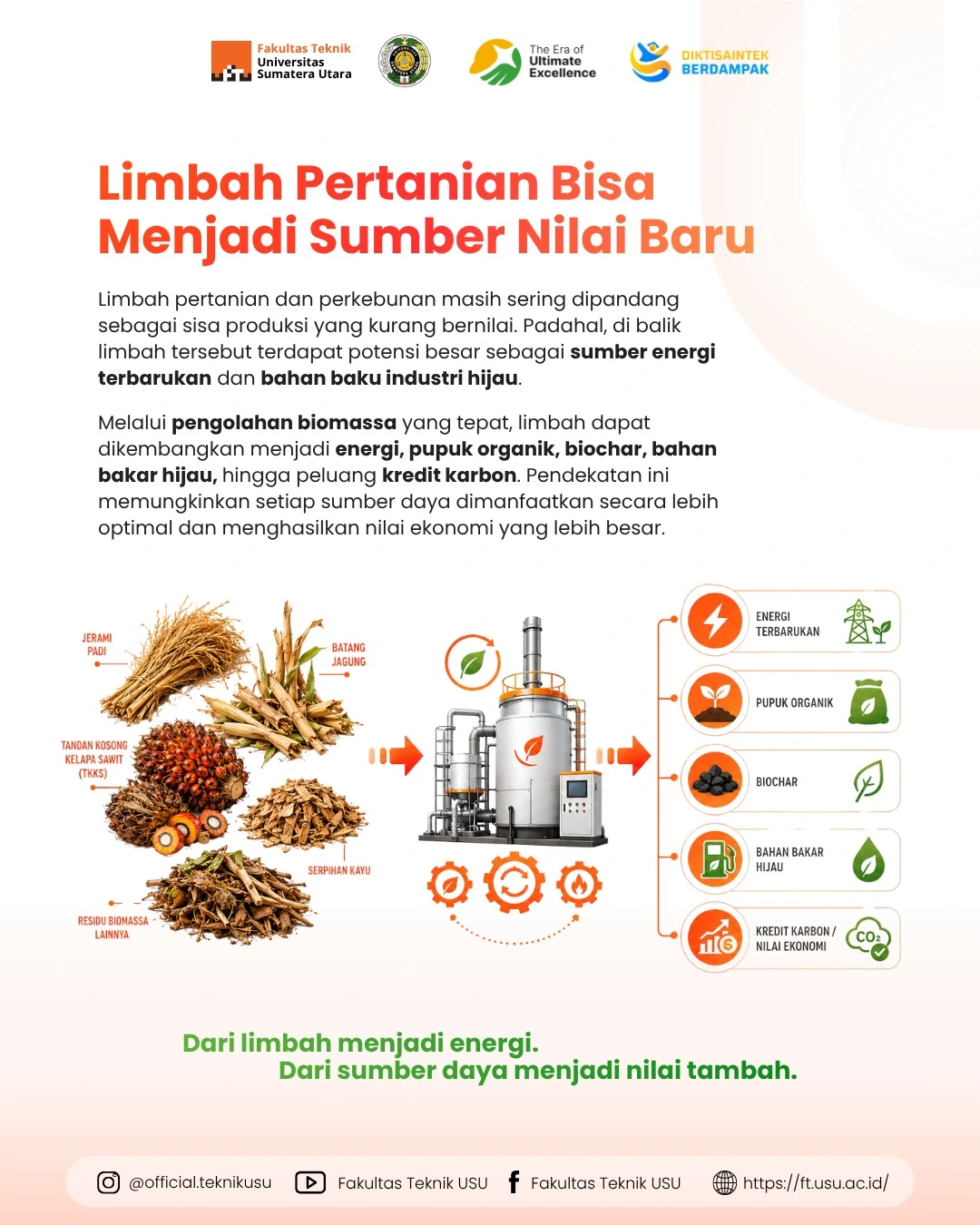
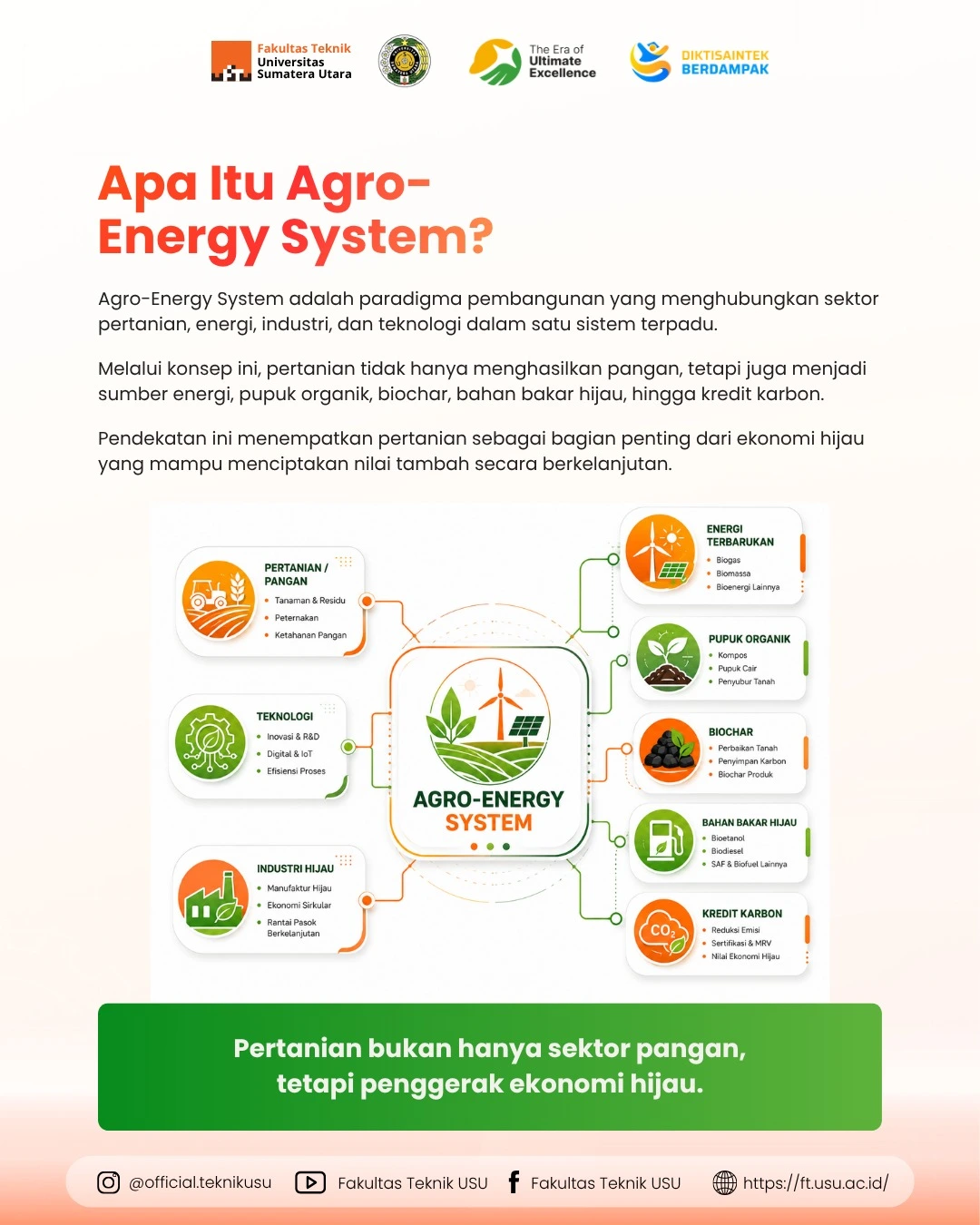
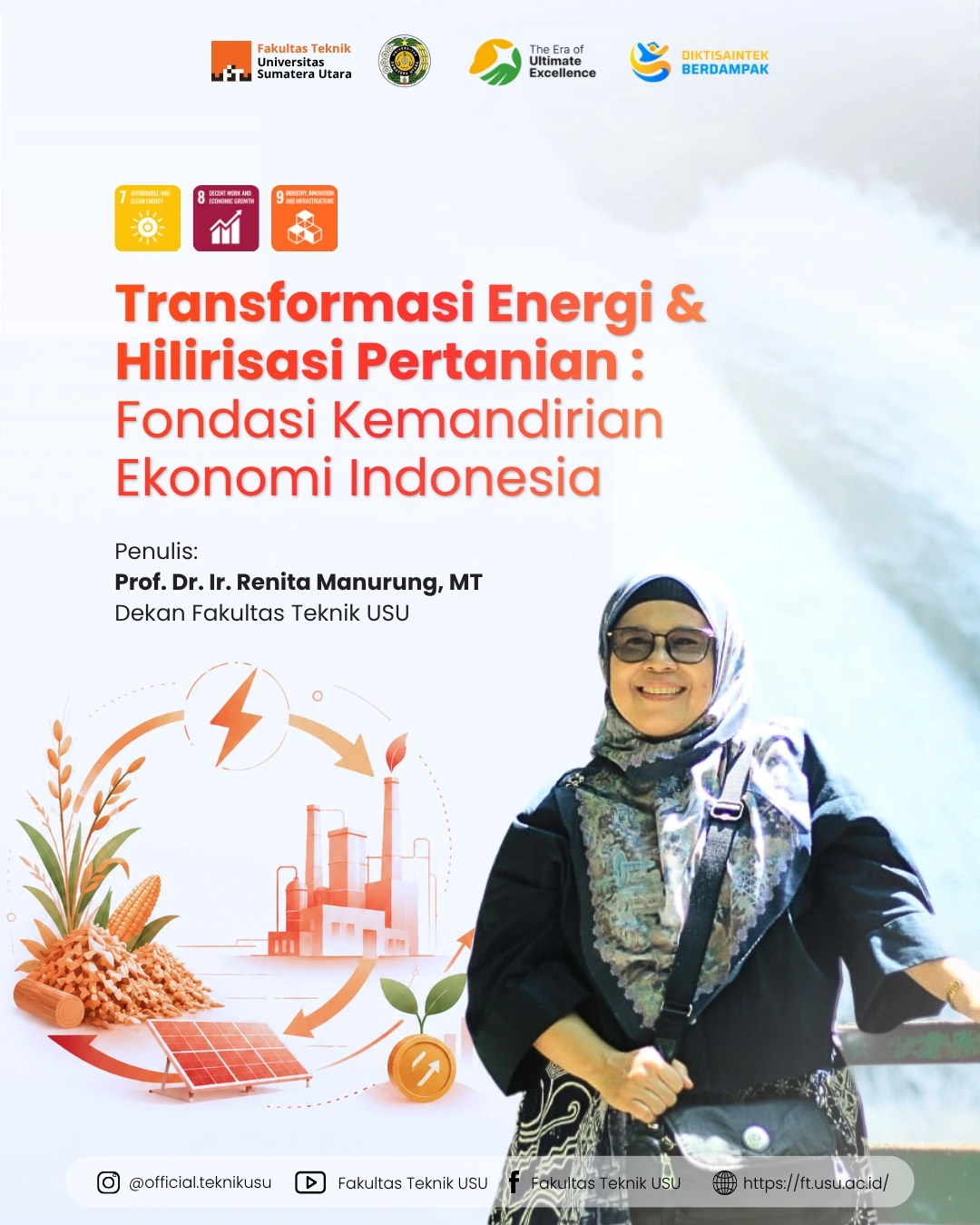
As a solution, the Agro-Energy System concept has been proposed to integrate the agricultural and energy sectors. Through cascade biomass utilization, agricultural products can generate not only food but also renewable energy, organic fertilizers, biochar, green fuels, and carbon credits.
The success of this transformation requires technological innovation, cross-sector collaboration, and consistent, long-term policy support.
By embracing this approach, Indonesia has the opportunity to strengthen both food and energy security while enhancing its national economic competitiveness in a sustainable manner.
Author:
Prof. Dr. Ir. Renita Manurung, M.T.
Dean, Faculty of Engineering, Universitas Sumatera Utara