


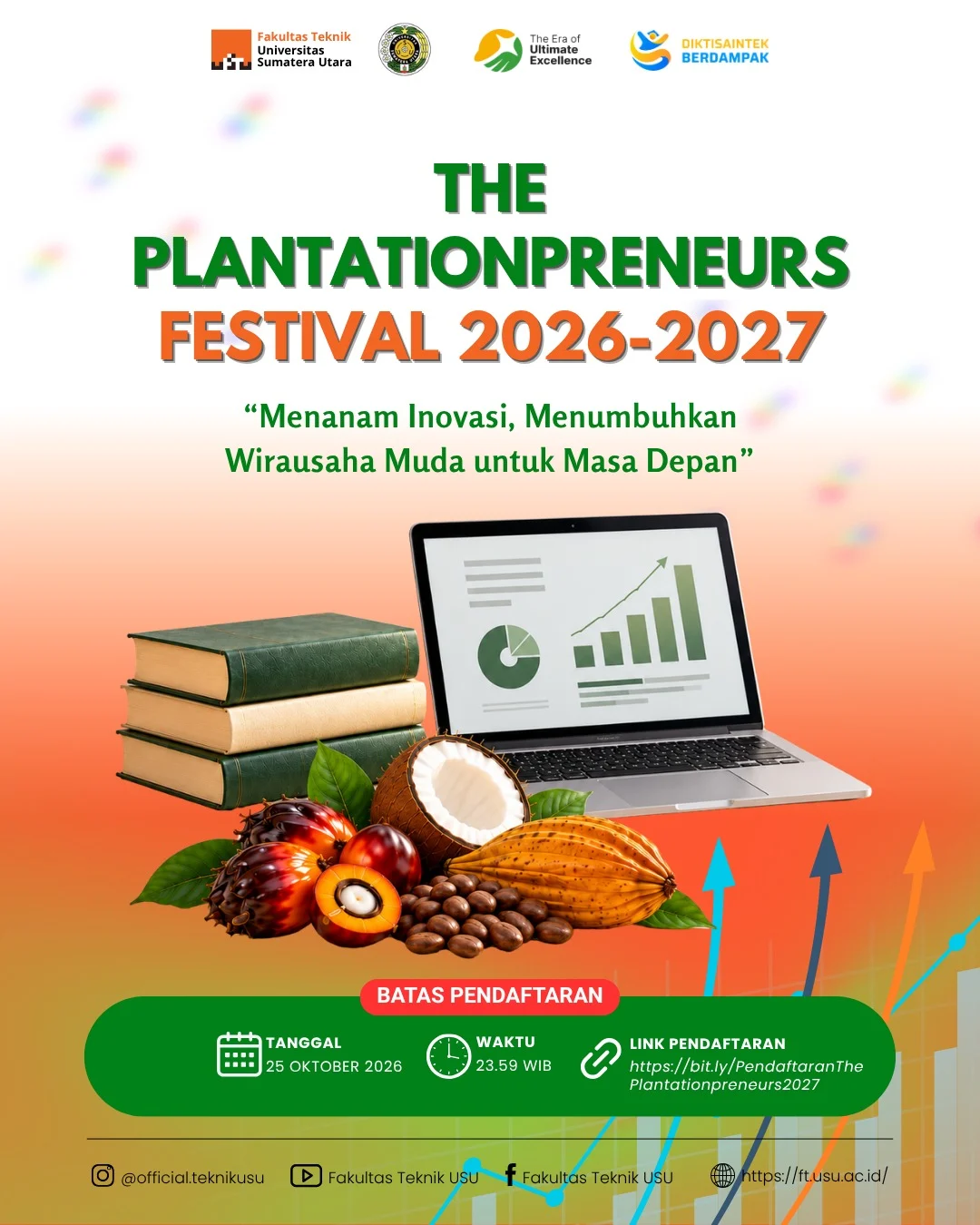
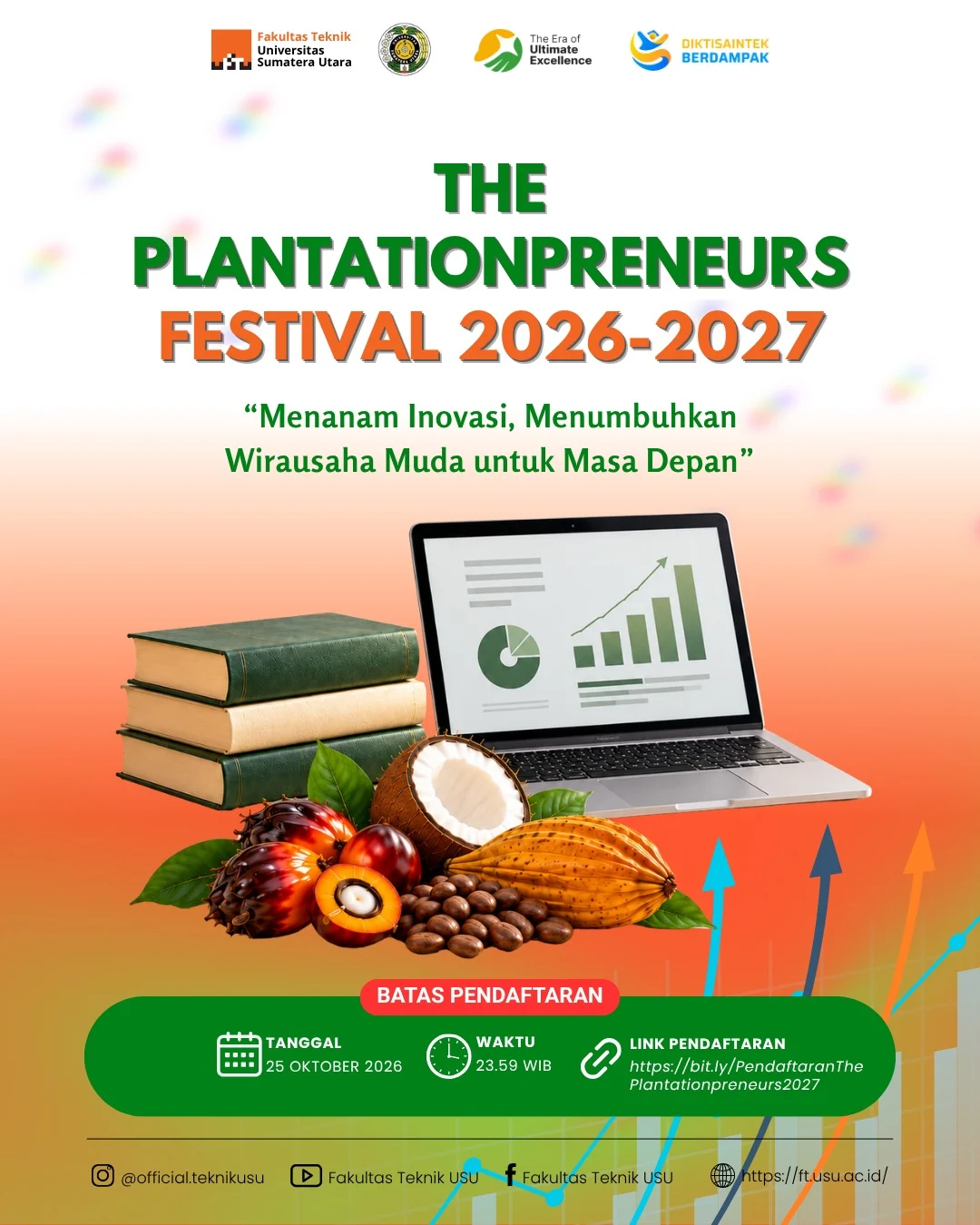
Medan – The Faculty of Engineering at USU opens opportunities for high school and university students across Indonesia to participate in The Plantationpreneurs Festival 2026–2027. Carrying the spirit of “Planting Innovation, Growing Young Entrepreneurs for the Future,” this event is designed as a platform to foster creativity, innovation, and an entrepreneurial mindset among the youth by highlighting the potential of Indonesia's plantation commodities.
 |
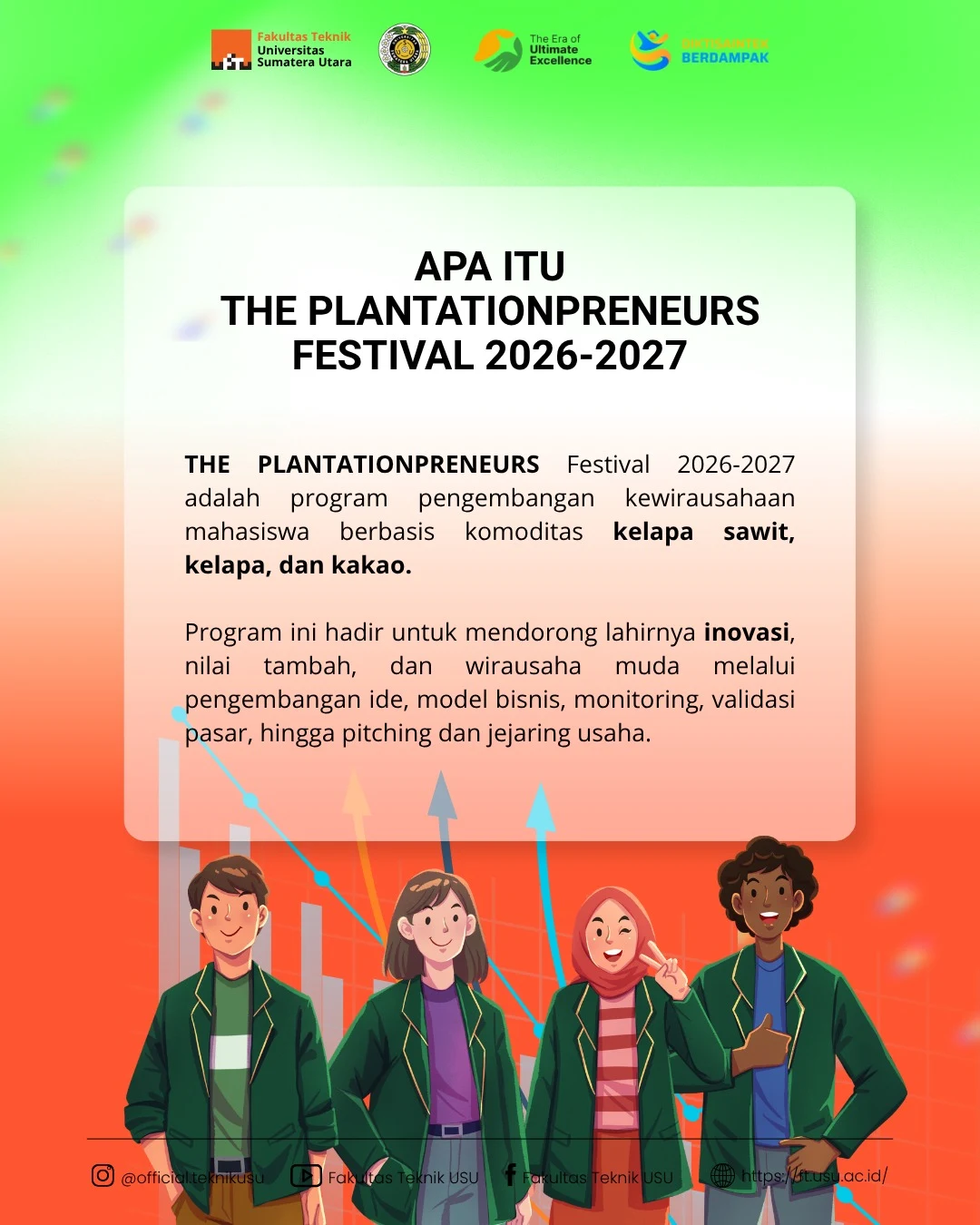 |
This festival focuses on three main commodities: oil palm, coconut, and cocoa. These three commodities hold strategic positions in the national economy while offering vast space for new innovations, ranging from product development and processing technology to value addition and more sustainable business ideas.
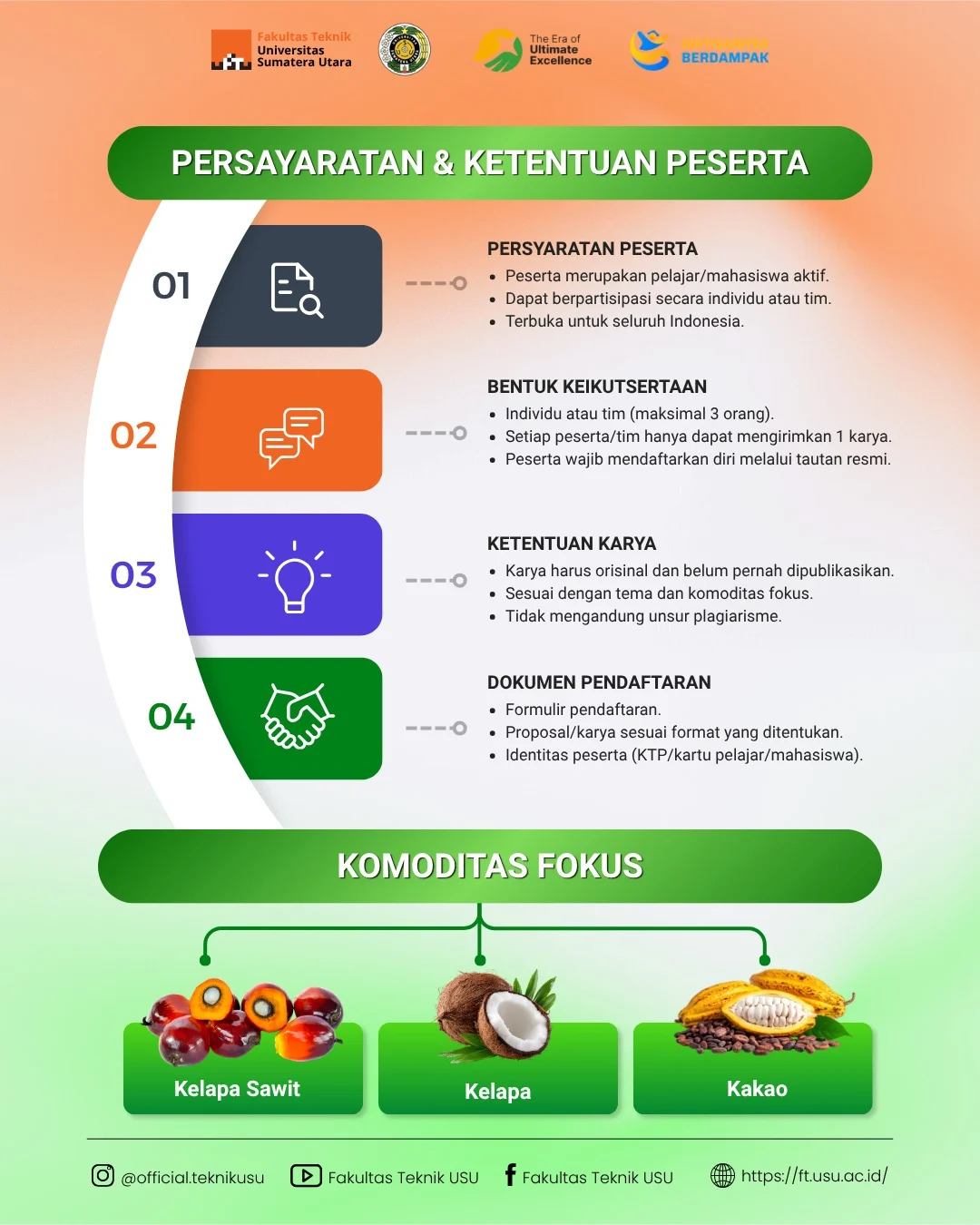
The Plantationpreneurs Festival is open to active high school and university students throughout Indonesia. Participants can enter the competition individually or in teams of up to three members. Each participant or team is allowed to submit only one original work aligned with the theme and focused commodities, which must not have been previously published or contain plagiarism.
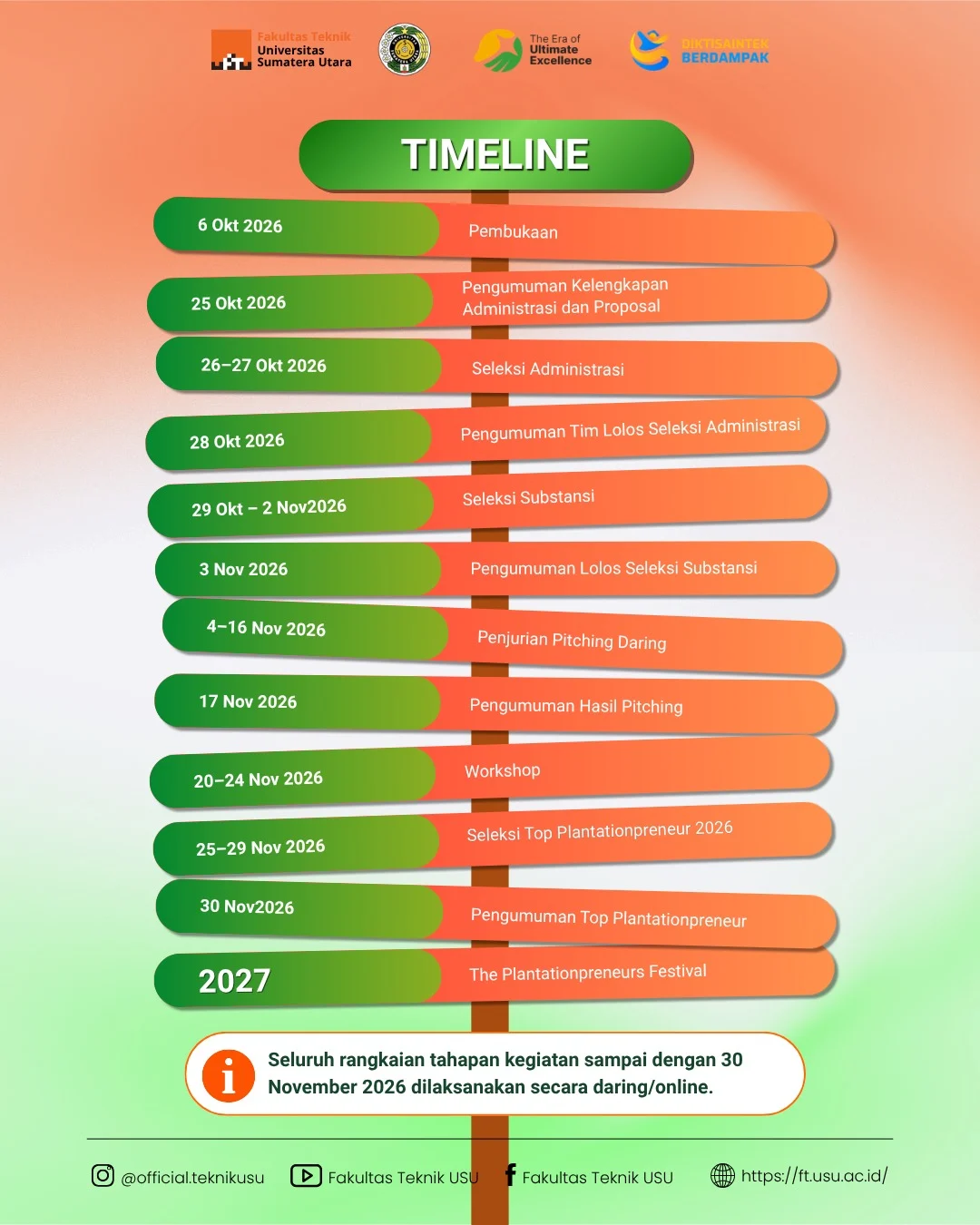
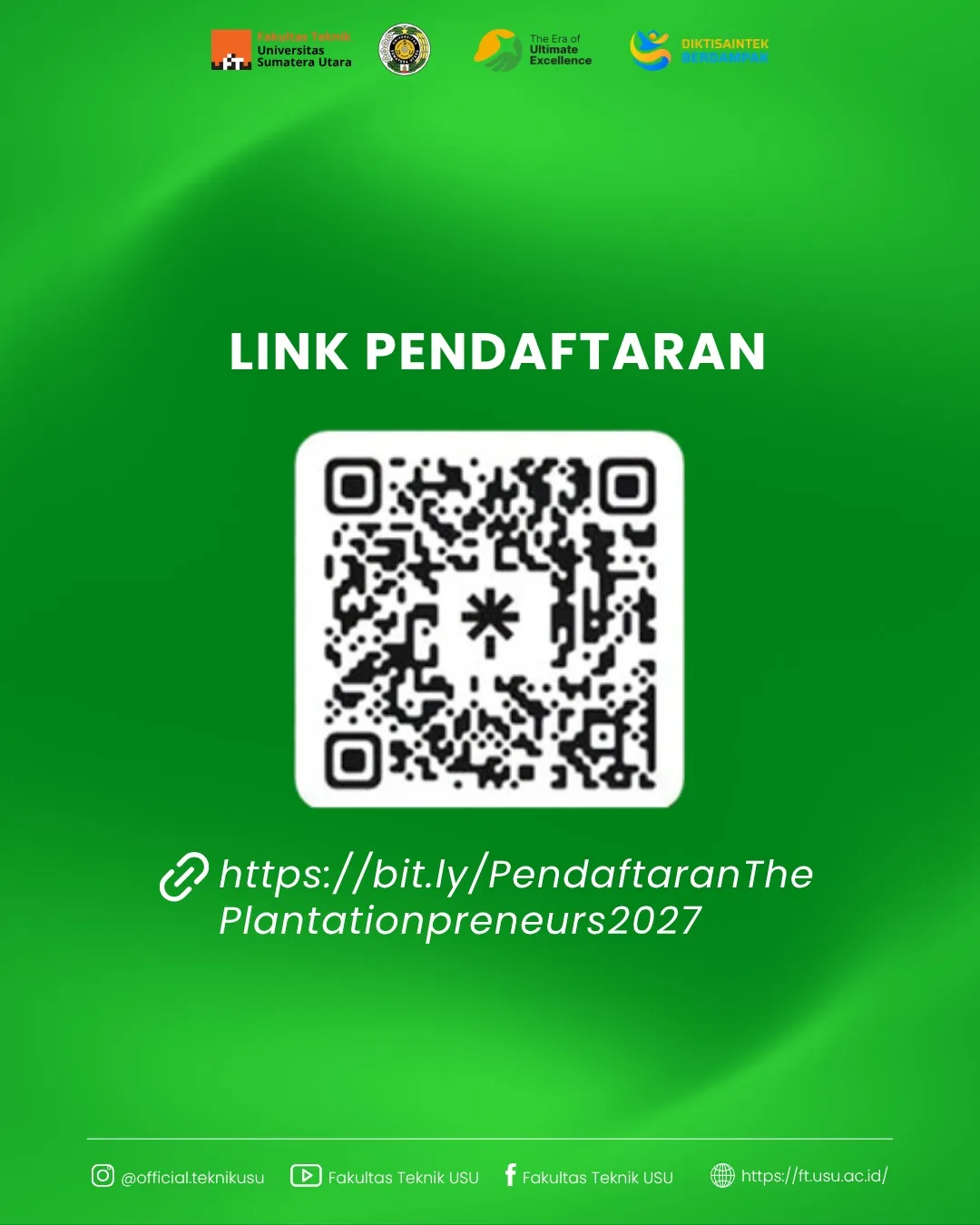
Alongside the registration form, participants must prepare a proposal or work according to the specified format, along with identity documentation (KTP or student ID). The series of events commenced with the opening on October 6, 2026, followed by administrative and proposal submission requirements open until October 25, 2026.
 |
 |
Through this event, FT USU encourages the younger generation to view the plantation sector not merely from a production perspective, but also as an arena for innovation, creativity, and entrepreneurship. This competition is expected to serve as a platform connecting fresh ideas with the development needs of Indonesia's plantation industry.
This initiative primarily aligns with SDG 8 (Decent Work and Economic Growth) through strengthening the entrepreneurial spirit among youth. SDG 9 (Industry, Innovation, and Infrastructure) is relevant through the promotion of plantation commodity-based innovation, while SDG 4 (Quality Education) is reflected in capacity building, creativity enhancement, and experiential learning for participants.