


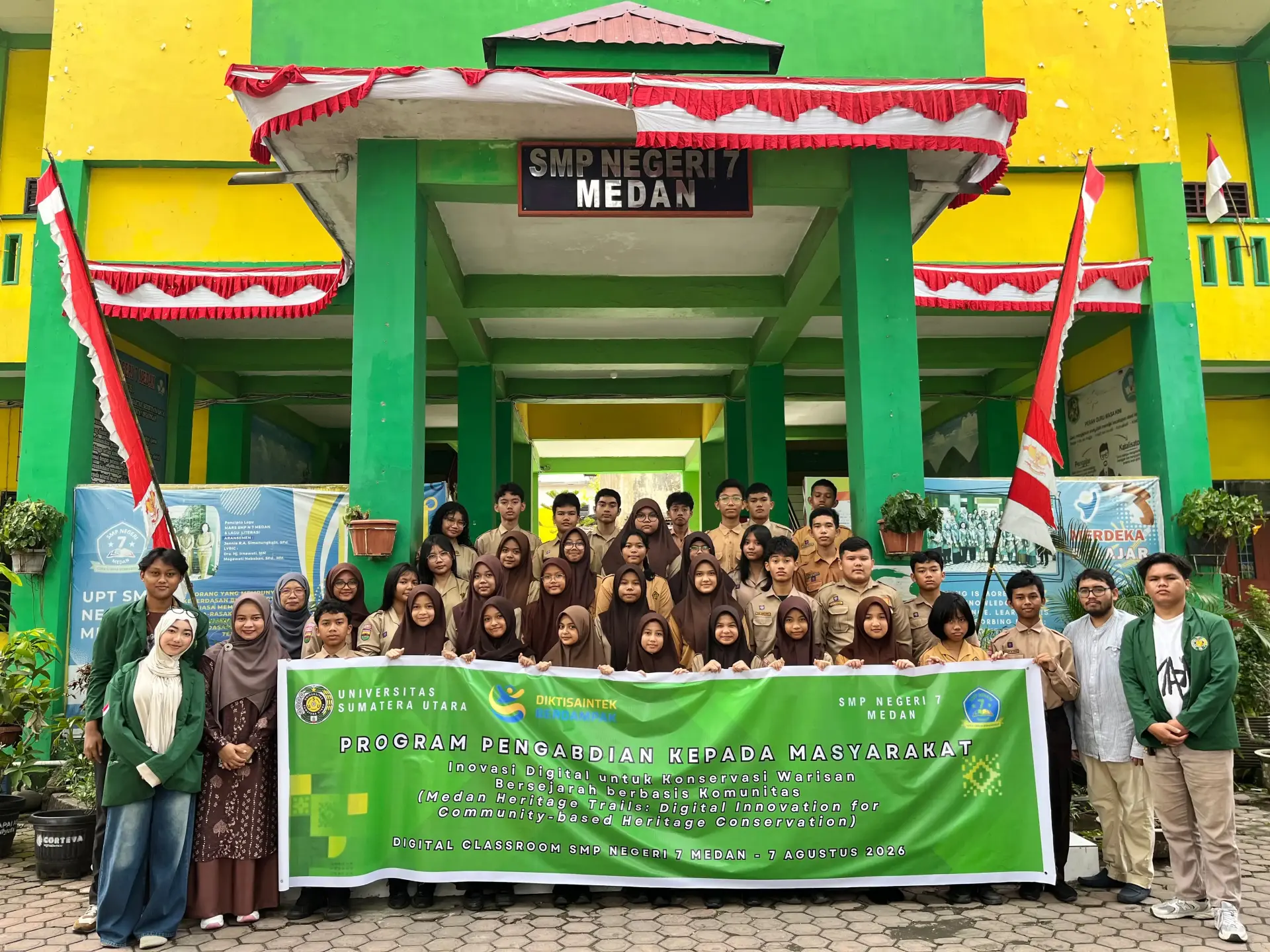
An interdisciplinary community service team from the Faculty of Engineering, Universitas Sumatera Utara (FT USU), in collaboration with the Faculty of Computer Science and Information Technology (Fasilkom-TI) USU, organized an innovative history education program titled “Digital Innovation for Community-Based Heritage Conservation (Medan Heritage Trails)” on Friday, August 7, 2026. The program involved 40 students from SMP Negeri 7 Medan in a hands-on learning experience focused on the city’s history and cultural heritage.
Through a walking trail concept, the students were invited to explore various cultural heritage sites, including traditional Malay stilt houses, historic mosques, and the river area in Silalas. The team also introduced Medan Simpang, a digital platform designed to guide the public in exploring historical sites across Medan while providing information about the identity and development of each area.
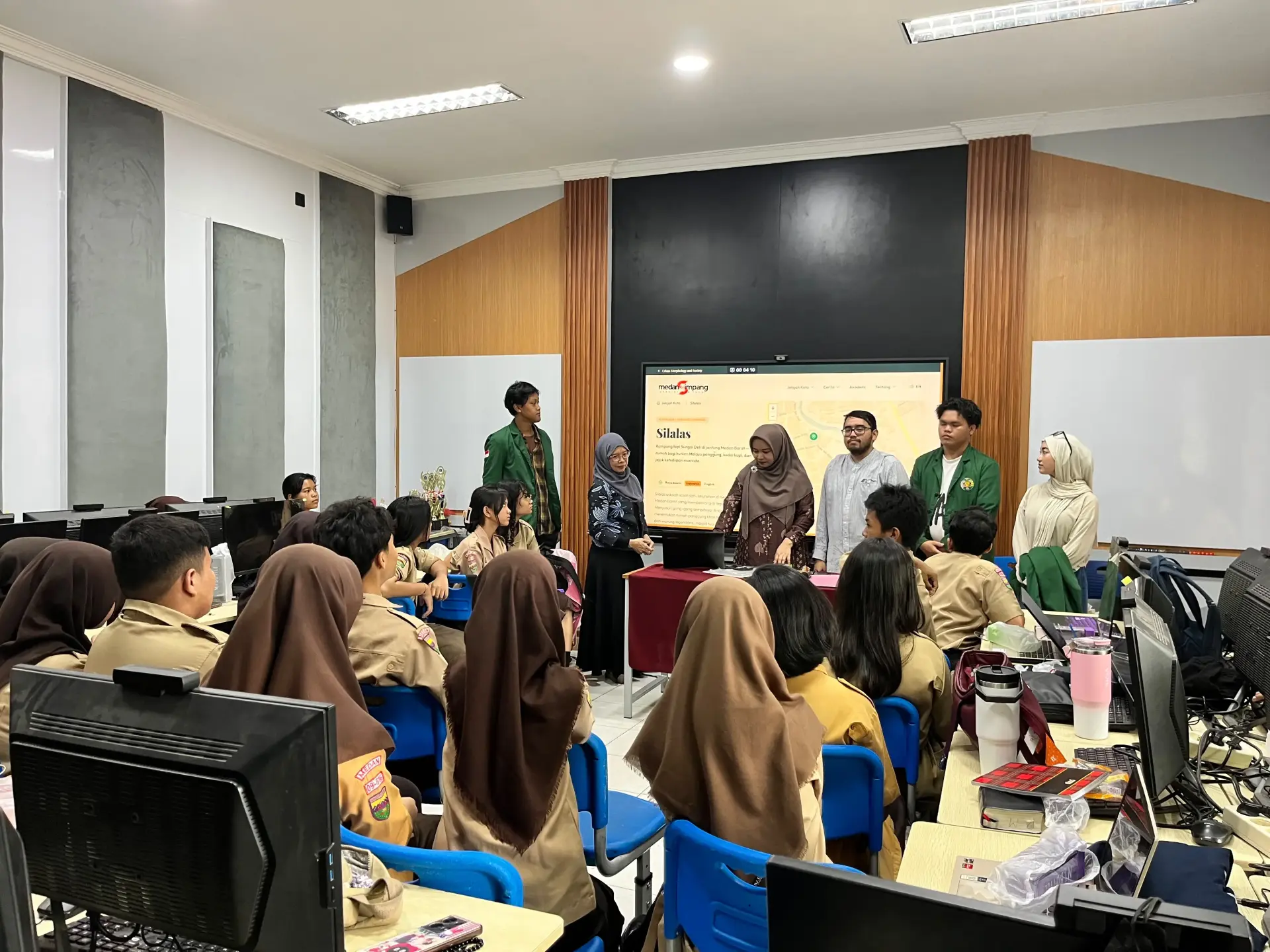
The program was led by Dr. Salmina Wati Ginting, S.T., M.T., from the Architecture Study Program and involved Ryandika Afdila, S.T., M.Eng.Sc., from the Electrical Engineering Study Program, and Nurrahmadayeni, M.Kom., from the Computer Science Study Program, Fasilkom-TI USU. Its development also involved an international partner, Prof. Johannes Widodo from the National University of Singapore (NUS), as part of interdisciplinary collaboration and knowledge transfer.
The activity provided students with an outdoor learning experience while introducing a digital platform as a medium for historical literacy. Nurfuadi Zain, M.Pd., Vice Principal for Curriculum Affairs at SMP Negeri 7 Medan, said, “This program provides a new perspective and broadens students’ understanding that the environment in which they live has significant historical value that needs to be recognized and preserved.” The statement reflects the school’s positive reception of the program, while changes in students’ knowledge and behavior will require further evaluation.
The activity primarily supports SDG 11: Sustainable Cities and Communities through cultural heritage education and the use of digital media to increase awareness of the city’s historical assets. Contextual learning for students also contributes to SDG 4: Quality Education, while collaboration between faculties and international partners supports SDG 17: Partnerships for the Goals.
Through this community service initiative, FT USU reaffirms its commitment to developing public education based on expertise, digital innovation, and collaboration that responds to community needs. The Medan Simpang Heritage Trails initiative is expected to create broader opportunities for younger generations to recognize and contribute to the sustainable preservation of Medan’s cultural heritage.