


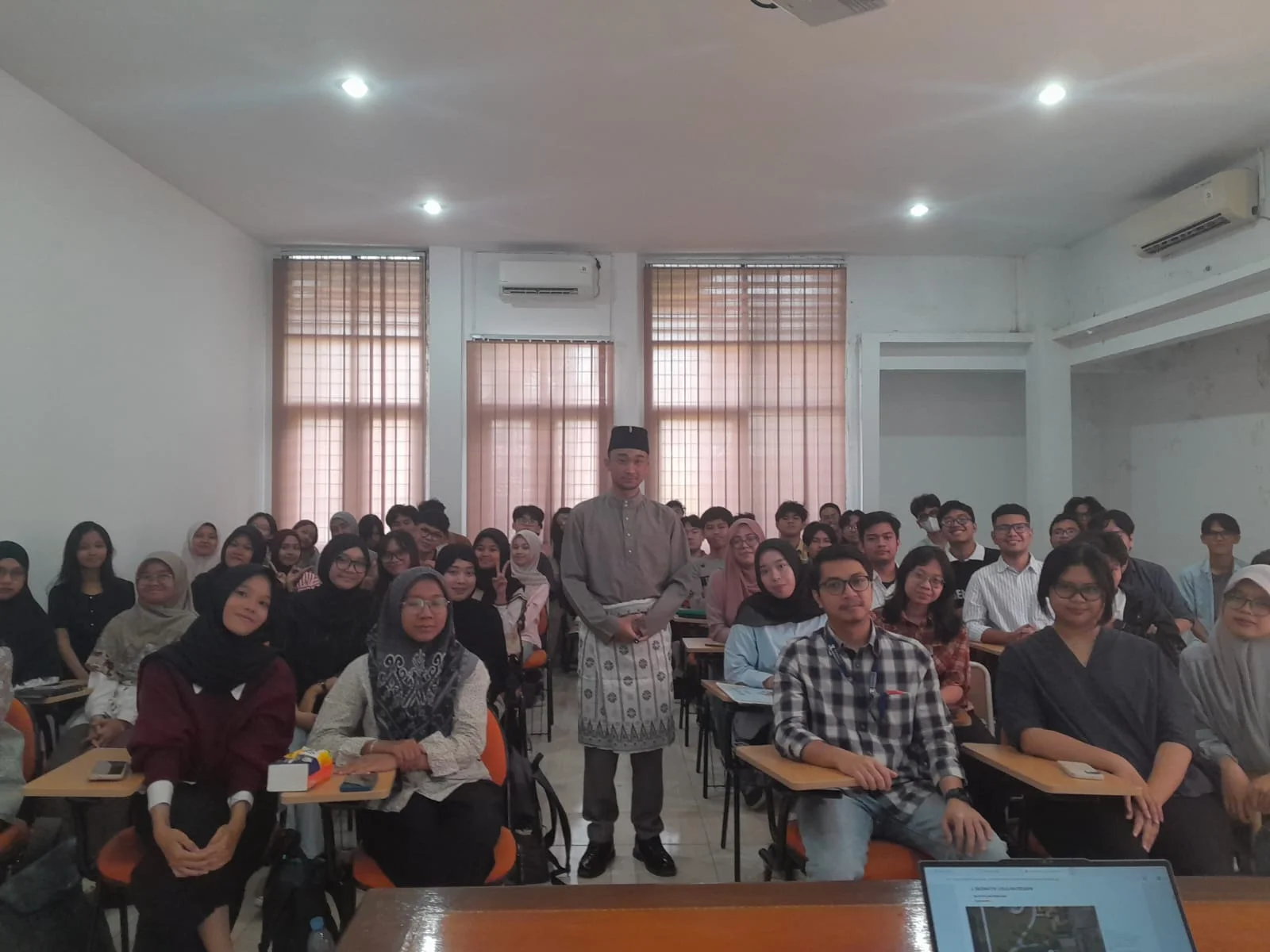
Medan – 3 November 2026, the 14th Sultan of Deli, Sultan Mahmud Aria Lamantjiji Perkasa Alamsyah, attended the Architecture Study Program, Faculty of Engineering, USU, as a guest lecturer. The guest lecture was attended by undergraduate students enrolled in the Architecture and Society course and master's students enrolled in the Vernacular Architecture course, both taught by Dr. Salmina Wati Ginting, S.T., M.T.
Focusing on the topic “Revitalization of Maimun Palace,” the activity provided students with an opportunity to gain firsthand insights into the history, architectural values, and preservation efforts surrounding one of the most important cultural heritage sites in Medan from the perspective of the Deli Sultanate.
In his presentation, the 14th Sultan of Deli recounted the long history of Maimun Palace's construction, from its historical background to the cultural values embodied in it. Construction of the palace began on 26 August 1888 at the initiative of the 9th Sultan of Deli, Sultan Ma'mun Al Rasyid Perkasa Alamsyah, and was completed and officially inaugurated on 18 May 1891. The palace became an important landmark in the development of the Deli Sultanate and a representation of the historical and cultural journey of the Malay people in East Sumatra.
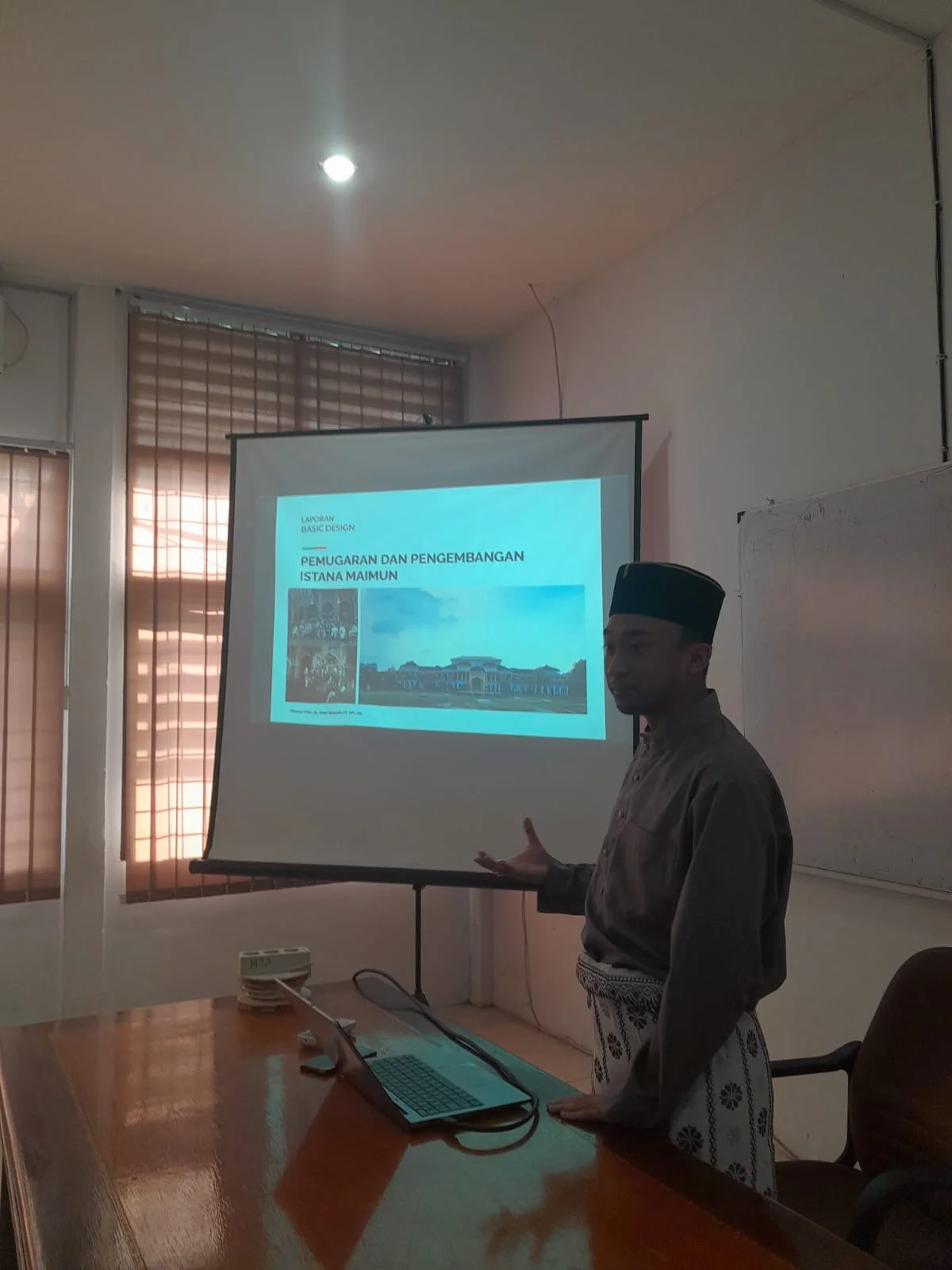
Architecturally, Maimun Palace showcases a blend of various cultural influences, particularly Malay, Islamic, and European. This combination can be seen in its spatial layout, building forms, ornaments, and various architectural elements that define the palace's distinctive character. These elements demonstrate how architecture serves as an expression of cultural interaction, power, and social change during its time.
The Sultan also explained the historical context behind the development of the Deli Sultanate in the 19th century, particularly the relationship between the Deli Sultanate and the Dutch colonial government in the development of tobacco plantations. During the reign of the 8th Sultan of Deli, Sultan Mahmud Al Rasyid Perkasa Alamsyah (1858–1873), cooperation with the colonial authorities was initiated to establish tobacco plantations in the Deli region. The subsequent development of the tobacco industry, which became widely known in international markets, brought significant changes to the economic and political conditions and the regional landscape of East Sumatra.
This transformation continued during the reign of the 9th Sultan of Deli, Sultan Ma'mun Al Rasyid Perkasa Alamsyah. The growth of the plantation economy was also part of the context behind the relocation of the Sultanate's administrative center from Labuhan Deli to Medan and the construction of Maimun Palace. Thus, the history of the palace cannot be separated from the social, economic, and political dynamics that also shaped the development of Medan.
Today, Maimun Palace is undergoing revitalization with funding support from the Ministry of Culture of the Republic of Indonesia. This revitalization effort represents an important step in safeguarding the continuity of cultural heritage, not only through maintaining the building's physical condition but also through preserving its historical values, architectural character, and cultural identity.
Through this guest lecture, students were encouraged to understand that the revitalization of historic buildings is not merely a matter of physical repairs or restoring their aesthetic appearance. More importantly, revitalization is a process of maintaining the connection between architectural heritage, history, cultural identity, and the communities that inherit it. This perspective is essential in architectural education, particularly in understanding vernacular buildings and the reciprocal relationship between architecture and society.
The participation of the 14th Sultan of Deli in this academic activity also strengthened the dialogue between the Sultanate and the academic community. The historical knowledge shared directly by the heir to the Sultanate aligns with SDG 4 and SDG 11, providing students with a different learning dimension. They not only studied architectural heritage through literature and documentation but also gained perspectives from a figure with historical and cultural ties to the heritage itself.
The USU Undergraduate and Master's Architecture Study Programs hope that this activity will broaden students' knowledge of local history and architecture, increase appreciation for the cultural heritage of North Sumatra, and encourage younger generations to participate in preserving and developing architectural heritage for the future.