


.webp)
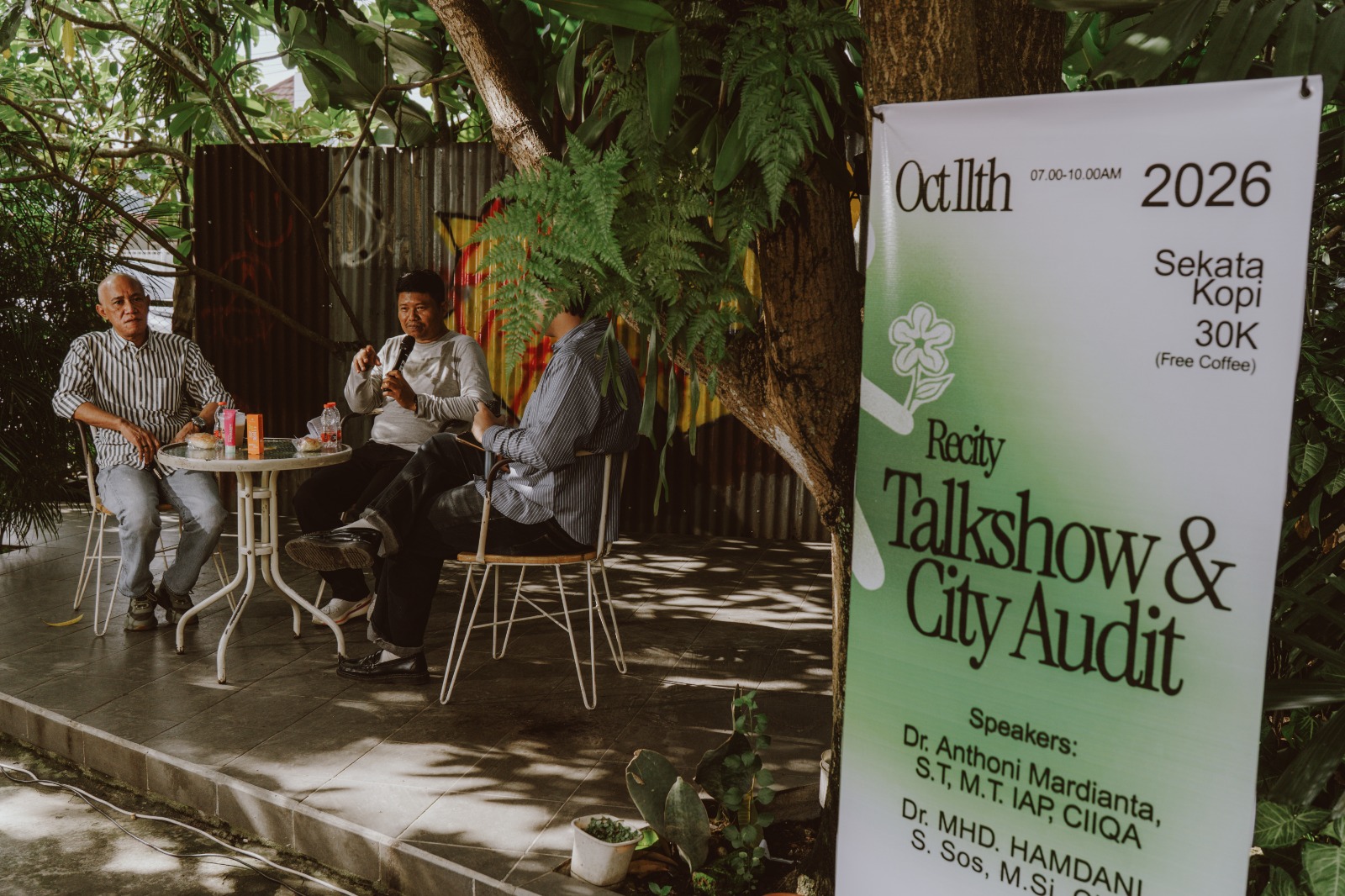
MEDAN – Academician and Urban and Regional Planning (PWK) expert from the Faculty of Engineering – USU, Dr. Anthoni Veery Mardianta, S.T., M.T., IAP., CIIQA, called for the need to overhaul the paradigm of pedestrian infrastructure development in Medan City to transform from a motor vehicle orientation (car-centric) toward a human-oriented city (people-oriented). This comprehensive view was presented by Dr. Anthoni while attending as the main keynote speaker at the Talkshow and Walk Audit event themed "Make Sidewalks Make Sense in Medan" at Sekata Kopi, Medan, on Sunday (11/10/2026).
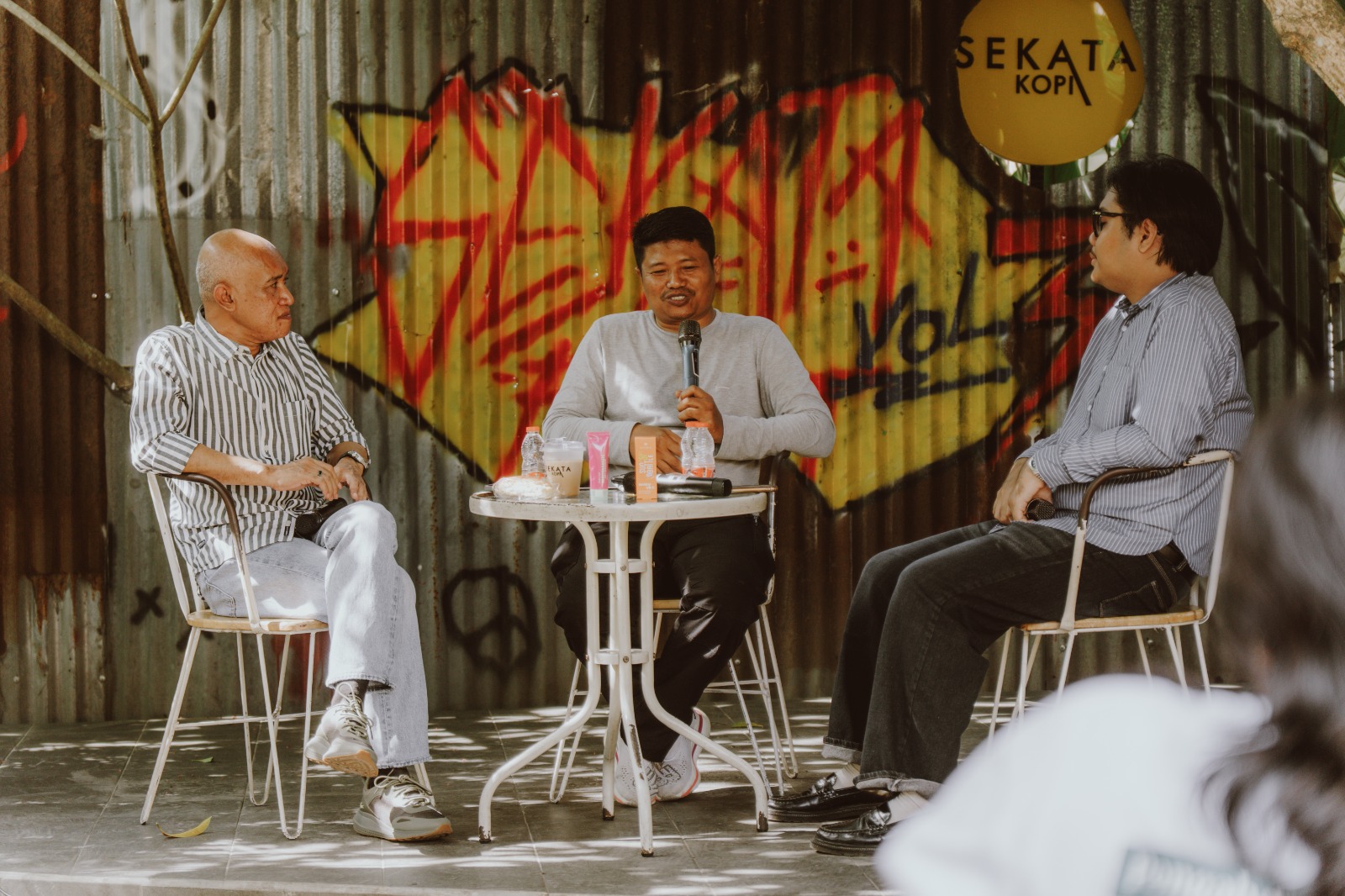
Dr. Anthoni's presence in the forum initiated by the ReCity community — a group of students from the Undergraduate Program in Communication Science, Faculty of Social and Political Sciences USU chaired by Daffa Alfathan Haris alongside co-speaker Dr. Mhd. Hamdani, S.Sos., M.Si., CHE — aimed to bridge the scientific theory of urban planning, technical regulations, and the empirical reality faced by residents. As a town planner, Dr. Anthoni unpacked common misconceptions that have so far placed sidewalks merely as "leftover space" or simple cement paving projects. According to Dr. Anthoni, urban roads must be designed fairly through the concept of Complete Streets to protect vulnerable road users (Vulnerable Road Users) such as the elderly, children, and people with disabilities from the risk of physical impact with high-speed vehicles. He emphasized that sidewalks are the most democratic public spaces that level all social classes while serving as the backbone of low-carbon development and urban resilience. "A sensible sidewalk is a reflection of a civilized and inclusive city. When a sidewalk can be navigated safely by children, the elderly, and wheelchair users independently, then all residents of Medan City will feel the benefits of a healthy, humane, and sustainable city," emphasized Dr. Anthoni.
In his presentation, Dr. Anthoni also presented empirical data that the implementation of the Road Diet strategy — reducing the width or number of motor vehicle lanes to widen pedestrian paths and green buffers — has been proven to increase the walkability index by up to 38.98 percent and boost public transportation usage by up to 15.41 percent in Indonesia's main corridors. In addition to boosting active mobility, proper pedestrian infrastructure also acts as a local economic generator that increases commercial property values and cuts household transportation costs. From the perspective of governance and regulation, Dr. Anthoni explained that fulfilling pedestrian rights in Medan City actually already has a very strong legal umbrella. Apart from being guaranteed by Article 131 of Law Number 22 of 2009 concerning Road Traffic and Transportation, the Medan City Government already has Regional Regulation Number 1 of 2022 concerning the Spatial Plan (RTRW) of Medan City 2022–2042 which establishes 21 priority corridors for the pedestrian network, as well as Medan Mayor Regulation Number 46 of 2024 concerning the Detailed Spatial Plan (RDTR) of Medan City 2024–2044 which regulates zoning standards, minimum pedestrian terrace building setback lines (GSB) of 6 to 10 meters, to bonus zoning compensation schemes for developers to build transit-integrated sidewalks.
Nevertheless, Dr. Anthoni highlighted that the execution of sidewalk arrangements on the ground is often hindered by two structural issues at the bureaucratic and social levels:
Utility Overlap (Silo Mentality): Lack of integrated spatial coordination among agencies such as the Public Works Agency, Parks Agency, PLN, and Telkom causes the placement of drainage, optical cables, water pipes, and electricity poles above and below sidewalks to often run separately and damage pedestrian clear space.
Socio-Economic Dimensions of the Informal Sector: Control of Street Vendors (PKL) through eviction without mature relocation is considered not a sustainable solution, so urban planning must be able to integrate informal economic spaces without taking away pedestrian rights. To ensure the community movement does not stop as complaints on social media, Dr. Anthoni equipped participants with a citizen science-based field audit methodology referring to six pedestrian needs hierarchies from the Institute for Transportation and Development Policy (ITDP) — namely passable, accessible, safe, convenient, comfortable, and enjoyable. Through the "Five Indicators of Ideal Sidewalks" instrument and the Pedestrian Environment Review System (PERS) guide, participants were directed to measure technical data in the field, ranging from crossing connectivity, minimum clear width of 1.22 to 1.50 meters according to Ministry of PUPR standards, maximum curb ramp slope of 8.33 percent (1:12), continuity of tactile guiding blocks for persons with disabilities, availability of shade trees and bollards, to mapping illegal parking occupancy points. On that occasion, Dr. Anthoni provided four main policy recommendations that need to be followed up:
Spatial Utility Planning Integration (Short-Term): Form an integrated spatial planning coordination forum (One Spatial Map) across agencies so that physical sidewalk work, underground utilities, and pole placements are carried out synchronously.
Implementation of Universal Accessibility Audits (Short-Medium Term): Mandate standardization by involving stakeholders from the Detailed Engineering Design (DED) drafting stage to prevent misinstallation of guiding blocks and the absence of ramps.
Priority for Transit-Oriented Development / TOD Areas (Medium Term): Focus on improving sidewalk connectivity within a 500-meter radius of major BRT Trans Metro Deli stops and Medan Railway Station to support mobility integration in the Mebidangro region.
PKL Conflict and Illegal Parking Management (Long-Term): Enforce strict spatial zoning or time-sharing schemes for PKL usage, accompanied by physical bollard installation to prevent motor vehicles from occupying sidewalks.