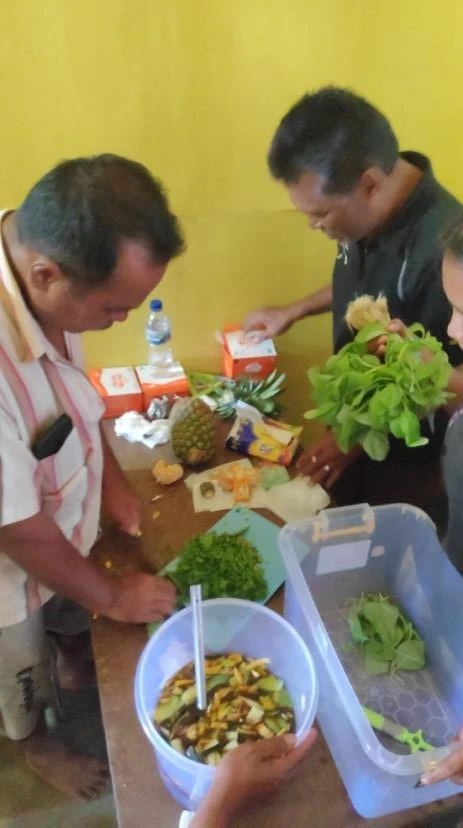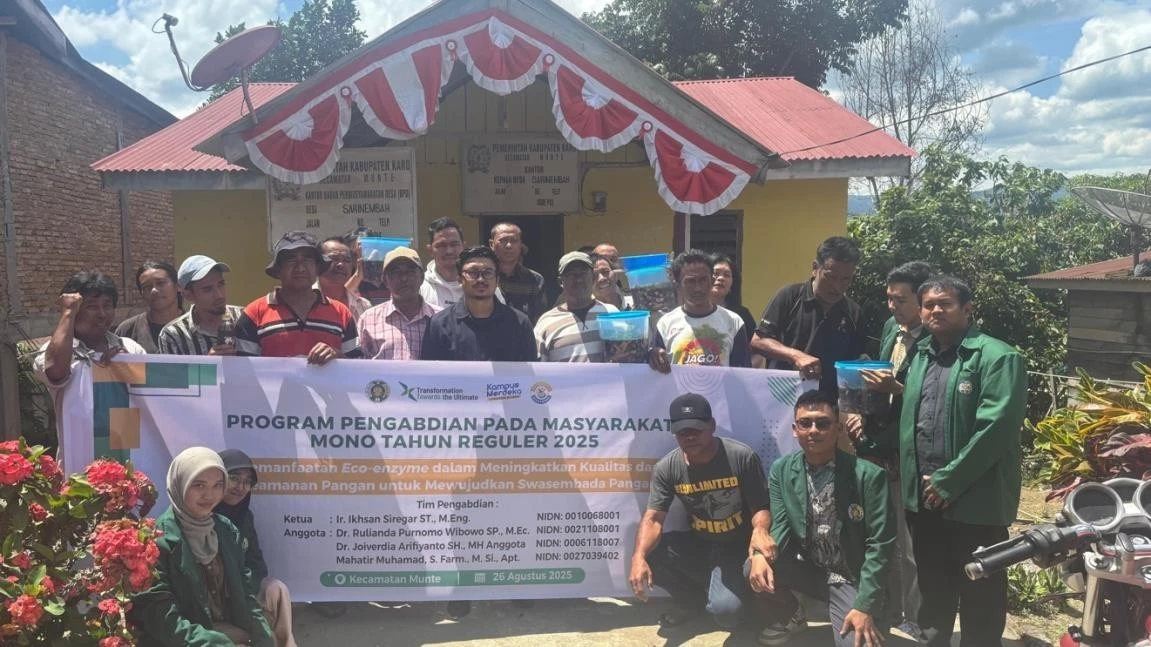
The Community Service Program (PkM) was conducted by Ir. Ikhsan Siregar, S.T., M.Eng., Dr. Rulianda Purnomo Wibowo, S.P., M.Ec., Dr. Joiverdia Arifiyanto, S.H., M.H., and Mahatir Muhamad, S.Farm., M.Si., Apt., under the theme “Utilization of Eco-Enzyme to Improve Food Quality and Safety toward Achieving Food Self-Sufficiency”, held in Munte District, Karo Regency.
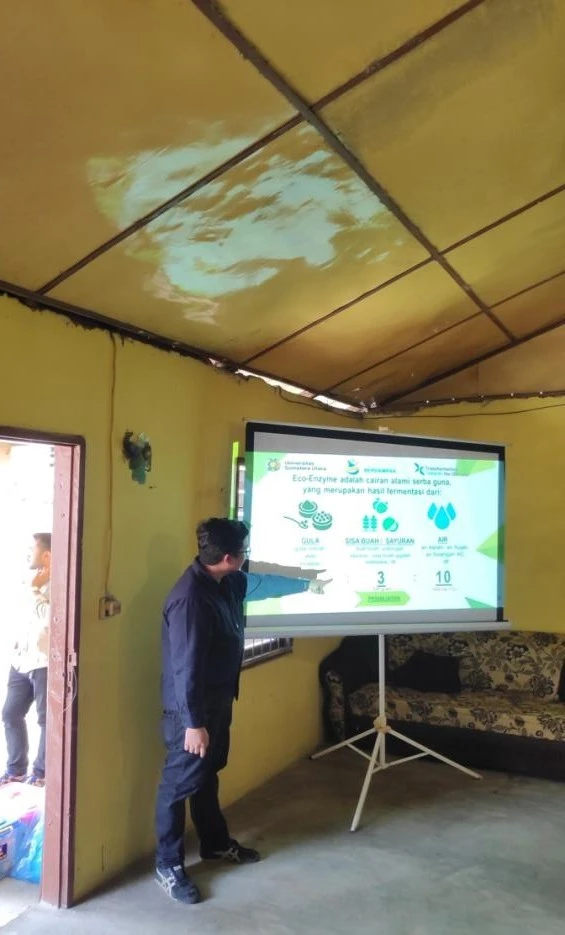
In Munte, most residents rely on agriculture and food production as their main livelihood. However, the widespread use of synthetic chemicals in farming poses long-term risks to soil quality and food safety.
The program offered comprehensive solutions addressing agricultural, environmental, and downstream product development aspects, including:
Education and training on the use of eco-enzyme in agriculture
Application of eco-enzyme to enhance food safety
Product downstream training based on eco-enzyme utilization
Education on product legality and standardization
Organic waste management for eco-enzyme production
Empowerment and marketing of eco-enzyme-based products
Eco-enzyme, produced through the fermentation of organic waste, can serve as a natural fertilizer and organic pesticide. Its application in agriculture helps improve crop yields without relying on synthetic chemicals, maintaining soil fertility and preventing pollution. Furthermore, eco-enzyme reduces production costs as it uses inexpensive, easily obtainable materials.
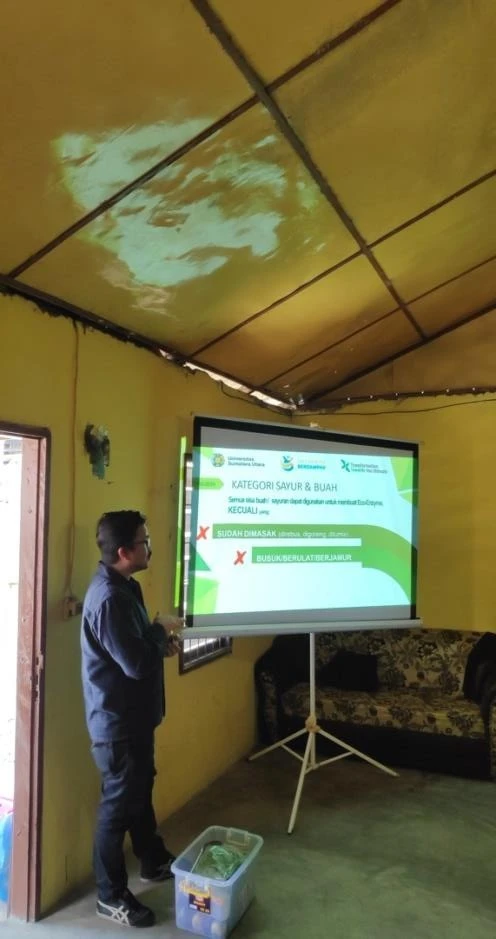
The program was implemented through socialization sessions, hands-on workshops on eco-enzyme production, and field trials in agricultural and food processing applications. The resulting eco-enzyme products can be used as liquid organic fertilizers or natural cleaning agents, reducing dependence on chemical-based products and promoting environmentally friendly waste management practices.
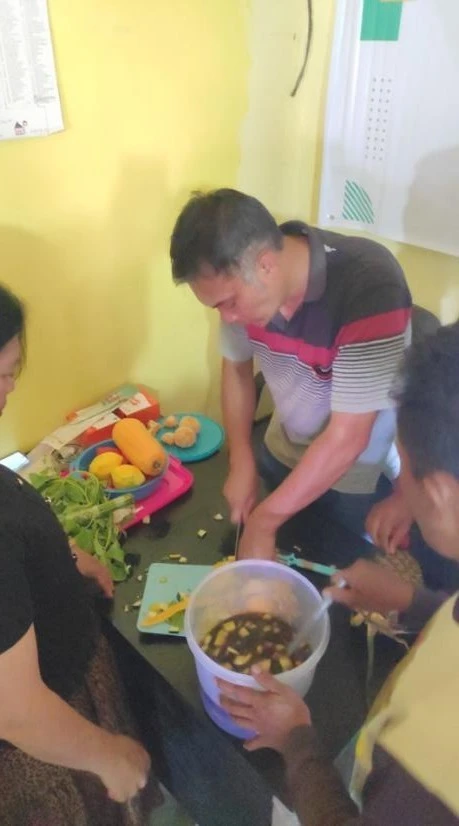
Beyond its practical benefits, the program fosters community awareness about the productive use of organic waste. Through this initiative, residents of Munte District are expected to become more self-reliant in producing healthy and high-quality food while preserving environmental sustainability. Broad adoption of eco-enzyme practices could bring long-term positive impacts on food security, public health, and ecosystem balance—realizing harmony between agricultural productivity and natural resource sustainability.