


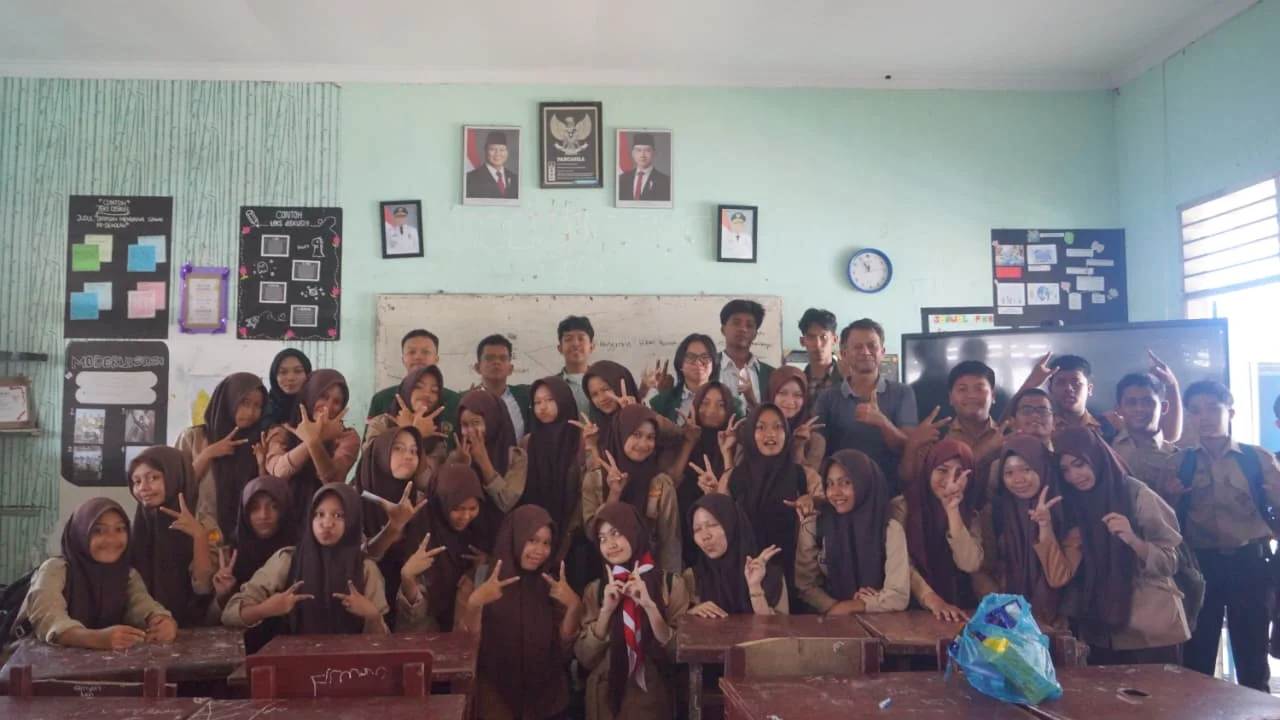
DELI SERDANG – In an effort to enhance the younger generation's understanding of developments in information technology, lecturers and students from the Mining Engineering Study Program at the Faculty of Engineering, University of North Sumatra (Universitas Sumatera Utara), conducted a Community Service (Pengabdian kepada Masyarakat/PkM) initiative at SMP Negeri 4 Pantai Labu, located in Pantai Labu District, Deli Serdang Regency, North Sumatra, on October 31, 2026.
The initiative, themed "Digital Literacy for Students," was aimed at the students of SMP Negeri 4 Satu Atap Pantai Labu in Pantai Labu District, Deli Serdang Regency. This educational program seeks to equip students with the knowledge and skills to utilize digital technology in a manner that is intelligent, critical, safe, and responsible.


The activity featured Edi Yasa Ardiansyah, who served as both a lecturer and presenter, supported by a team of Mining Engineering students: Nadin Natalia Br S Kembaren, Ahmad Daudi, Brandon Timothea Boston Siahaan, Riski Suci Khoiriyah Pulungan, Raihan Aulia Rasyid, Raisan Habib Nasution, and Fahri Fitra Wahyudi.
In his presentation, Edi Yasa Ardiansyah explained that digital literacy is a crucial skill for the younger generation, especially given the rapid advancement of information technology. He emphasized that students must go beyond simply knowing how to use digital devices or access the internet; they must also be able to understand, evaluate, and utilize information appropriately.
The educational content covered the fundamentals of digital literacy, the use of the internet for learning, the ability to distinguish between accurate and inaccurate information, the identification of fake news (hoaxes), personal data security, and the ethics of digital communication.
Students were also introduced to the various challenges that can arise from the improper use of digital technology, such as cyberbullying, the misuse of information, digital fraud, internet addiction, and the dissemination of negative content.
During the session, the presenter stressed that digital technology should be leveraged as a tool to enhance knowledge, creativity, and academic achievement. Students were encouraged to develop the habit of verifying information before believing or sharing it, and to safeguard their personal identities and data while online.
The material was delivered through an educational and interactive approach, allowing students to grasp digital literacy concepts using examples relevant to their daily lives. The session also provided an opportunity for students to ask questions and discuss various issues they have encountered while using the internet and social media.
The involvement of the Mining Engineering students in this initiative represents their active participation in the *Tri Dharma Perguruan Tinggi* (the Three Pillars of Higher Education)—specifically in the area of community service. Through these activities, students not only gain experience interacting with an educational environment but also develop skills in communication, collaboration, and social awareness.
Contributing to the Achievement of the Sustainable Development Goals (SDGs)
This community service initiative supports the achievement of the Sustainable Development Goals (SDGs), particularly SDG 4: Quality Education. By providing education on digital literacy, the program contributes to enhancing students' digital knowledge and skills, fostering the development of the younger generation's competencies.
Furthermore, the initiative aligns with SDG 16—Peace, Justice, and Strong Institutions—by promoting digital ethics, awareness of information security, and the prevention of cyberbullying. The collaboration among lecturers, university students, and the school also reflects the spirit of SDG 17: Partnerships for the Goals.
Through this program, lecturers and students from the Mining Engineering department hope that the students at SMP Negeri 4 Pantai Labu will grow into a generation that is not only capable of keeping pace with technological advancements but also possesses critical thinking skills, a sense of responsibility, and ethical awareness when engaging with digital information.
This community service project serves as a tangible contribution from higher education toward improving the quality of human resources, starting from the school-age level. Moving forward, it is hoped that similar educational initiatives will continue to be developed as part of an effort to build a generation that is intelligent, adaptive, and prepared to face the challenges of digital transformation.