


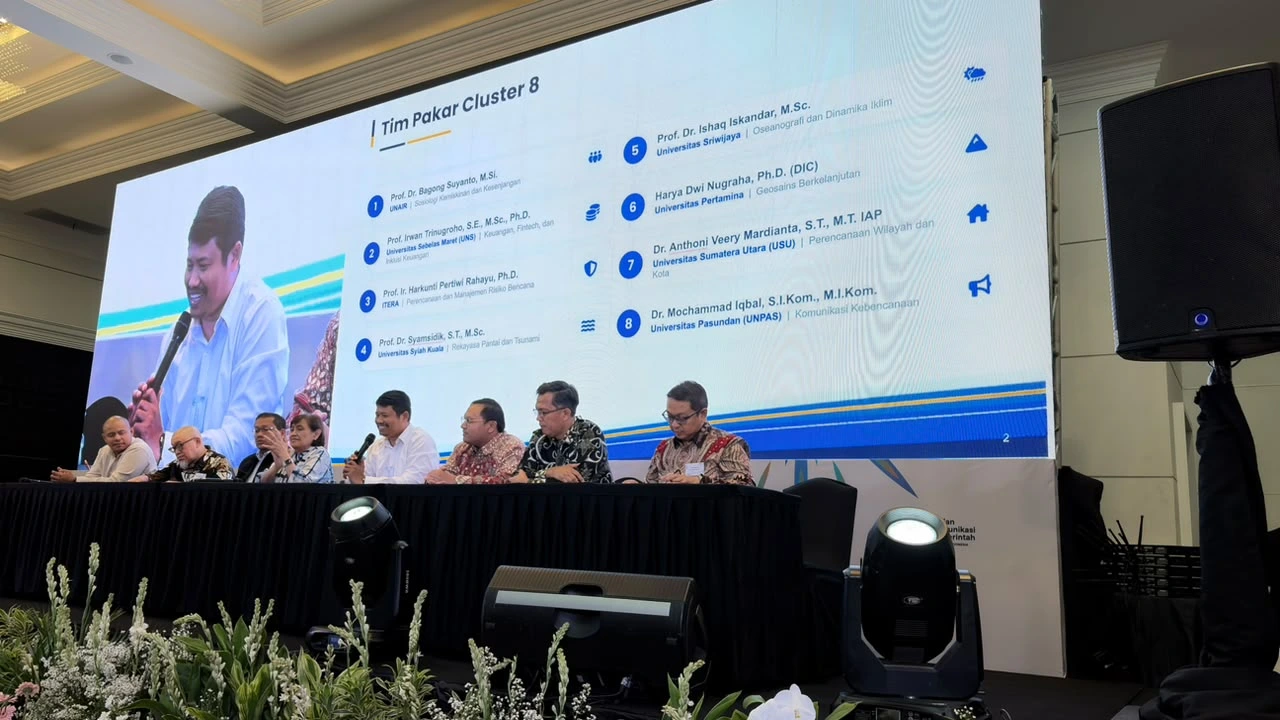
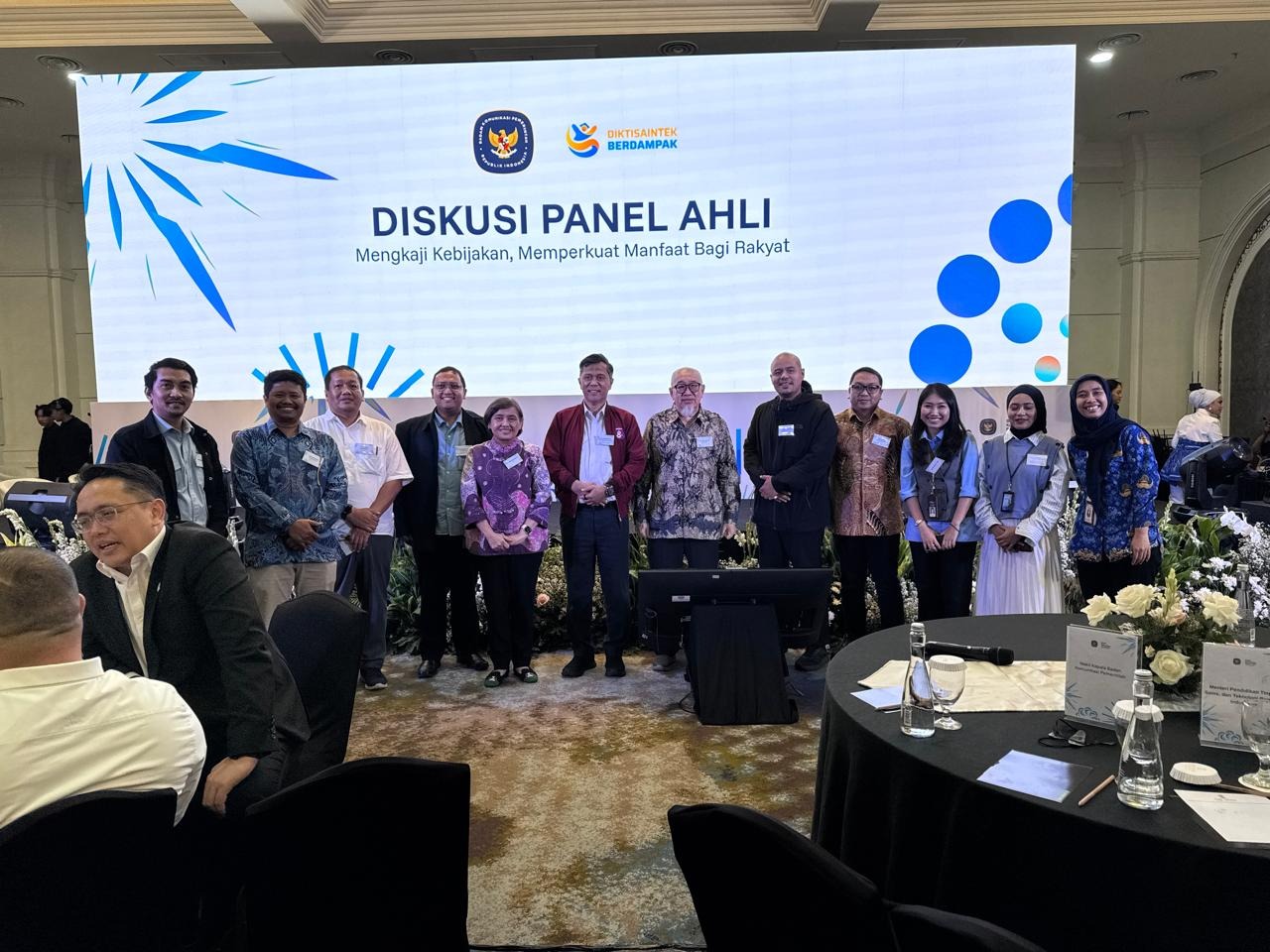
Universitas Sumatera Utara (USU) is once again playing a strategic role at the national level through the participation of Dr. Anthoni Veery Mardianta, S.T., M.T., IAP, an academic from the Urban and Regional Planning Study Program, in the Expert Panel Discussion (DPA) organized by the Ministry of Higher Education, Science, and Technology. The forum, themed "Understanding Policies, Strengthening Benefits for the People," took place on 28–29 October 2026 at Tavia Heritage Hotel, Jakarta. The participation of experts from various disciplines aimed to evaluate the achievements of government policies, identify challenges, and formulate recommendations for improvement to ensure that national priority programs deliver tangible benefits to all segments of society.
Dr. Anthoni Veery Mardianta was part of the Cluster 8 Expert Team, which specifically discussed the theme "Poverty Alleviation: From Social Protection to Impactful Social Mobility." The team brought together multidisciplinary experts from various leading universities, including specialists in the sociology of poverty, financial inclusion, regional planning, natural resource management, and disaster management.
Based on the Expert Team's assessment, poverty in Indonesia has structural roots that are far broader and more complex than merely the consequences of a crisis or disaster. In rural areas, community vulnerability begins with a lack of knowledge that limits access to proper education. Rural communities are also often trapped in a weak bargaining position due to limited economic access, with most people working only as laborers rather than owning assets or land. This situation often drives people to seek quick ways to obtain funds and is further compounded by limited access to healthcare facilities. Meanwhile, in urban areas, poverty is driven by extremely high population density, declining environmental carrying capacity, and weakening social institutions that tend to become increasingly self-centered. Although rural communities possess strong social capital and local wisdom, while urban communities have better access to infrastructure, all these capacities and economic advances remain vulnerable to destruction or being set back to zero when communities face extreme shocks, one of which is a disaster. In this context, disasters or crises are merely one unpredictable factor that can instantly undermine a family's economic resilience, adding to the existing structural burdens.
To address this complexity, the Expert Team encourages the government to change its approach to setting priorities, allocating budgets, and evaluating development performance based on one key question: "How many families have experienced sustainable improvements in well-being, obtained employment or productive business opportunities, become capable of facing shocks, and secured a better future for their children?" Poverty alleviation must not stop at providing social assistance alone. A comprehensive roadmap is needed, supported by valid data and coordination across ministries and regional governments. Social protection serves as a short-term purchasing power buffer to prevent people from falling further into poverty. However, these interventions must be followed by economic empowerment that helps people become self-reliant, as well as the provision of productive employment opportunities that enable them to progress. The ultimate goal is social mobility, through which progress and prosperity can be passed on as genuine opportunities rather than mere good fortune.
The Expert Team also highlighted the importance of economic justice in natural resource-producing regions. These regions must not be positioned merely as production sites, investment areas, and drivers of macroeconomic growth. Their wealth must be translated into improved skills for residents, the creation of quality employment opportunities, and the growth of community businesses. Communities must not be treated merely as recipients of corporate social responsibility (CSR) funds. Food Self-Sufficient Village Areas (KDMP) are encouraged to function as centers for local capacity development and business incubation, providing training for local suppliers and building productive assets. In this way, natural resource management—including the energy self-sufficiency agenda—can generate social mobility dividends for residents.
For communities that depend heavily on daily income, the state must provide an economic safety net that can respond quickly when extreme conditions occur. If a crisis disrupts livelihoods, the primary intervention must focus on restoring people's livelihoods first (livelihood first), followed by infrastructure and housing improvements. The recommended rapid-response measures include distributing Direct Cash Assistance (BLT) through instant verification, activating cash-for-work programs, providing working capital incentives or production machinery to reactivate agricultural land and fishponds, and ensuring access to BPJS Health services and continued education without bureaucratic complications during a crisis.
Overall, the discussion led by the Cluster 8 Expert Team emphasized that poverty alleviation is not merely about reducing the statistical number of people living in poverty. It is about ensuring that every vulnerable family has the opportunity to achieve greater prosperity, become resilient to various forms of crises and shocks, and secure a better future for the next generation.