


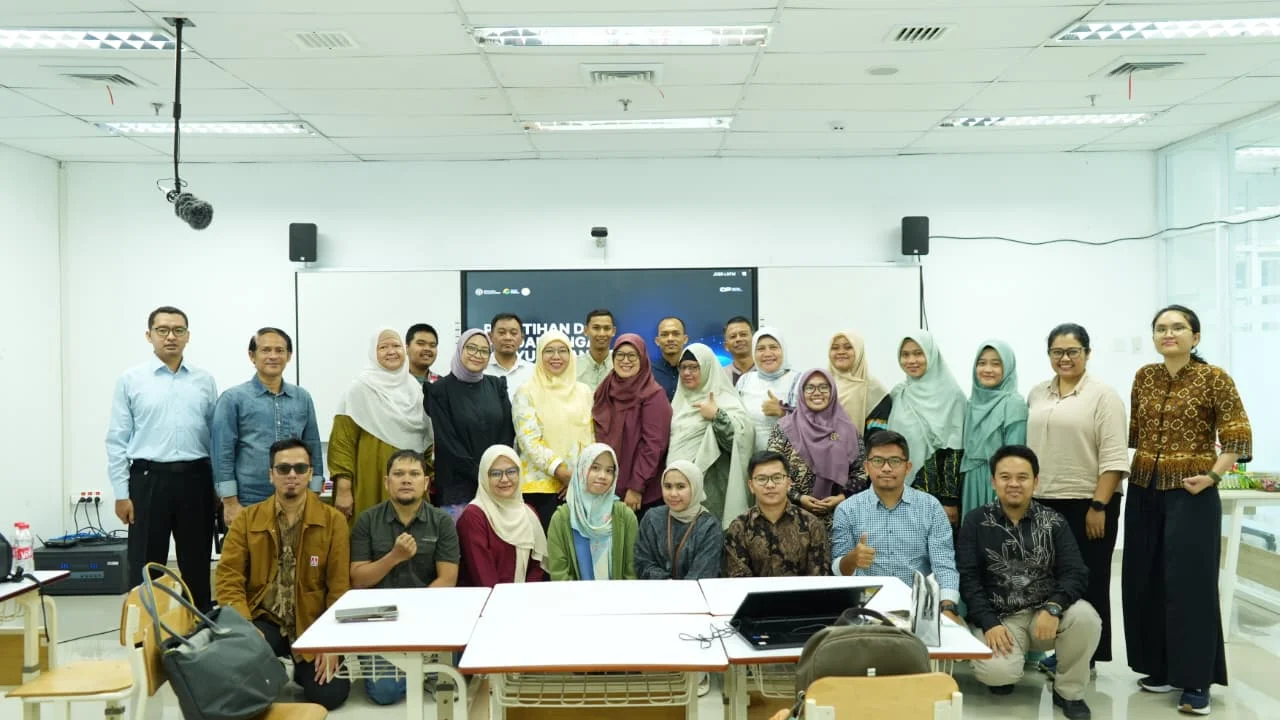
MEDAN, USU | Edi Yasa Ardiansyah, a lecturer in the Mining Engineering Study Program, Faculty of Engineering, Universitas Sumatera Utara (USU), participated in the USU Massive Open Online Courses (MOOC) Development Training and Mentoring Program, Batch 1 of 2026, held on September 9–11, 2026. Organized by the Directorate of Digital Learning at Universitas Sumatera Utara (DitDP USU), the program took place in the Smart Classroom on the fourth floor of the DLCB Building as part of the university’s efforts to strengthen digital transformation in higher education.
The program was officially opened by the Director of the Directorate of Digital Learning at USU, Dr. Ir. Tigor Hamonangan Nasution, S.T., M.T., IPM. It aims to enhance the capacity of lecturers and study programs to develop structured, interactive, and flexibly accessible digital learning materials through the USU MOOC platform .

Through its Open Learning and OpenCourseWare initiatives, DitDP USU promotes the development of open online courses and digital learning content to address the evolving needs of higher education in the digital era. This training and mentoring program represents a strategic effort to expand the use of technology in teaching and learning while strengthening the digital education ecosystem at USU.
The program is being implemented in several batches, involving lecturer representatives from faculties and study programs across the university. This approach is expected to broaden academic participation in digital learning development and strengthen lecturers’ capacity to design learning experiences that meet students’ needs.
During the training, participants explored the fundamental concepts of MOOCs, the design of online courses, and the development of learning modules and educational content. The training also covered the preparation of interactive learning materials, the design of learning assessment systems, and the use of technology and artificial intelligence (AI) to support flexible learning.
These competencies provide lecturers with a foundation for developing learning experiences that go beyond content delivery by encouraging student engagement, independent learning, and structured assessment of learning outcomes. In the context of the Mining Engineering Study Program, MOOCs offer opportunities to present technical materials through a combination of text, videos, illustrations, simulations, and online assessments.
Supporting the Achievement of the Sustainable Development Goals (SDGs)
The development of digital learning through USU MOOCs is aligned with the United Nations Sustainable Development Goals (SDGs). This initiative is particularly relevant to SDG 4: Quality Education, which emphasizes inclusive and equitable quality education and lifelong learning opportunities for all.
By providing digital learning content, MOOCs have the potential to broaden access to educational resources and give students greater flexibility in studying materials according to their individual needs. This initiative also aligns with SDG 9: Industry, Innovation and Infrastructure, through the use of digital technology and AI to encourage innovation in teaching methods and the development of technology-based educational infrastructure.
Furthermore, the program is relevant to SDG 10: Reduced Inequalities, particularly through its potential to expand access to learning materials for students with diverse circumstances and learning needs. However, this contribution depends on the availability of digital infrastructure, internet access, and inclusive learning design.
Edi Yasa Ardiansyah’s participation in this program represents part of the ongoing professional development of lecturers in support of technology-based educational innovation. The development of MOOCs is expected to enrich teaching methods in the Mining Engineering Study Program while contributing to improvements in the quality of educational services at USU.
Through this training and mentoring initiative, USU continues to foster an innovative, adaptive, and collaborative academic environment. Digital learning development is not only an integral part of the technological transformation of higher education but also creates opportunities to broaden access to knowledge and support the achievement of sustainable development goals through quality education.