


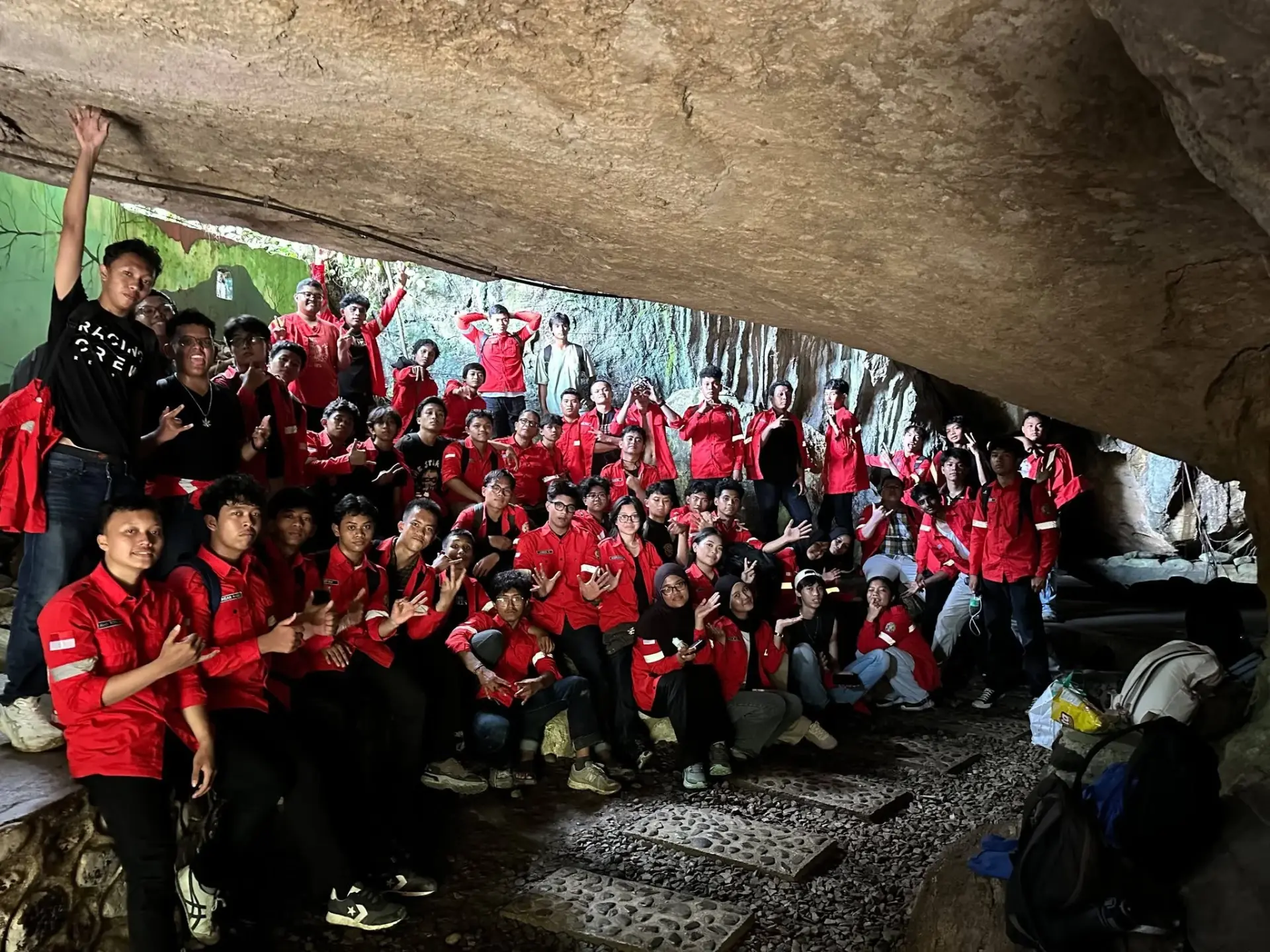
BAHOROK, LANGKAT | Students from the Mining Engineering Study Program at the University of North Sumatra (USU) conducted a physical geology field trip in the Bahorok area, Langkat Regency, North Sumatra. This field activity is an integral part of their academic curriculum, designed to strengthen students' understanding of rock formation processes particularly limestone as well as geological structures and the complex geological history that has shaped the North Sumatra region.
The activity was supervised by lecturer Ir. Gustam Lubis, S.T., M.T., who provided on-site explanations regarding the geological conditions and phenomena observed. Through this experience, students moved beyond classroom theory, engaging directly with geological materials by observing and identifying them in the field.
At one of the observation sites in the village of Batu Katak, Bahorok, students had the opportunity to examine and handle rock samples from the Bahorok and Batumilmil Formations. These formations are linked to the regional geological history of Sumatra, including developments during the Early Permian period and various other geological dynamics evident along the Wampu River.
Studying these rock formations provides students with essential insights into rock characteristics, sedimentation processes, shifts in geological environments, and the tectonic dynamics that have shaped the Sumatra region. This area is also crucial for understanding the regional geological framework, specifically concerning the evolution of the Sibumasu block and its historical connection to the Gondwana supercontinent.
Bridging classroom theory with real-world geological phenomena
Lecturer Ir. Gustam Lubis, S.T., M.T., emphasized the vital role of field-based learning in mining engineering education. Direct observation of rocks and geological phenomena offers an experience that cannot be fully replicated through theoretical classroom instruction alone.

Through this activity, students can deepen their understanding of how rocks are formed, how geological structures develop, and how geological processes unfold over vast spans of time. Students also have the opportunity to observe rock characteristics firsthand, identify local geological conditions, and connect the phenomena they encounter with the concepts learned during their coursework.
This field trip serves to sharpen the students' grasp of the material previously presented by their lecturers on campus. The learning process becomes more contextual, as students are able to compare theories and geological interpretations against actual conditions in the field.
Developing the competencies of future mining graduates
An understanding of physical geology is a fundamental pillar in the field of mining engineering. Knowledge regarding rock types, geological structures, mineral formation processes, stratigraphic conditions, and the characteristics of the geological environment serves as an essential foundation for future mining engineers—equipping them for tasks ranging from exploration and mineral resource evaluation to mine planning and the management of geological risks.
Through direct observation, students are expected to cultivate critical thinking, observational skills, and the ability to interpret geological features and link field evidence to scientific concepts. Such competencies are vital for navigating the challenges of the mining industry, which increasingly demands professionalism, precision, workplace safety, and responsible resource management.
Supporting the achievement of the Sustainable Development Goals (SDGs)
This Physical Geology Field Trip also aligns with the Sustainable Development Goals (SDGs), specifically:
• It supports quality higher education through experiential learning, the strengthening of academic competencies, and the development of practical skills (SDG 4).
• A robust understanding of geology provides the basis for developing technologies, innovations, and mining engineering practices that are both more effective and more responsible. (SDG 9)
• Knowledge regarding the characteristics and formation processes of geological resources fosters an understanding of how to utilize mineral resources wisely, efficiently, and sustainably. (SDG 12)
• Field-based geological studies enhance students' awareness of the interconnections between geological conditions, landforms, and terrestrial environments, as well as the importance of preserving ecosystems. (SDG 15)
The experience of observing geology firsthand in Bahorok is intended to equip students with the professional competencies and regional geological insights necessary to apply the principles of sustainable and responsible mining.