


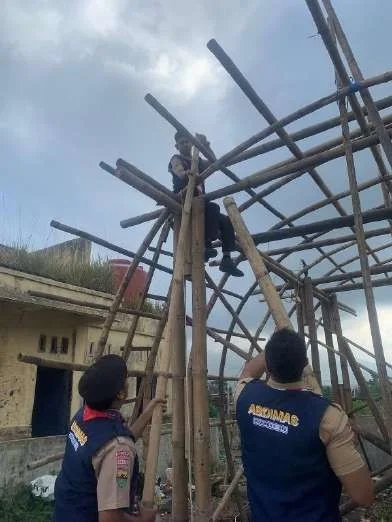
Kutambelin Village, Namanteran District, Karo Regency — The Community Service Team, led by Dr. Ar. Achmad Delianur Nasution, S.T., M.T., IAI., AA., IAP., GP, carried out a program titled “Construction of a Zero-Carbon Concept Mini Library Using Bamboo Materials in Kutambelin Village, Namanteran District, Karo Regency.”
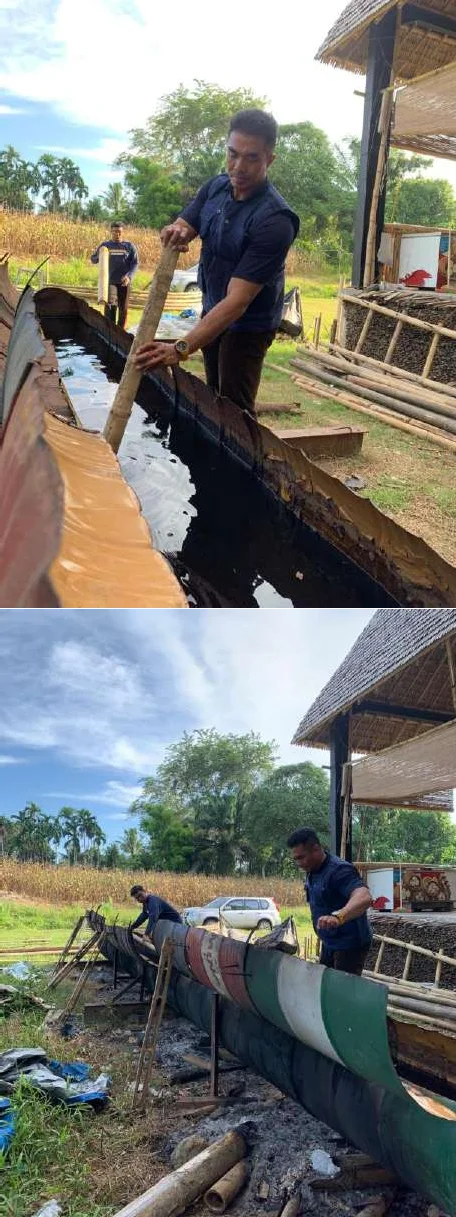
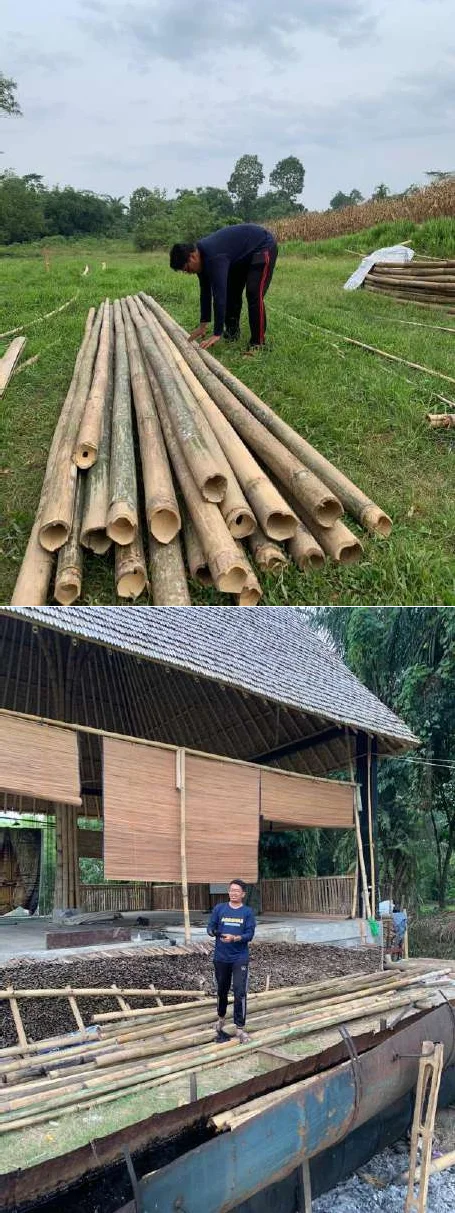
This program aims to provide educational facilities while applying environmentally friendly building principles. The construction was carried out entirely using bamboo materials that were naturally preserved to ensure strength and resistance to pests. The project not only focused on physical construction but also educated the community about environmental preservation and energy efficiency.
Objectives of the Community Service Program:
a. To enhance the utilization of bamboo and other zero-carbon materials in Kutambelin Village by constructing an eco-friendly mini library.
b. To provide wider access to reading materials and adequate reading facilities, particularly for children in Kutambelin Village.
c. To support the development of informal education and community literacy so that villagers can access information and knowledge more effectively.
d. To encourage active community participation in the construction and maintenance of the mini library as a center of knowledge and culture in Kutambelin Village.
e. To reduce farmers’ dependence on middlemen by introducing fairer and more sustainable marketing systems.
Benefits of the Community Service Program:
a. To broaden community knowledge and insight through increased access to reading materials and information.
b. To reduce farmers’ dependence on middlemen by promoting fair and sustainable marketing systems.
c. To raise environmental awareness and concern for sustainability through the use of eco-friendly building materials.
d. To encourage active community participation in building and maintaining the mini library as a shared asset and a hub for social and cultural activities.
The construction activities involved local residents as a form of empowerment while educating them on the importance of sustainable building practices. The mini library will later serve as a learning center and a small public library easily accessible to the community, particularly children and students, with a diverse collection of books.
 |  |