


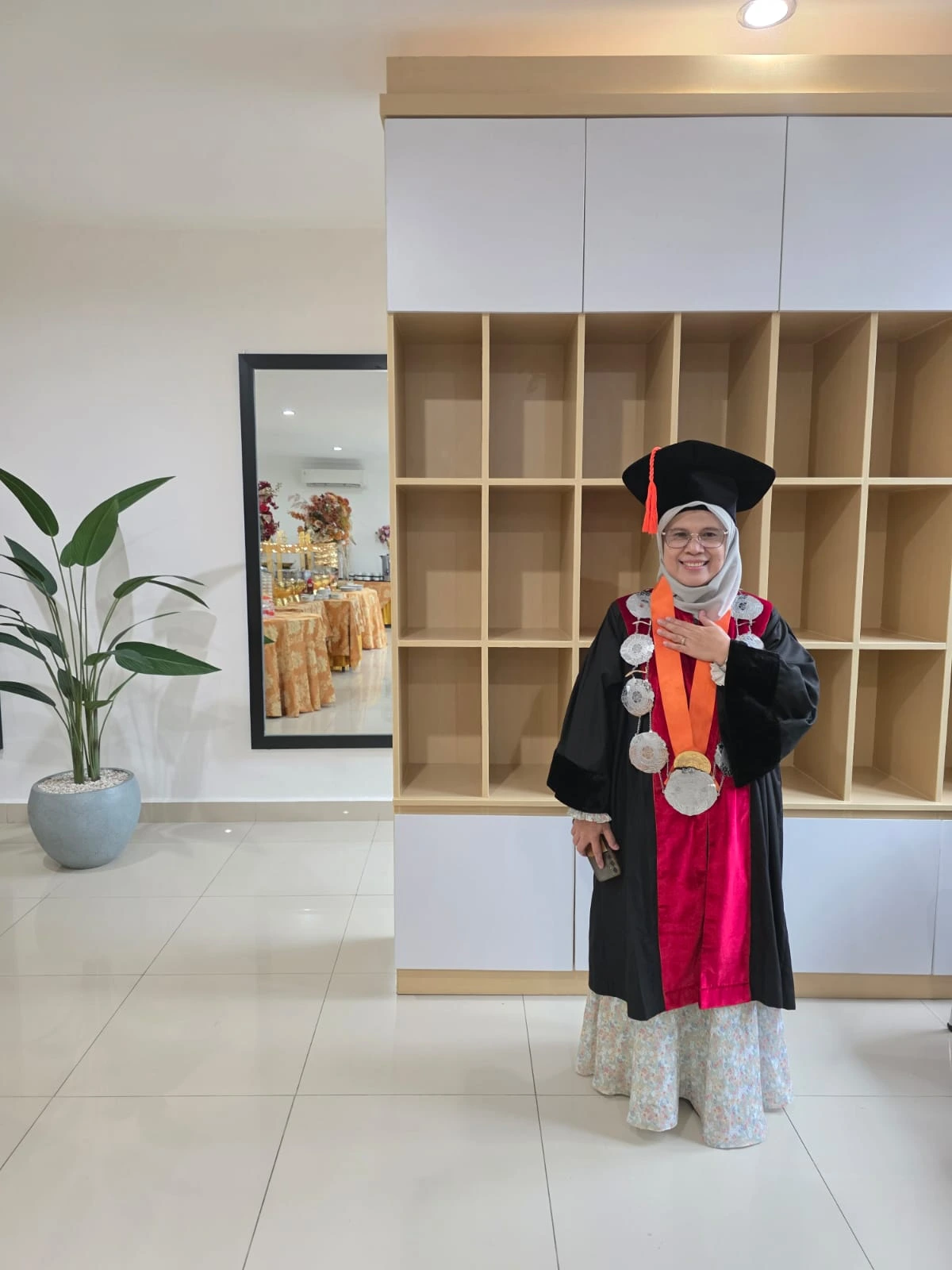
An opinion article titled “From Waste to Energy: When Plastic Waste and Coffee Grounds Find New Value,” prepared in August 2026, highlights research conducted by faculty members and students of the Faculty of Engineering, Universitas Sumatera Utara (FT USU) on microwave-assisted co-pyrolysis. The research involved Wan Rizki Ansari, a student of the Doctoral Program in Chemical Engineering, and, based on the source document, received funding through the Doctoral Dissertation Research Program.
The research combines plastic waste and coffee grounds in a thermal processing method to produce pyrolysis oil with potential applications as an alternative fuel. The composition of the feedstock mixture, microwave power, and operating conditions are among the variables examined to understand the characteristics of the resulting product and the performance of the processing method.
Through this discussion, the opinion article invites readers to view waste not merely as residual material that must be discarded, but as a resource whose potential value can still be researched and developed. Higher education institutions play a role in generating knowledge and technology, while the potential benefits for waste management operators, coffee businesses, and energy product users still require further testing before the technology can be widely implemented.
The article also emphasizes that successful laboratory-scale research does not directly indicate that a technology is ready for industrial-scale application. Product quality, feedstock consistency, economic feasibility, energy requirements, process safety, and emission levels still need to be comprehensively evaluated. Therefore, reductions in waste generation, energy savings, and increased community income cannot yet be stated as measured impacts.
This initiative primarily supports SDG 12: Responsible Consumption and Production by exploring ways to recover the value of resources contained in waste. The development of processing methods and equipment is also related to SDG 9: Industry, Innovation and Infrastructure. However, these potential contributions still need to be assessed based on technological performance, implementation feasibility, and environmental impacts.
Through strengthened research and science-based public education, FT USU continues to encourage the development of solutions that connect environmental challenges with societal needs. More comprehensive testing and the exploration of collaboration with the government, industry, waste management operators, and coffee businesses are necessary next steps to ensure that the potential utilization of waste can be developed safely, measurably, and responsibly.
Author: Prof. Dr. Ir. Renita Manurung, M.T.