


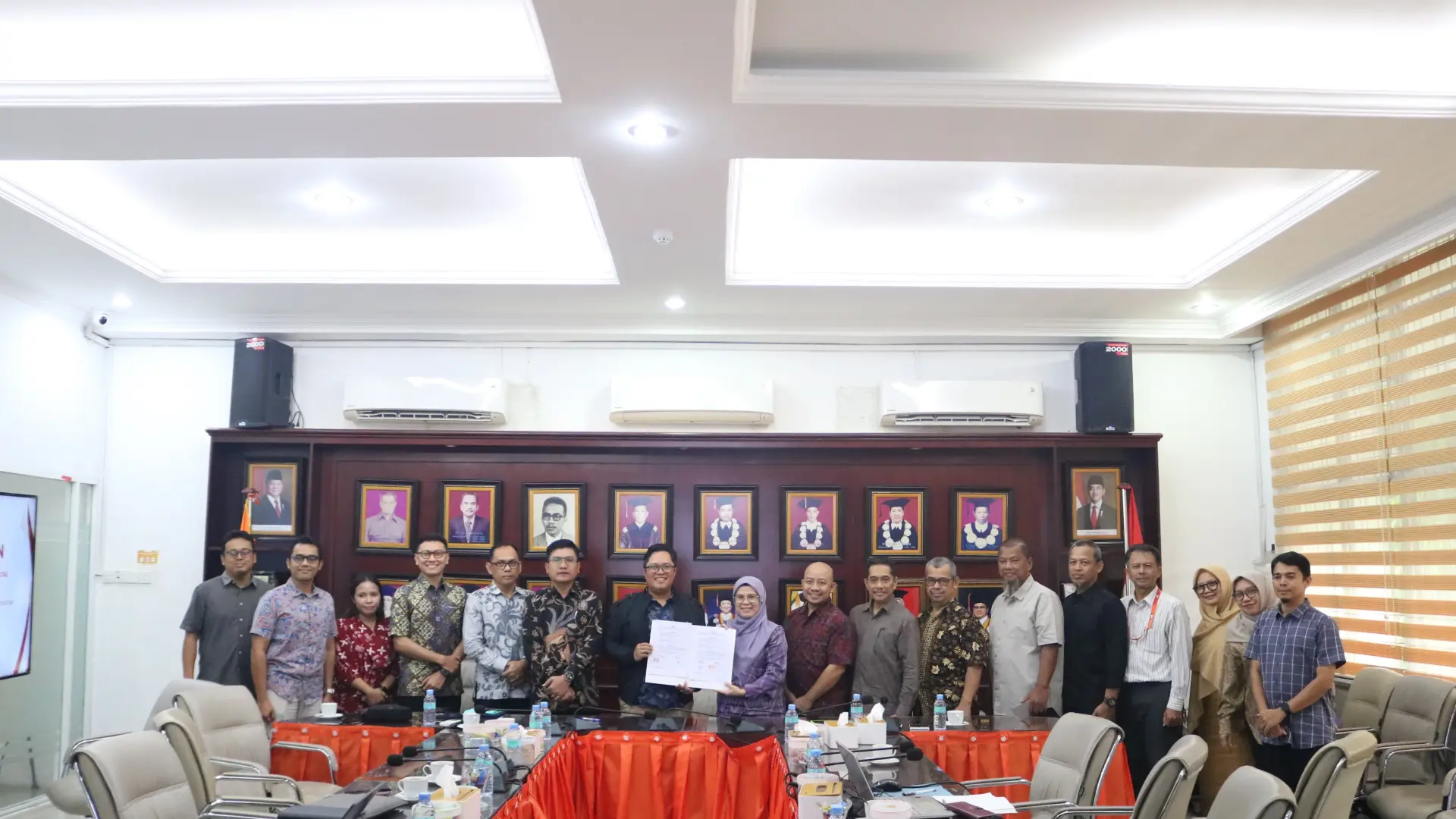
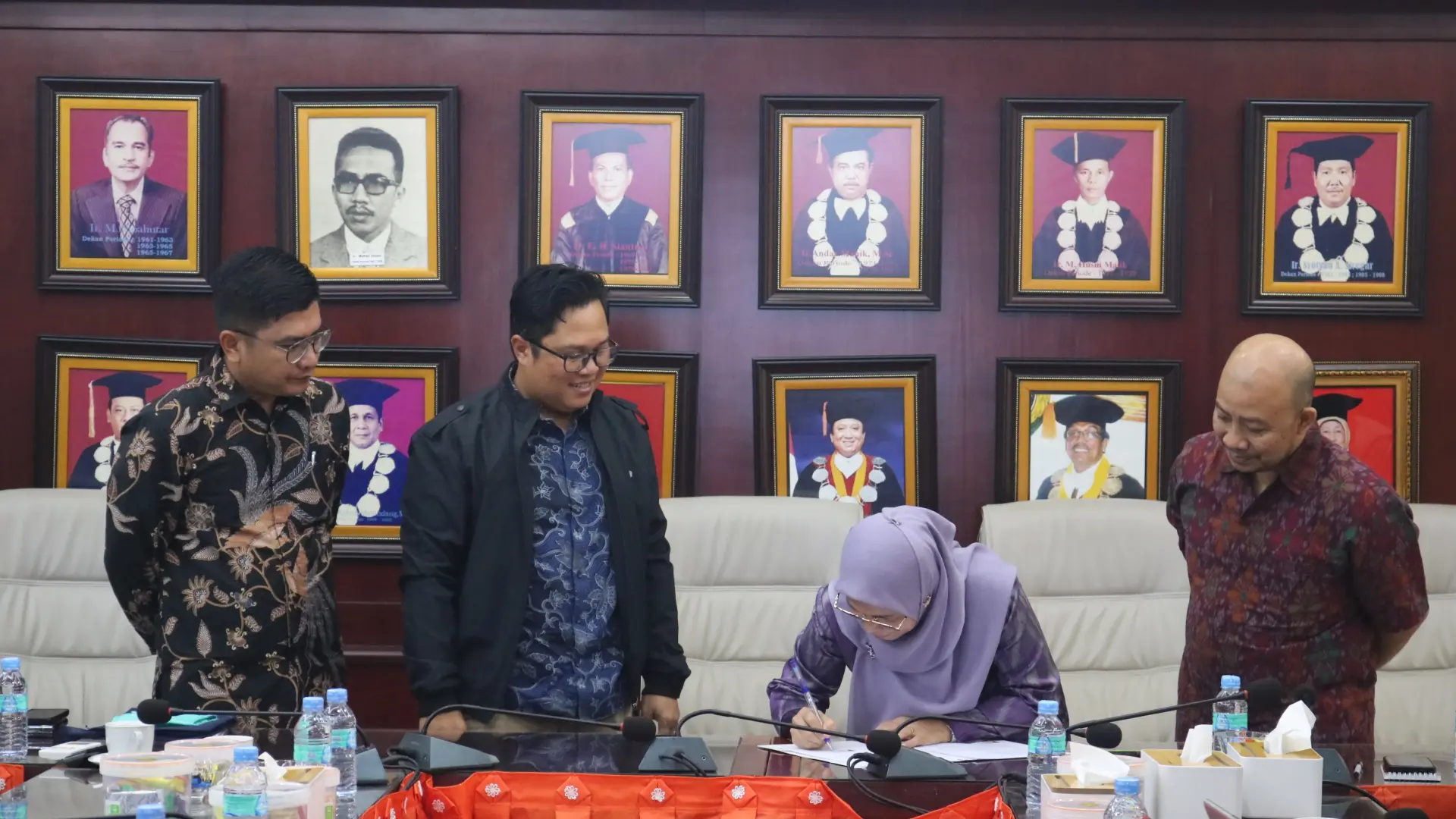
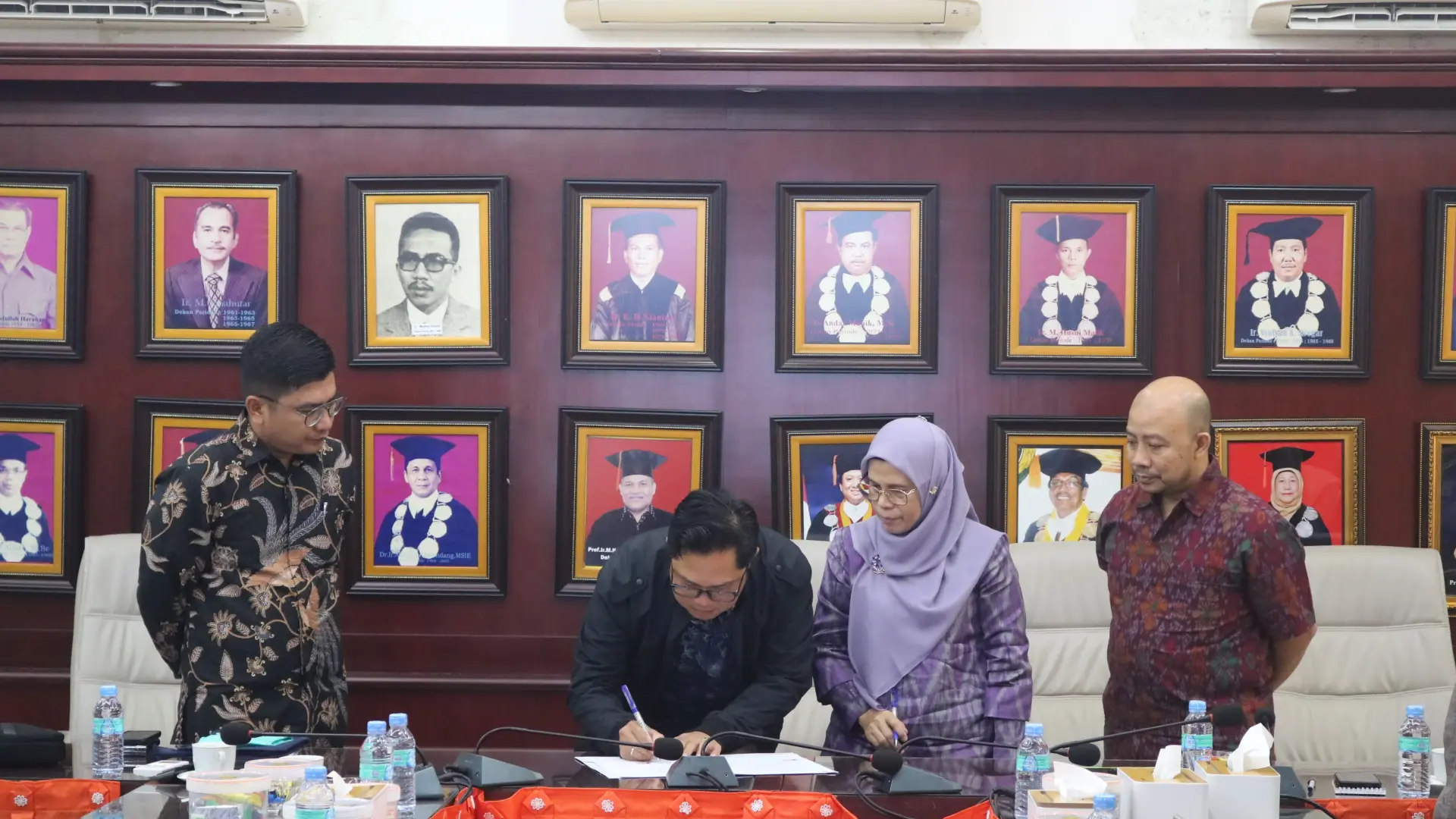
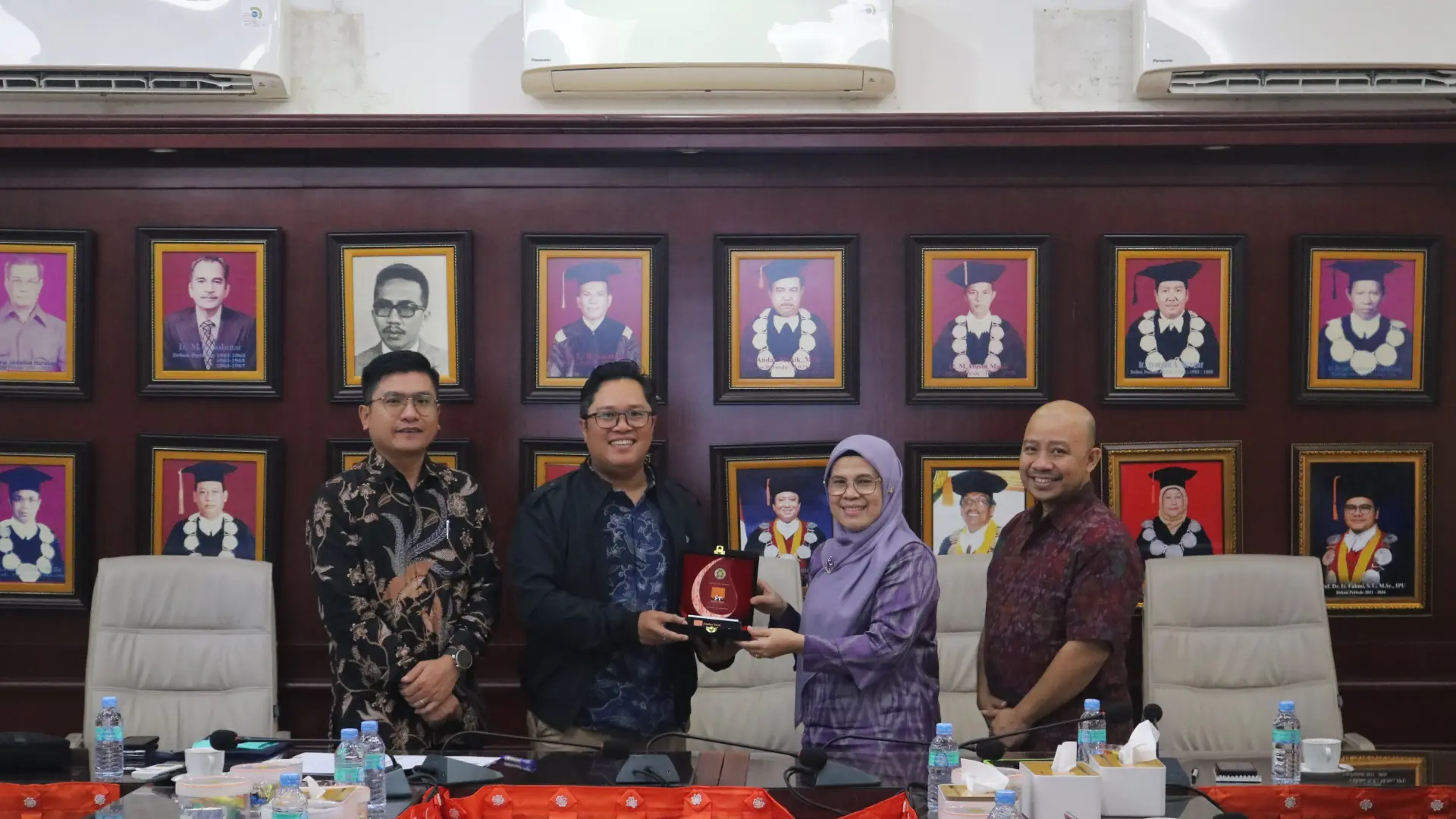
Medan – On October 20, 2026, the Faculty of Engineering, Universitas Sumatera Utara (FT USU), and PT Kawasan Industri Medan (Persero) signed a Memorandum of Agreement (MoA) establishing collaborative synergies across industrial development, higher education, scientific research, and human resource empowerment as the core framework of their partnership.
The MoA was formally executed by Prof. Dr. Ir. Renita Manurung, M.T. (Dean of FT USU) and Alif Usman Amin (President Director of PT Kawasan Industri Medan).
 |
 |
The signing ceremony was attended by Zaid Perdana Nasution, S.T., M.T., Ph.D. (Vice Dean for Research, Community Service, Cooperation, and Internationalization), Heads and Secretaries of Study Programs across FT USU, as well as representatives from PT KIM, including Taufik Akbar (Director of Operations & Development), Eka Wahyudin (Head of Planning & Development Division), Raymond Depari (Corporate Secretary), Ruth Sibagariang (Head of Planning Department), and Kevin Aritonang (Head of Public Relations Department).
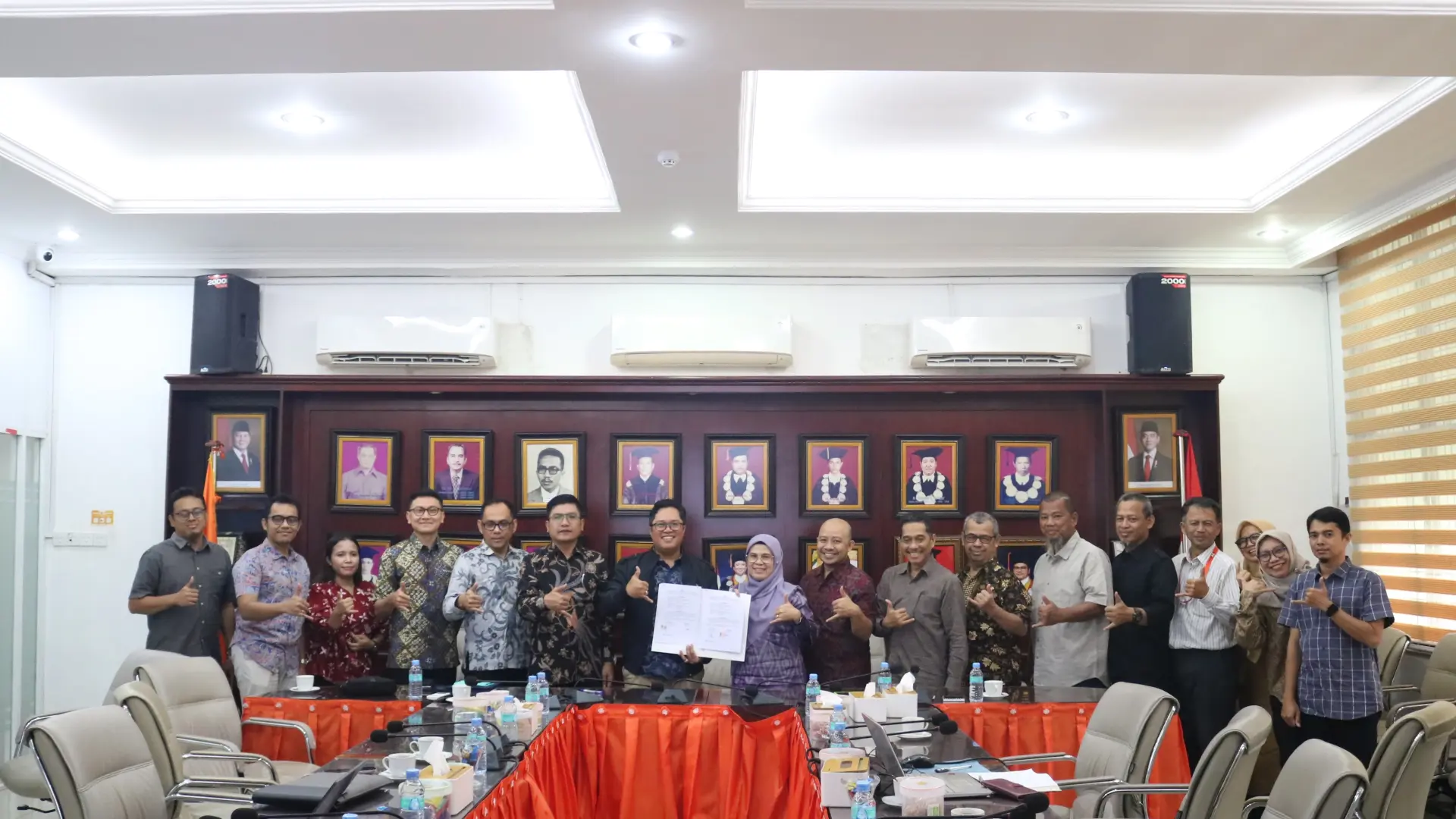
This strategic partnership is designed to bridge higher education with industrial zones. FT USU will contribute academic and technical studies rooted in faculty expertise, while PT KIM provides industrial insights, operational access, and essential coordination aligned with its corporate mandate.
The scope of the agreement includes regional development studies for township construction plans, provision of technical experts, and staff competency enhancement through training, workshops, seminars, professional certifications, and continuing education. The framework also opens avenues for PT KIM practitioners to deliver guest lectures in relevant university courses.
For students, the agreement opens opportunities for Out-of-Study-Program Learning (PLPS), industrial internships, practical work, independent studies, and learning activities hosted by tenants operating within the PT KIM industrial zone. Joint research and community service projects led by FT USU faculty members are also integrated into the partnership framework according to technical requirements.
This collaboration directly supports SDG 9 (Industry, Innovation, and Infrastructure) by advancing industrial zone research, innovation, and development; SDG 4 (Quality Education) through industry-integrated learning and professional competency building; and SDG 17 (Partnerships for the Goals) by fostering strong academia-industry cooperation.