


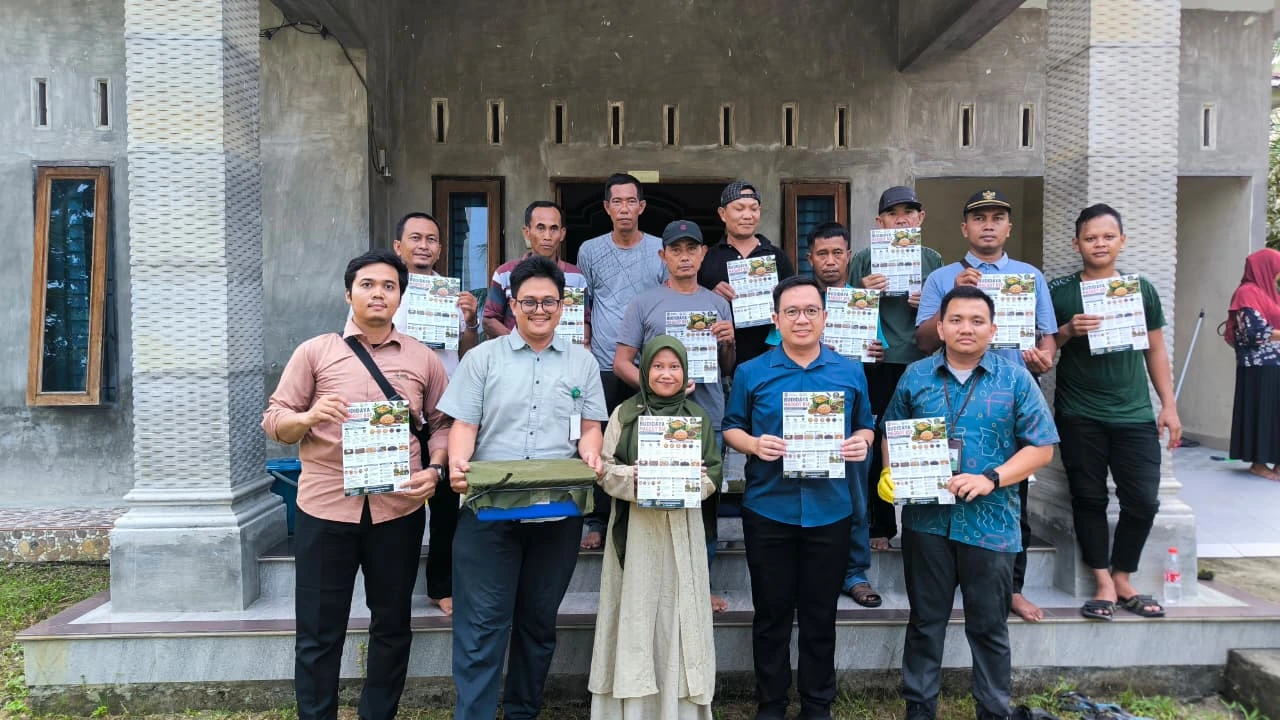
The community service activity was carried out through educational sessions and hands-on training on BSF maggot cultivation techniques, covering the life cycle of BSF, preparation of cultivation media and feed, maintenance, and harvesting. The community also received information on utilizing household organic waste and agricultural waste as feed sources to support the cultivation process.
BSF maggot cultivation has the potential to promote more productive organic waste management. In addition to producing maggots that can be utilized as a protein-rich feed source for livestock and fish, the cultivation process also generates residual material that can be utilized as a supporting material for agricultural activities.
Through this activity, lecturers from the Chemical Engineering Study Program at USU sought to promote the application of simple, practical, and locally appropriate knowledge and technology. This approach is expected to improve community skills while creating opportunities for sustainable and economically valuable maggot cultivation.
The community service activity also supports the achievement of the Sustainable Development Goals (SDGs), particularly SDG 12: Responsible Consumption and Production through the productive utilization of organic waste, and SDG 8: Decent Work and Economic Growth through skills development and the creation of economic opportunities for the community. In addition, the activity contributes to SDG 2: Zero Hunger by utilizing maggots as an alternative feed source to support the livestock and fisheries sectors.
Through this community service initiative, the Chemical Engineering Study Program at USU continues to strengthen its contribution to applying science and technology for the benefit of communities while promoting locally based solutions that generate environmental, social, and economic benefits.