


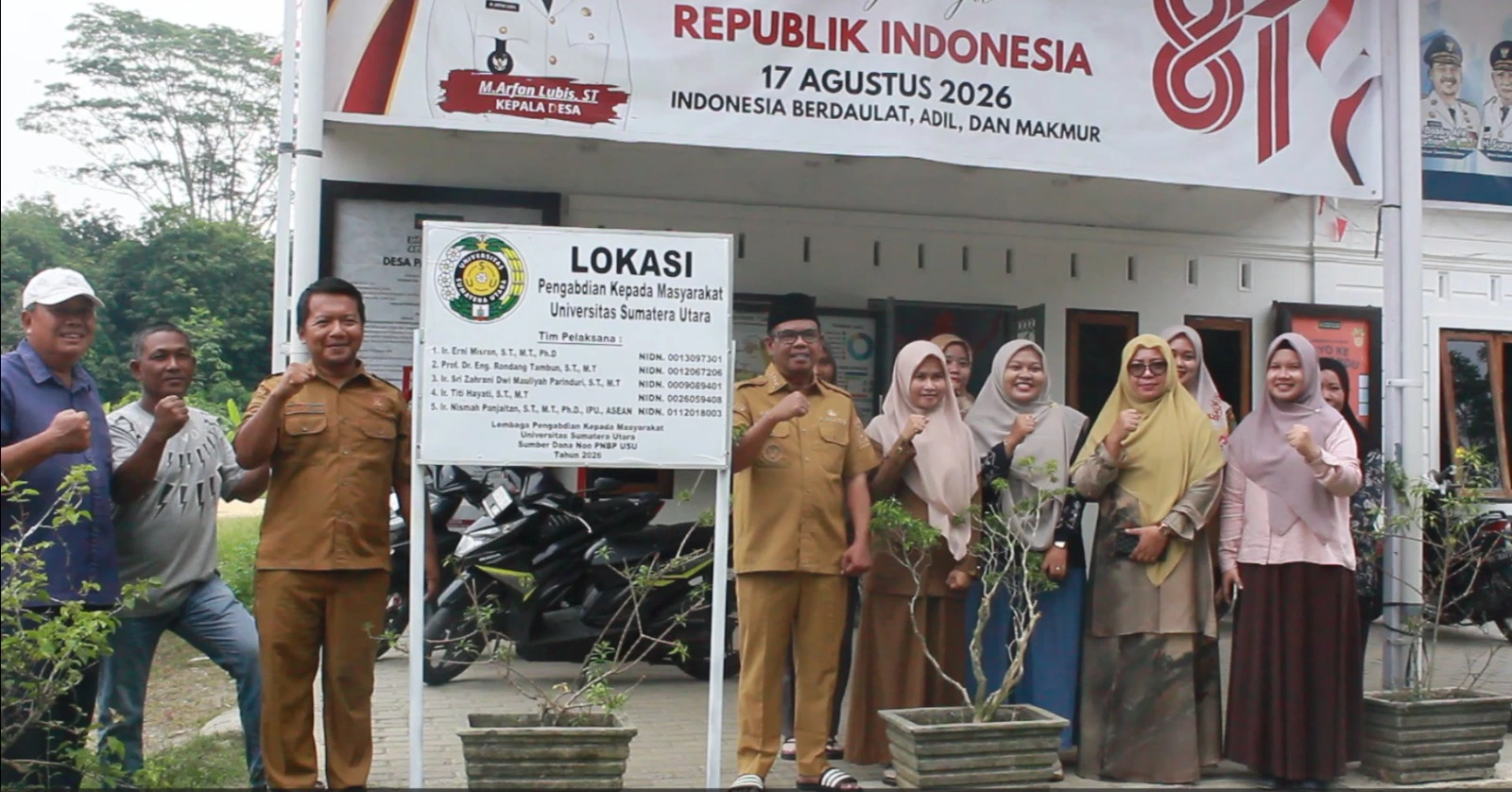
The activity was carried out as a form of the university’s concern and contribution to helping communities address post-flood water quality issues. Flooding can alter water quality due to the presence of mud, suspended solids, organic matter, and various other contaminants. Therefore, simple and effective water treatment measures that can be implemented according to local conditions are needed.
Through this program, the USU Chemical Engineering lecturers introduced multi-stage filtration technology as one of the water treatment methods that can help improve water quality. The filtration system consists of several filtration stages using different media, each serving a specific function, allowing the treatment process to gradually reduce turbidity and impurities in the water.
In addition to providing an understanding of the principles and functions of multi-stage filtration, the activity included demonstrations and hands-on practice to help community members understand how to operate and maintain the filtration system. This approach is expected to strengthen the community’s capacity to provide better-quality water for daily needs and improve preparedness in addressing water quality issues following flood disasters.
The community service program represents an application of Chemical Engineering knowledge and technology to address real-world challenges in society. The introduction of simple and practical technology is expected to provide direct benefits to the people of Padang Tualang Village while supporting sustainable post-flood recovery efforts.
The activity directly supports the Sustainable Development Goals (SDGs), particularly SDG 6: Clean Water and Sanitation, through efforts to improve access to and availability of better-quality water for the community. It also contributes to SDG 3: Good Health and Well-Being, as access to quality water is an important factor in maintaining public health.
In terms of strengthening community resilience to disasters, the activity also supports SDG 11: Sustainable Cities and Communities, particularly by building communities that are more resilient to the impacts of disasters and environmental disruptions. The program further reinforces the role of higher education institutions in providing science- and technology-based solutions that can be directly applied to improve people’s quality of life.
Through this community service initiative, the Undergraduate Program in Chemical Engineering, USU, continues to demonstrate its commitment to addressing environmental challenges and basic community needs through simple, appropriate, and sustainable technological innovations.