


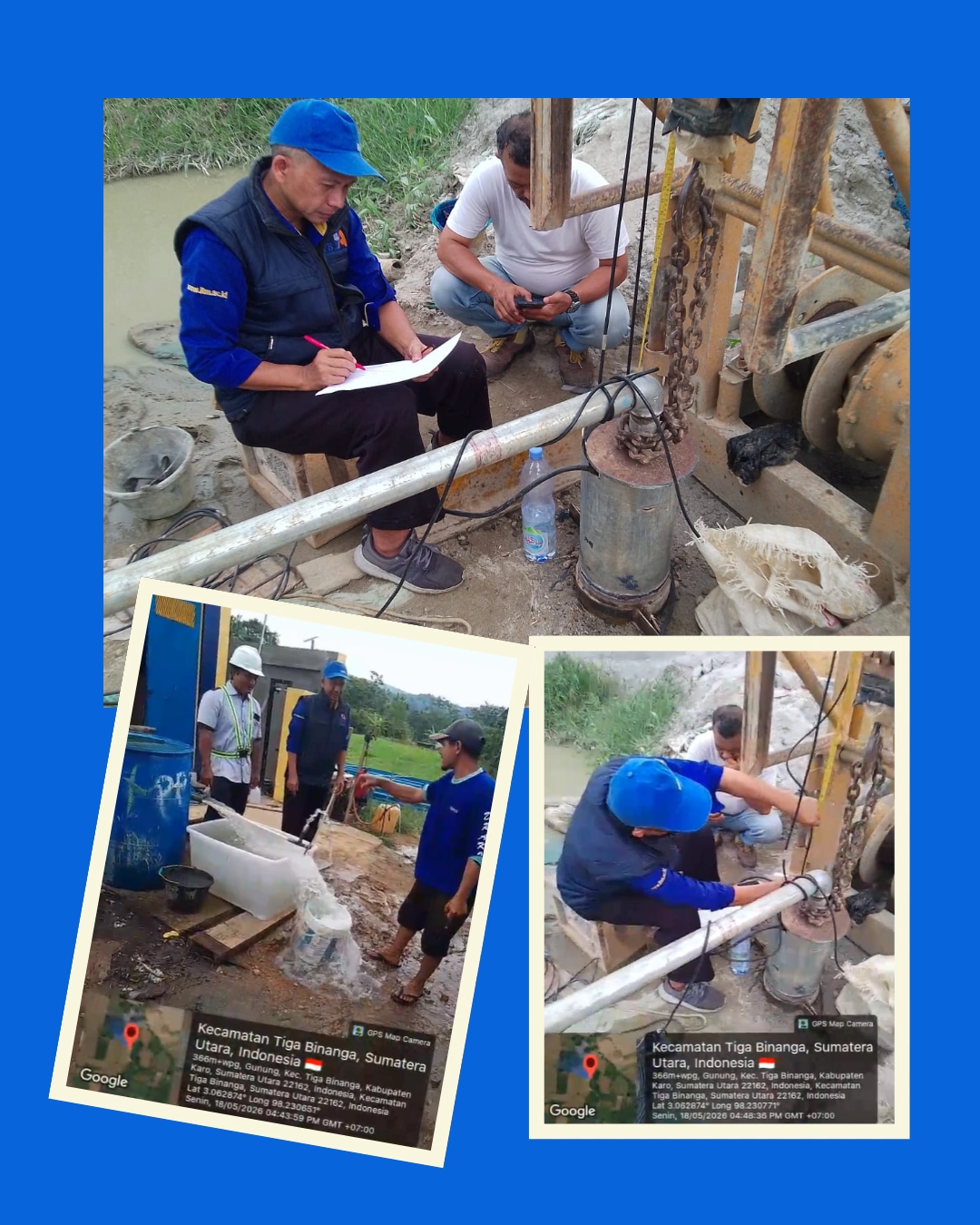
KARO REGENCY, NORTH SUMATRA | Edi Yasa Ardiansyah, S.T., M.T., a lecturer in the Mining Engineering Study Program, Faculty of Engineering, Universitas Sumatera Utara (USU), carried out a community service activity through an inspection of the productivity and quality of a deep-drilled well in Tigabinanga District, Karo Regency, North Sumatra.
The activity represents the application of Mining Engineering expertise and competencies to support the provision of water resources for local communities, particularly to meet the needs of the agricultural sector. The inspected drilled well is part of a water supply project for agricultural purposes under the Ministry of Public Works.
The inspection was conducted to ensure that the drilled well had been completed in accordance with the technical standards and specifications established by the project owner. The assessment also aimed to ensure that the developed water source could function optimally and provide tangible benefits to the community, particularly farmers.
Ensuring Optimal Water Infrastructure Performance
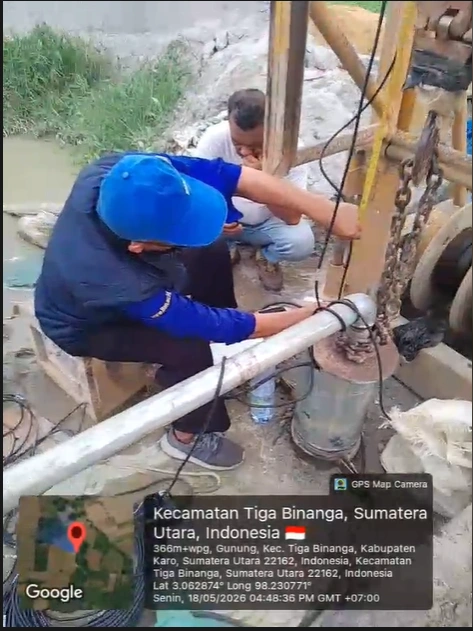 | 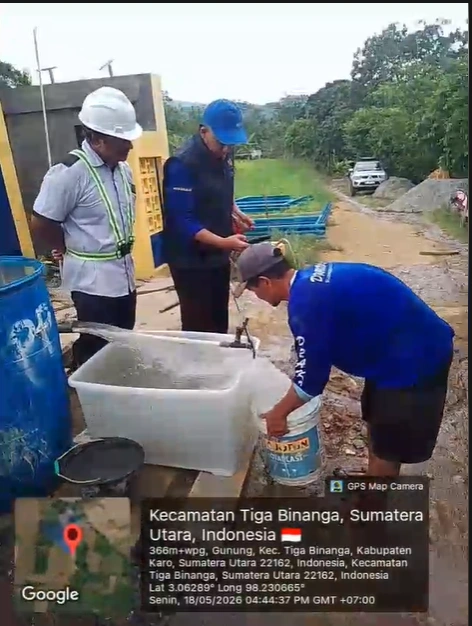 |
During the field activity, Edi Yasa Ardiansyah conducted a direct inspection of the deep-well installation and its supporting equipment. The inspection included observing the physical condition of the installation, piping system, water discharge, and overall well productivity.
Documentation of the activity shows the inspection process being carried out directly at the drilled-well installation site. The team also observed the flow of water discharged from the well and collected water as part of the productivity evaluation.
According to Edi Yasa Ardiansyah, the success of a drilled-well project is not determined solely by achieving the planned drilling depth.
“Completing the drilling process is not enough. We need to ensure that the well’s productivity, construction condition, and water quality meet the required needs. This ensures that the infrastructure built can truly provide benefits to the community,” he said.
Supporting Agriculture and Food Self-Sufficiency
Water availability plays an important role in sustaining agricultural activities in Karo Regency. Water is one of the key factors determining the success of cultivation and agricultural productivity.
The development of drilled wells is one alternative for providing a water source to support the agricultural needs of local communities. Therefore, evaluating well productivity and water quality is essential to ensure that the infrastructure functions in accordance with its intended purpose.
This community service activity also represents an effort to support the food self-sufficiency program promoted by the President of the Republic of Indonesia, Prabowo Subianto. Adequate water-source infrastructure in agricultural areas is expected to strengthen agricultural productivity, improve the reliability of water supplies, and support sustainable food production.
Achieving food self-sufficiency requires not only increased agricultural production but also adequate supporting infrastructure. In this context, water supply is an important component in strengthening agricultural production capacity at the regional level.
Applying Mining Engineering Expertise
This activity represents the application of Mining Engineering competencies to address real-world challenges in the community. Expertise in drilling engineering, borehole evaluation, subsurface characterization, and well productivity testing was directly applied during the field inspection.
The involvement of a university lecturer also added value to the evaluation process, as the actual condition of the well could be assessed using both technical and academic approaches. The inspection results can serve as evaluation material for relevant stakeholders to ensure the quality of the work and determine appropriate maintenance measures when necessary.
The activity demonstrates the broad applications of Mining Engineering. Drilling engineering expertise is not limited to mineral resource exploration but can also be applied to the development and evaluation of water wells that support community needs.
Ensuring Sustainable Water Resources
Community service through drilled-well inspection also provides long-term benefits. Water infrastructure requires regular monitoring and maintenance to ensure optimal performance throughout its service life.
Monitoring parameters such as water discharge, pump condition, piping systems, groundwater levels, and water quality can help identify changes in well performance. If productivity declines or water quality changes, corrective measures can be implemented at an early stage.
This approach is important to ensure that water resources are utilized responsibly and sustainably. With proper management, the developed water source is expected to continue providing benefits to the community over the long term.
A Reflection of the Three Pillars of Higher Education
The activity conducted by Edi Yasa Ardiansyah represents an implementation of the Three Pillars of Higher Education (Tridharma Perguruan Tinggi), particularly community service. Through this activity, the lecturer’s academic and professional expertise was applied directly to support infrastructure development related to essential community needs.
The activity also strengthens collaboration among universities, government institutions, project contractors, and local communities in supporting water-resource infrastructure and the agricultural sector.
In addition to supporting SDG 6 on Clean Water and Sanitation, the activity also contributes to SDG 2 on Zero Hunger, as providing water for agriculture is directly connected to the sustainability of food production.
Ultimately, the success of a drilled-well project should not be measured solely by the completion of drilling activities, but by the ability of the water source to deliver tangible benefits to the community, support agricultural productivity, and contribute to strengthening national food security and self-sufficiency.
Through this activity, the Faculty of Engineering at USU continues to promote the application of science and technology to address community needs while contributing to regional development and national development priorities.