Life Cycle Assessment Research Cluster Seminar 2024

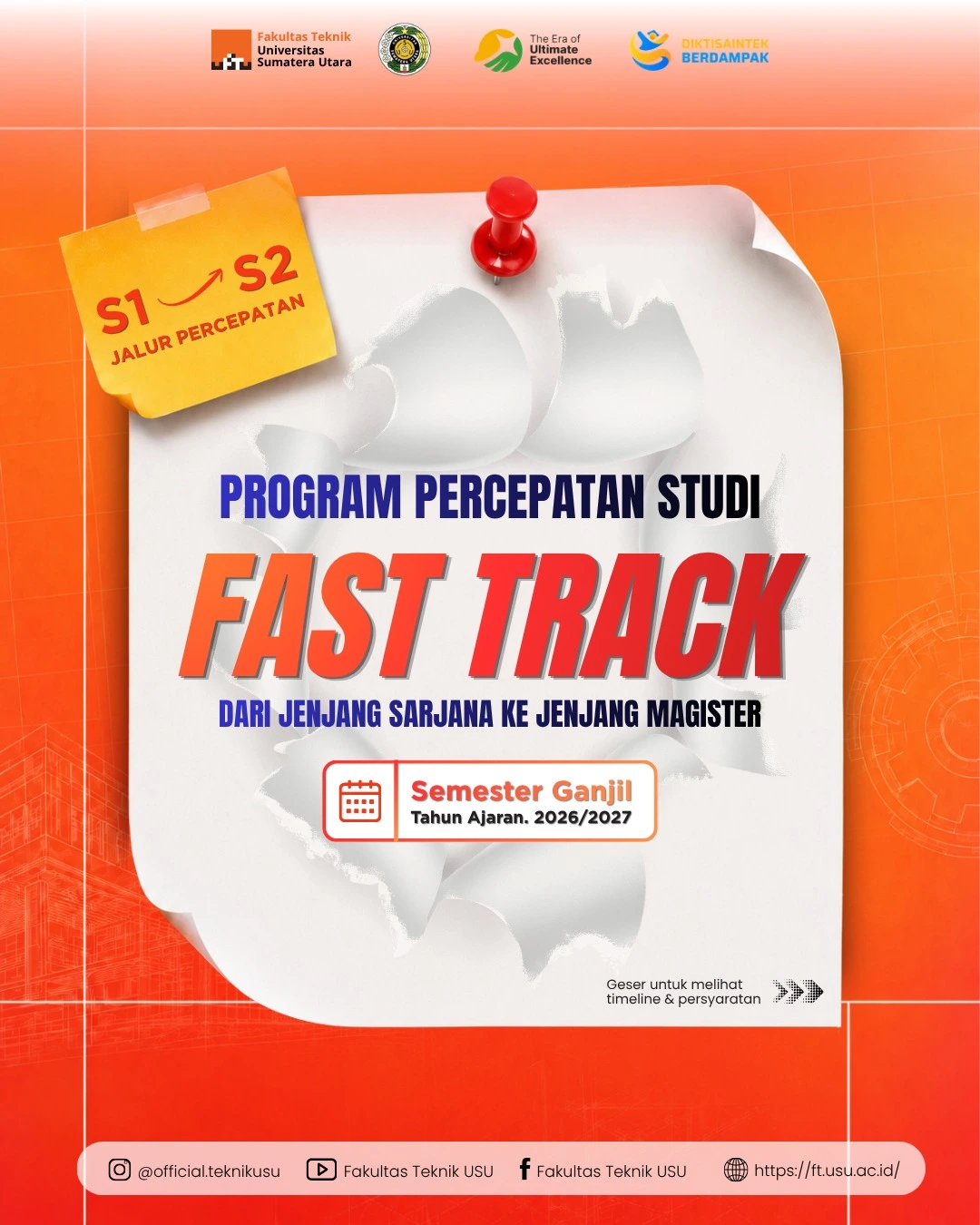
 Please register through: bit.ly/Seminar2024LCALimited seats for 100 participants!Deadline for registration: 19 February 2024 at 16:00 WIB ...

Read More
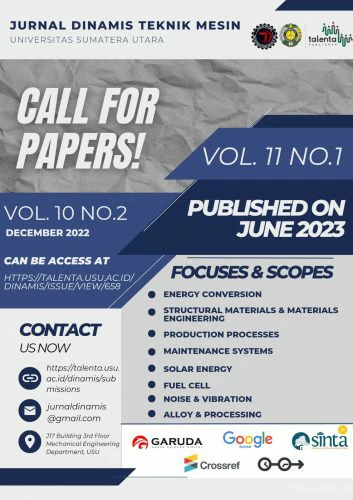
Call for Paper Jurnal Dinamis Teknik Mesin USU Vol. 11 No. 1 2023

The Jurnal Dinamis Teknik Mesin of Universitas Sumatera Utara invites academics, researchers, and practitioners to submit your scholarly articles to the Call for Papers for Vol. 11 No. 1, to be published in June 2023. The journal focuses on the following topics:Energy ConversionStructural Materials & EngineeringProduction ProcessesMaintenance SystemsSolar EnergyFuel CellsNoise & VibrationAlloy & ProcessingThis journal...

Read More
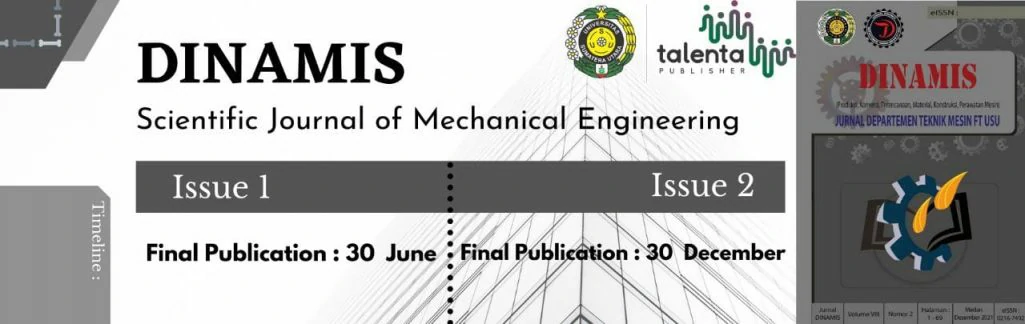
The Sun Goes Down, Journal is Published

Scientific journals are publications containing collections of research articles published regularly. The Jurnal Dinamis Teknik Mesin Universitas Sumatera Utara (USU) is published twice a year, in June and December. In addition to serving as a medium for scientific development, scientific journals have various benefits, such as providing a database for public policy, disseminating research findings,...

Read More
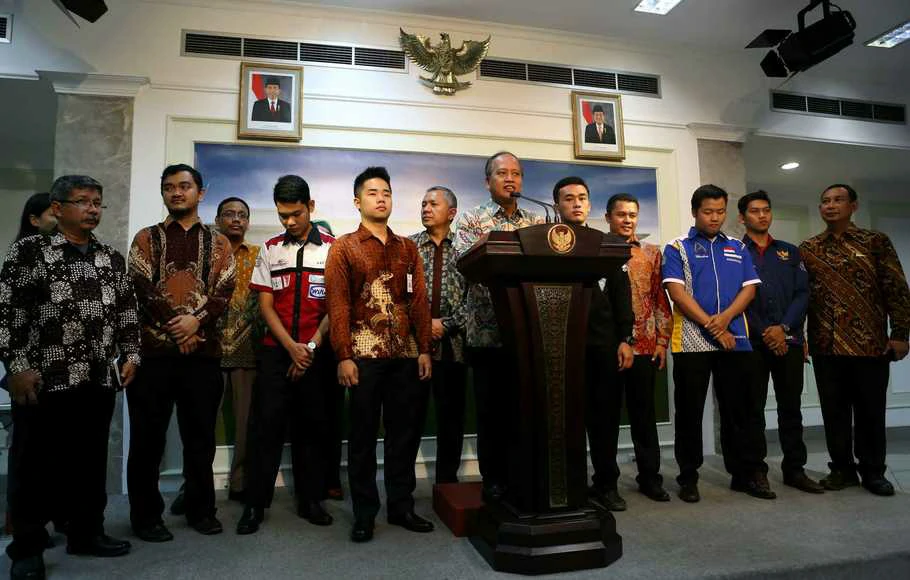
Horas USU Team Won the International Car Innovation Contest

The Horas Team from Universitas Sumatera Utara (USU) secured second place in the Shell Eco Marathon competition held in Manila, Philippines. Horas was one of Indonesia’s representatives, alongside teams from Universitas Indonesia, Universitas Sebelas Maret, Universitas Negeri Jakarta, and Institut Teknologi Bandung.“One of our product specializations is an ethanol-powered vehicle,” said Arie Matius Bangun, a...

Read More
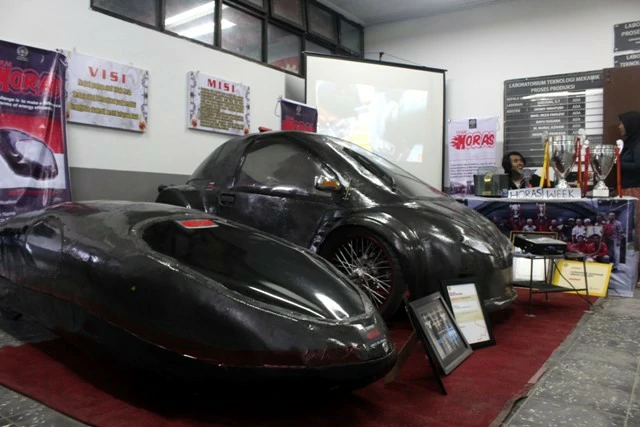
Horas USU Team's Car Competes in SEM Asia 2016

The prototype car designed by the Horas Team from the Faculty of Engineering, Universitas Sumatera Utara (USU), is ready to compete in the Shell Eco Marathon (SEM) Asia 2016. As part of their preparation, the vehicles, named Prototype G7 and USU G8, were showcased during the “Grand Launching of Energy Efficient Vehicle” event at the...

Read More
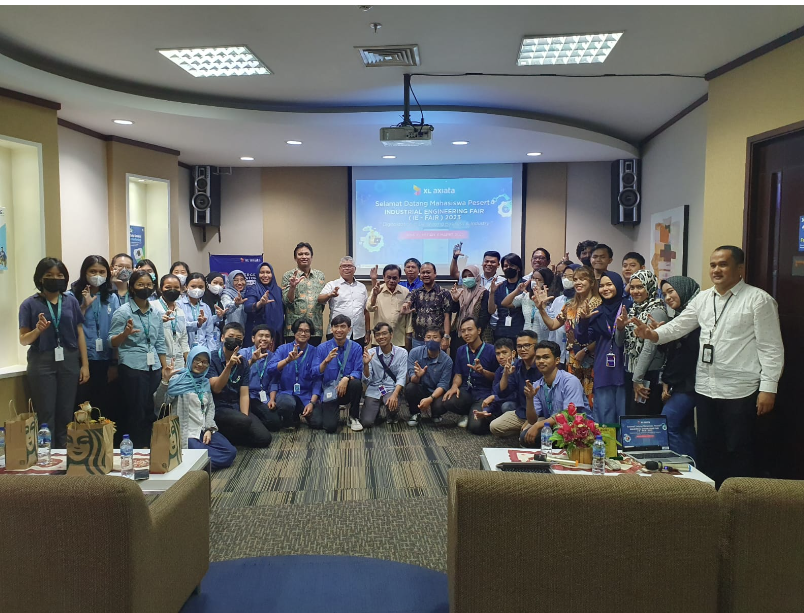
Indutrial Engineering Fair 2023

Industrial Engineering Fair 2023 (IE FAIR 2023) is an annual event organized by the Industrial Engineering Student Association (HIMTI) under the Knowledge Development Division.IE Fair was initiated by Universitas Sumatera Utara (USU) Industrial Engineering students with the aim of collaborating with their peers in Southeast Asia. Additionally, the event seeks to share knowledge and enrich...

Read More
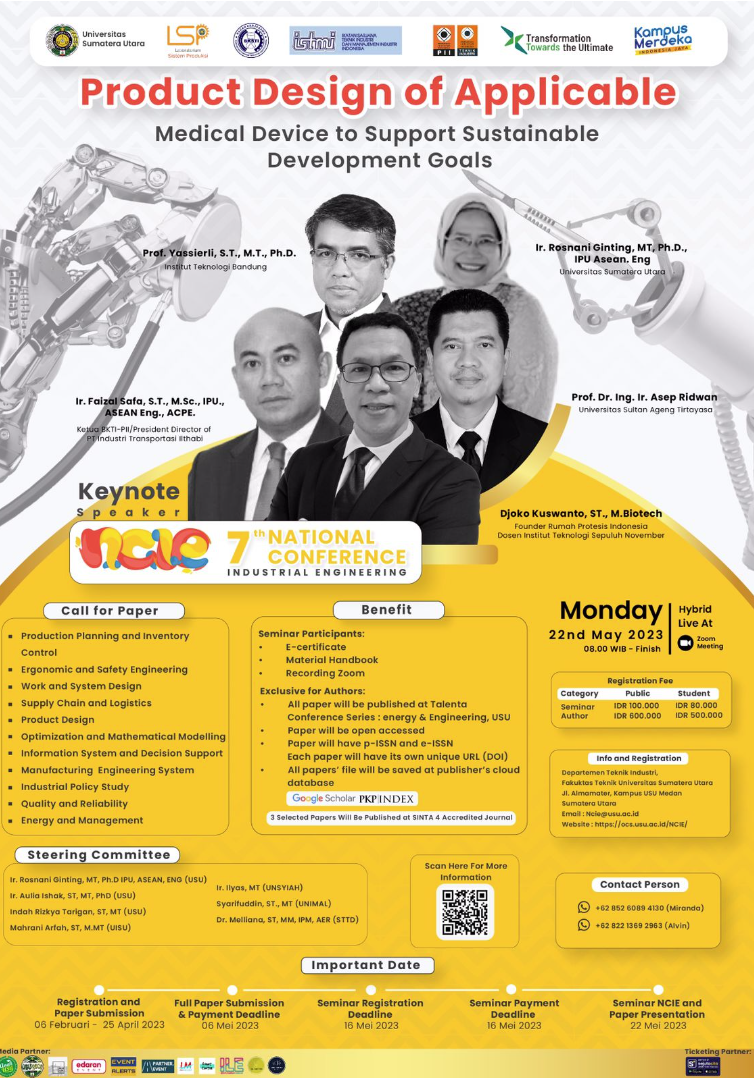
National Conference on Industrial Engineering 2023

The Department of Industrial Engineering, Faculty of Engineering, Universitas Sumatera Utara, invites academics, researchers, practitioners, and students to join NCIE 2023 held on:Monday, May 22, 202308.00 WIB – FinishHybrid (Zoom Meeting & Onsite USU) Keynote Speakers:Prof. Yassierli, S.T., M.T., Ph.D. (Institut Teknologi Bandung)Ir. Rosnani Ginting, MT., Ph.D., IPU, ASEAN Eng. (Universitas Sumatera Utara)Prof. Dr. Ing. Ir....

Read More
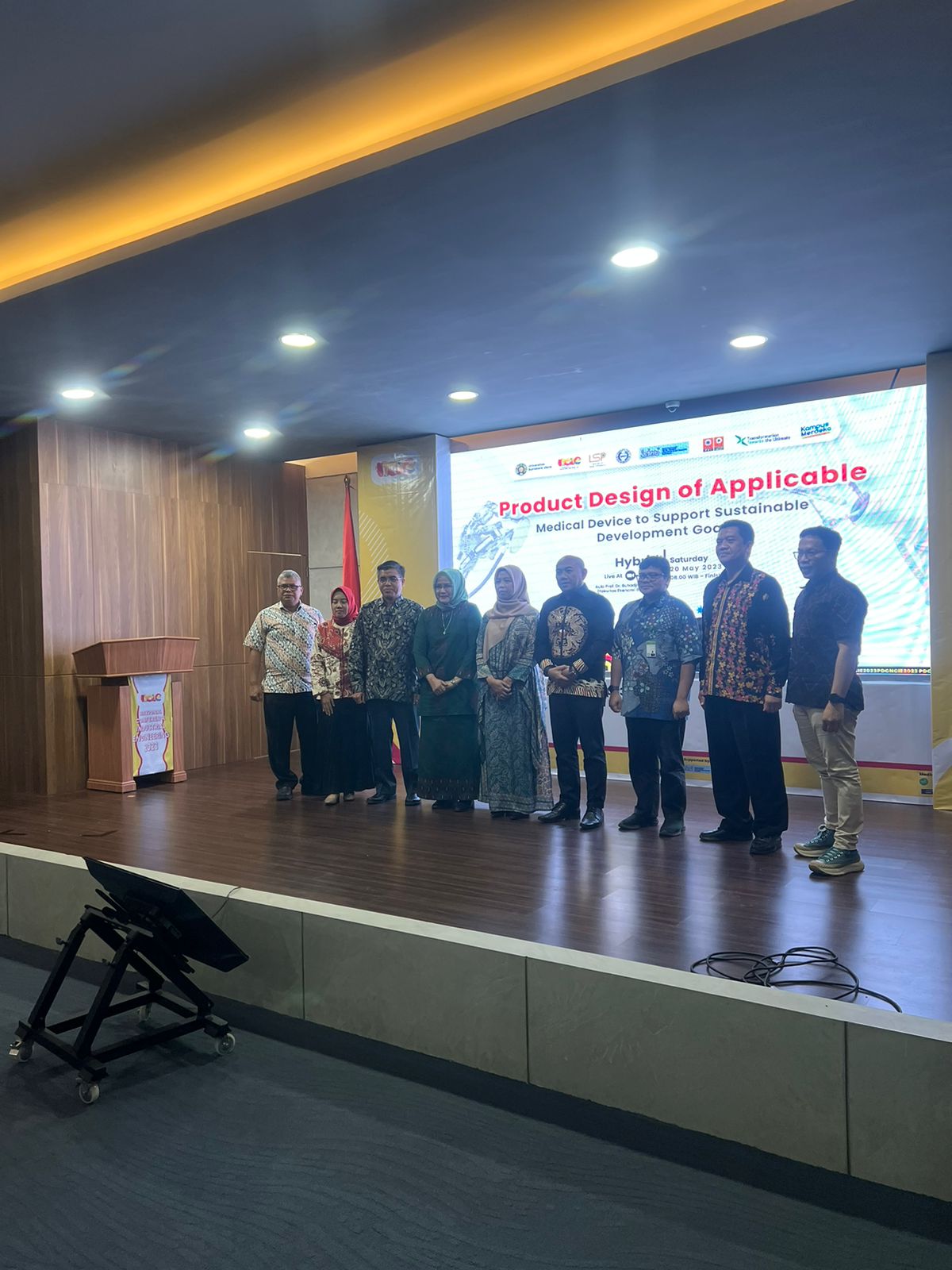
NCIE Seminar and Paper Presentation

On Saturday, May 20, 2023, the 7th National Conference on Industrial Engineering (NCIE) took place in a hybrid format at the Prof. Dr. Suhadji Hardibroto Auditorium (Faculty of Economics and Business, Universitas Sumatera Utara) and via Zoom Meeting. The National Conference on Industrial Engineering (NCIE) is an annual national seminar organized by the Production Systems...

Read More
Bukhori IIBS Vocational School Students Trained to Make Surveillance Robots

Robotics training for students of the Bukhori IIBS Islamic Boarding School is a form of community service chaired by Tigor Hamongan Nasution whose members are Ainul Hizriadi (Information Technology), Fahmi (Electrical Engineering) and Soeharwinto (Electrical Engineering) to provide students with the ability to design simple robots.“It can be controlled remotely using a computer network. And...

Read More
Community Empowerment in the Implementation of City Architecture in the Medan Maimun Area

Community participation is expected to support community service activities so that the design can be realized. The designs made not only add to the beauty of the Jalan Court area, but can also improve the community's economy. In addition, to improve human resources, training or workshops will be given to the community, such as blacksmith...

Read More
Research | Faculty of Engineering

Research

Faculty of Engineering

Faculty Expert

Faculty of Engineering is the leading Faculty of Engineering in North Sumatra, Faculty of Engineering is a hotspot for the best experts in each field available at USU. You can find experts from each field below.

Natural Rubber Latex Technology

Composites and Biocomposites

Renewable Energy Technologies

Switching Technique

Quantum Artificial Intelligence

Telecommunications

Production and Inventory Control

Repair of Machinery and Auxiliary Equipment

Production Management

Material Engineering

Wastewater Treatment

Architecture and Urban Environment

Impact Architecture and Urban Climate

Architecture Education

Post-disaster Architecture

Construction Technology

Housing/Settlement Management

History, Theory and Criticism of Architecture

Indoor Environmental Quality

Air Quality for Health and Comfort in Buildings

Waste Management Technology

Impact Strength of Materials

Enzyme Production

Architectural and Urban Conservation

Architectural and Urban Conservation Management

Vernacular Architecture

History and Theory of Architectural Criticism

Energy Efficient Architecture

History, Theory & Criticism of Architecture

Urban Heritage

Architecture & Urban Environtment Impact

Architecture & Urban Climate

Urban Environtment - Behavior Studies

Digital Architecture

Architectural Computing

Architectural Planning

Communication Networks and Protocols

Advanced Materials

Polymeric Materials

Adsorption Technology

Membrane Technology

Project Planning and Control

Manufacturing System

Heat & Mass Transfer

Energy Efficiency

Energy Conversion and Management Systems

Thermal Engineering

Energy System Optimization

Electrical Energy Conversion Engineering

Water Management

Manufacturing Process

Human Factors Engineering

Industrial Enginnering

Performance Measurement

ornament

Announcements

See More
See More

Transmission and Distribution Laboratory

<p style="text-align:justify;" data-start="1938" data-end="2282">The Transmission and Distribution Laboratory is a teaching laboratory under the Department of Electrical Engineering, Faculty of Engineering, Universitas Sumatera Utara. This laboratory has been operating since the establishment of the department and plays a critical role in supporting practical learning related to electric power systems.</p><p style="text-align:justify;" data-start="2284" data-end="2790">Before the implementation of the Merdeka Curriculum and the Outcome-Based Education (OBE) approach, the Transmission and Distribution Laboratory operated under the KKNI curriculum framework. During that period, the lab supported core courses such as Electric Power Systems, Electrical Installation Techniques, Power System Analysis, and Power System Protection. With the curriculum reform, some of these courses became electives, which in turn affected the laboratory’s practical offerings.</p><p style="text-align:justify;" data-start="2792" data-end="2976">Each academic year, the laboratory serves approximately 100 students, conducts two practical sessions, and delivers a total of seven practical modules. The modules include:</p><p style="text-align:justify;" data-start="2978" data-end="3018">For Electric Power System II Course:</p><ol data-start="3019" data-end="3127"><li data-start="3019" data-end="3047"><p style="text-align:justify;" data-start="3022" data-end="3047">Short Transmission Line</p></li><li data-start="3048" data-end="3075"><p style="text-align:justify;" data-start="3051" data-end="3075">Long Transmission Line</p></li><li data-start="3076" data-end="3127"><p style="text-align:justify;" data-start="3079" data-end="3127">Shunt Compensation of Medium Transmission Line</p></li></ol><p style="text-align:justify;" data-start="3129" data-end="3179">For Electrical Installation Techniques Course:</p><ol data-start="3180" data-end="3326"><li data-start="3180" data-end="3206"><p style="text-align:justify;" data-start="3183" data-end="3206">Lighting Installation</p></li><li data-start="3207" data-end="3243"><p style="text-align:justify;" data-start="3210" data-end="3243">Distribution Panel Installation</p></li><li data-start="3244" data-end="3285"><p style="text-align:justify;" data-start="3247" data-end="3285">Electric Motor Starting Installation</p></li><li data-start="3286" data-end="3326"><p style="text-align:justify;" data-start="3289" data-end="3326">Electric Motor Control Installation</p></li></ol><p style="text-align:justify;" data-start="3328" data-end="3537">All laboratory activities are designed to align with the Course Learning Outcomes (CLOs), emphasizing both theoretical understanding and real-world application in the field of electrical power engineering.</p>

arrow_forward

Basic Electronics Laboratory

<p style="text-align:justify;" data-start="1912" data-end="2361">The Basic Electronics Laboratory is one of the academic and research laboratories under the Department of Electrical Engineering, Faculty of Engineering, Universitas Sumatera Utara. It plays a crucial role in supporting practical activities for two core courses: Basic Electronics (TEE1203) and Sensors and Transducers (TEE4125), both of which lay the foundation for understanding and applying electronic devices and sensor technologies.</p><p style="text-align:justify;" data-start="2363" data-end="2772">The lab was originally used to support two separate practical courses—Analog Electronics and Digital Electronics—prior to the 2021 curriculum revision. Since then, these two subjects have been integrated into a single course (Basic Electronics), with all practical sessions continuing to be conducted in this laboratory.</p><p style="text-align:justify;" data-start="2774" data-end="3049">In addition to its teaching functions, the Basic Electronics Laboratory also supports student research related to the design and development of electronic systems and sensor-based technologies. To extend its impact to the community, the lab offers the following services:</p><ol data-start="3051" data-end="3323"><li data-start="3051" data-end="3170"><p style="text-align:justify;" data-start="3054" data-end="3170">Diagnosis and repair of electronic instrumentation (oscilloscopes, spectrum analyzers, and other electronic modules)</p></li><li data-start="3171" data-end="3240"><p style="text-align:justify;" data-start="3174" data-end="3240">Modeling, simulation, and prototyping of custom electronic devices</p></li><li data-start="3241" data-end="3323"><p style="text-align:justify;" data-start="3244" data-end="3323">Provision of expert witnesses in the field of electronics for legal proceedings</p></li></ol><p style="text-align:justify;" data-start="3325" data-end="3500">This laboratory continues to evolve to meet the Course Learning Outcomes (CPMK) and to support ongoing research and technological applications in the field of electronics.</p>

arrow_forward

Basic Telecommunication Laboratory

<p style="text-align:justify;" data-start="2104" data-end="2468">The Basic Telecommunication Laboratory is one of the educational and research laboratories under the Department of Electrical Engineering, Faculty of Engineering, Universitas Sumatera Utara. Established in 1979 and located on the 3rd floor of the T3 Building, this laboratory serves students from all three concentrations within the department.</p><p style="text-align:justify;" data-start="2470" data-end="2804">The lab supports the Telecommunication Systems course (3 credits), offered in the third semester. Each year, it accommodates approximately 120 students, divided into 24 practical groups, with each group consisting of 5 students. The lab provides hands-on experience through six experimental modules, conducted in parallel:</p><ul data-start="2805" data-end="3001"><li data-start="2805" data-end="2826"><p style="text-align:justify;" data-start="2807" data-end="2826">Oscillator Module</p></li><li data-start="2827" data-end="2844"><p style="text-align:justify;" data-start="2829" data-end="2844">Filter Module</p></li><li data-start="2845" data-end="2883"><p style="text-align:justify;" data-start="2847" data-end="2883">AM/FM Modulator/Demodulator Module</p></li><li data-start="2884" data-end="2913"><p style="text-align:justify;" data-start="2886" data-end="2913">Digital Modulation Module</p></li><li data-start="2914" data-end="2958"><p style="text-align:justify;" data-start="2916" data-end="2958">Analog to Digital Converter (ADC) Module</p></li><li data-start="2959" data-end="3001"><p style="text-align:justify;" data-start="2961" data-end="3001">Digital to Analog Converter (DAC) Module</p></li></ul><p style="text-align:justify;" data-start="3003" data-end="3259">To support practical and research activities, the laboratory is equipped with various instruments such as oscilloscopes, spectrum analyzers, signal generators, digital multimeters, power supplies, and voltage stabilizers, all in good working condition.</p><p style="text-align:justify;" data-start="3261" data-end="3454">With an area of approximately 26.25 m², the lab includes essential facilities such as work tables and chairs, equipment and document storage cabinets, and air conditioning for user comfort.</p><p style="text-align:justify;" data-start="3456" data-end="3825">In addition to its role in teaching, the Dastel Laboratory also serves as a research facility for undergraduate and postgraduate students, providing workspace and equipment loan services. The lab operates every semester and continuously improves its practical modules to fully support the foundational concepts of telecommunication systems taught in the curriculum.</p>

arrow_forward

High Voltage Engineering Laboratory

<p style="text-align:justify;" data-start="2232" data-end="2715">The High Voltage Engineering Laboratory is one of the premier laboratories within the Electrical Engineering Study Program at the Faculty of Engineering, Universitas Sumatera Utara (USU). Established on May 1, 1982, the lab began with a single high-voltage generator set—“HV Construction Kit” from West Germany. With significant support through the HEDS-JICA Project in 1992, the laboratory expanded its capabilities to support both undergraduate practicals and faculty research.</p><p style="text-align:justify;" data-start="2717" data-end="3017">This laboratory supports a range of academic courses, including Electromagnetic Field, Electrotechnical Materials, High Voltage Engineering, and Substation Equipment. It also serves students from other faculties and universities in Medan, Aceh, West Sumatra, and Riau for practicals and research.</p><p style="text-align:justify;" data-start="3019" data-end="3094">Located in a three-story building covering 898 m², the laboratory includes:</p><ul data-start="3095" data-end="3258"><li data-start="3095" data-end="3139"><p style="text-align:justify;" data-start="3097" data-end="3139">Head of Laboratory &amp; Staff Office: 40 m²</p></li><li data-start="3140" data-end="3179"><p style="text-align:justify;" data-start="3142" data-end="3179">Equipment &amp; Laboratory Room: 389 m²</p></li><li data-start="3180" data-end="3258"><p style="text-align:justify;" data-start="3182" data-end="3258">Lecture/Seminar Room: 83 m²<br>It is powered by a 35 kVA electrical facility.</p></li></ul><p style="text-align:justify;" data-start="3260" data-end="3300">Available practicum modules include:</p><ol data-start="3301" data-end="3840"><li data-start="3301" data-end="3371"><p style="text-align:justify;" data-start="3304" data-end="3371">Generation and measurement of high voltages (AC, DC, and impulse)</p></li><li data-start="3372" data-end="3442"><p style="text-align:justify;" data-start="3375" data-end="3442">Air breakdown voltage tests with various electrode configurations</p></li><li data-start="3443" data-end="3485"><p style="text-align:justify;" data-start="3446" data-end="3485">Corona inception voltage measurements</p></li><li data-start="3486" data-end="3563"><p style="text-align:justify;" data-start="3489" data-end="3563">Solid insulation dielectric strength and transformer oil breakdown tests</p></li><li data-start="3564" data-end="3617"><p style="text-align:justify;" data-start="3567" data-end="3617">Impulse and AC flashover tests on air insulators</p></li><li data-start="3618" data-end="3697"><p style="text-align:justify;" data-start="3621" data-end="3697">Measurement of liquid dielectric conductivity, volume &amp; surface resistance</p></li><li data-start="3698" data-end="3773"><p style="text-align:justify;" data-start="3701" data-end="3773">Voltage distribution on insulator strings and arrester sparkover tests</p></li><li data-start="3774" data-end="3840"><p style="text-align:justify;" data-start="3777" data-end="3840">AC withstand testing for transformers, insulators, and cables</p></li></ol><p style="text-align:justify;" data-start="3842" data-end="4265">Over the years, the lab has facilitated hundreds of research projects by USU students and faculty, as well as those from other institutions such as UHN and Unimed. It also engages in industrial collaborations, including with PT PLN, PT Sibacom, PT Brata, and PT Mujur Timber, offering services such as dielectric testing, cable fault detection, arrester and insulator testing, and electromagnetic field studies.</p>

arrow_forward

Air Quality and Climate Change Monitoring Laboratory

<p style="text-align:justify;" data-start="1794" data-end="2232">The Air Quality and Climate Change Monitoring Laboratory is part of the Environmental Engineering Study Program, Faculty of Engineering, Universitas Sumatera Utara. Established in 2019 as the Air Pollution Control Laboratory (LPPU), it was initially a part of the study program’s Expertise Group (KBK). In 2022, based on Rector Decree No. 3120/UN5.1.R/SK/TPM/2022, the laboratory was officially renamed to its current designation.</p><p style="text-align:justify;" data-start="2234" data-end="2523">This laboratory is actively used for practicum activities in the course Air Quality and Solid Waste Laboratory (TEL 2202), which is conducted every even semester. In addition, it serves as a research facility for students and lecturers working on air quality and climate change issues.</p><p style="text-align:justify;" data-start="2525" data-end="2622">The laboratory is equipped with instruments for monitoring key air quality parameters, including:</p><ul data-start="2623" data-end="2742"><li data-start="2623" data-end="2668"><p style="text-align:justify;" data-start="2625" data-end="2668">Particulate matter (TSP, PM10, PM2.5)</p></li><li data-start="2669" data-end="2709"><p style="text-align:justify;" data-start="2671" data-end="2709">Gaseous pollutants (SO₂ and NOₓ)</p></li><li data-start="2710" data-end="2742"><p style="text-align:justify;" data-start="2712" data-end="2742">Environmental noise levels</p></li></ul><p style="text-align:justify;" data-start="2744" data-end="2804">The practicum modules implemented in the laboratory include:</p><ol data-start="2805" data-end="3006"><li data-start="2805" data-end="2890"><p style="text-align:justify;" data-start="2808" data-end="2890">PM10 analysis using a High Volume Air Sampler (HVAS) with gravimetric method</p></li><li data-start="2891" data-end="2968"><p style="text-align:justify;" data-start="2894" data-end="2968">SO₂ and NOₓ analysis using an Impinger with spectrophotometry method</p></li><li data-start="2969" data-end="3006"><p style="text-align:justify;" data-start="2972" data-end="3006">Environmental noise level analysis</p></li></ol><p style="text-align:justify;" data-start="3008" data-end="3191">This laboratory plays a crucial role in supporting education and research in air pollution control and climate change monitoring, contributing to sustainable environmental management.</p>

arrow_forward

Materials and Concrete Laboratory

<p>The Materials and Concrete Laboratory is a supporting facility that provides practical training, research opportunities, and construction material testing services, particularly in the area of concrete. Operated under the Department of Civil Engineering, Faculty of Engineering, Universitas Sumatera Utara, this laboratory plays a vital role in assessing the quality and strength of concrete to ensure compliance with required standards. Since 2017, the laboratory has implemented a quality management system based on SNI ISO/IEC 17025 and has successfully obtained Accreditation Certificate LP 1370 IDN from the National Accreditation Committee (KAN) for the 2025–2030 period. By adhering to both national (SNI) and international (ASTM) standards, this laboratory ensures high testing reliability and has established itself as a competent and trusted testing facility in the field of construction.</p>

arrow_forward

Architectural Computing Laboratory

<p style="text-align:justify;">The Computing Laboratory is one of the laboratories in the Architecture Study Program, Faculty of Engineering, Universitas Sumatera Utara, which accommodates activities related to design, survey data analysis, mapping, and the use of computers in the field of Architecture. For internal activities, this laboratory is routinely used for Practicum activities for Computing and Architectural Design Studio courses.</p><p style="text-align:justify;">In addition, students can utilize this laboratory to support various major assignments, work practices, and their thesis. For lecturers, the Computing Laboratory can facilitate various activities related to research and community service.</p>

arrow_forward

Chemical Industry Process Laboratory

<p>The Chemical Industry Process Laboratory of Universitas Sumatera Utara is a laboratory that fulfills the practicum of the chemical industry process course, which consists of four modules: open system composite manufacturing, biodiesel manufacturing, liquid soap manufacturing, and pulp and paper manufacturing.</p>

arrow_forward

Laboratory of Manufacturing Process

The Laboratory of Manufacturing Process is one of several laboratories in the Department of Industrial Engineering, Universitas Sumatera Utara. It began to be developed in 2005 by recruiting assistants from Industrial Engineering students. Currently, the Manufacturing Process Laboratory continues to develop the application of its knowledge in manufacturing through the Practicum of Integrated Industrial Engineering (PTIT) and module development. This laboratory teaches Industrial Engineering students basic techniques for manufacturing products that can be mass-produced. Activities carried out in the Manufacturing Process Laboratory are manufacturing process practicum for Industrial Engineering students, Universitas Sumatera Utara. Practicum activity is carried out from Monday to Thursday. Courses supporting manufacturing process activities include manufacturing process courses, material knowledge, and Occupational Health Safety (K3). These courses are helpful as basic competencies for practitioners in practicum activities. Practicum activities include milling, turning, drilling, bench work, MPPC, and file routing.

arrow_forward

Laboratory of Production System

Laboratory of Production System is a laboratory under the auspices of the Industrial Engineering Study Program, Faculty of Engineering, Universitas Sumatera Utara. This laboratory is a place for students of the Industrial Engineering Study Program, Universitas Sumatera Utara (hereinafter referred to as PSTI USU), to carry out a practicum that supports Industrial Engineering competencies. The practicum is the Practicum of Integrated Industrial Engineering-II (PTIT-II). Integrated Industrial Engineering Practicum-II is a practicum focusing on systems involving the production floor or production system. Activities in the implementation of practicum in the Laboratory of Production System are pre-practicum, practicum, and post-practicum. Pre-practicum is a briefing and pre-test activity. Practicum is a response activity (question and answer) about the module discussed, report work, and report assistance. Post-practicum is a lecturer response activity, completion of report volume attributes, collection of report volumes, and post-test. The Laboratory of Production System is also a place for discussion for students taking Product Design and Development courses. The annual agenda of the discussion form output is Product Design Competition (PDC) and National Conference on Industrial Engineering (NCIE).

arrow_forward

Laboratory of Modeling and Simulation

The Laboratory of Modeling and Simulation in the Industrial Engineering Study Program at the Universitas Sumatera Utara (USU) is a center of excellence in supporting education, research, and student development in industrial engineering in system modeling, system simulation, and computer programming. This laboratory creates an optimal learning environment through Python for Data Science Training with Anaconda, Computer Programming Course Practicum, and implementation of Integrated Industrial Engineering Practicum - III. With a focus on training, practicum, and research, the Modeling and Simulation Laboratory plays an important role in producing graduates ready to enter the industrial world with a deep understanding of technology applications in the context of industrial engineering.

arrow_forward

Laboratory of Work System Design and Ergonomics

The Laboratory of Work System Design & Ergonomics (LPSK & E) is engaged in designing work systems, equipment, and work environments that adhere to ergonomic principles. The final goal is to obtain an EASNE work system.

arrow_forward

Laboratory of Facility Layout and Material Handling

Laboratory of Facility Layout and Material Handling (TLF&PB) is one of the laboratories in the Department of Industrial Engineering, Faculty of Engineering, Universitas Sumatera Utara. TLF&PB Laboratory is also a laboratory part of the Integrated Industrial Engineering Practicum-III (PTIT-III). The Laboratory of Facility Layout and Material Handling functions as a facility and support that provides students with a deeper understanding and experience in implementing 2D factory layout design into 3D final layouts.

arrow_forward

Actualizing Research Based on Tri Darma

Conducting research is part of the three aspects in the Tri Dharma of Higher Education. USUs vision is to become a university that has academic excellence as a barometer of scientific progress that is able to compete in a global world order. USU is committed to providing quality education and carrying out a series of research to produce innovative findings, beneficial to society, and achieving national and international recognition.

Read More
ornament

E-Journal & Conference

List of E-journals subscribed and intended for the Academic Community of Universitas Sumatera Utara

See More
ornament

Roadmap

The Research Roadmap of the Faculty of Engineering, Universitas Sumatera Utara (2021–2025) is designed to guide innovative, structured, and sustainable research development. This roadmap integrates the strengths of seven engineering departments, addressing strategic issues such as infrastructure, renewable energy, industry, environment, telecommunications, and disaster mitigation. Research activities are directed toward tangible contributions to societal needs, industrial development, and strengthening national competitiveness through science and technology.

...

Read More